
The first time you notice extra strands on your pillow or swirling near the shower drain, something quietly changes. Your hand instinctively reaches for your scalp as you try to recall when your hair last felt full. A subtle worry takes root—easy to hide from others, impossible to dismiss alone. Stress, weather, new products, or tight hairstyles seem like comforting explanations, often preferred over confronting the possibility that something deeper may be happening.
Listening to the Signals Your Hair Sends
Hair often mirrors daily habits and internal balance more clearly than we expect. Late nights, skipped meals, emotional strain, and chemical exposure all leave traces. Hormonal shifts and seasonal changes also play a role. Early signs like increased shedding or rough texture usually appear long before noticeable thinning, yet they’re often overlooked. Gentle, home-based care focuses on long-term support rather than quick fixes.
The Restorative Power of Oil Massages
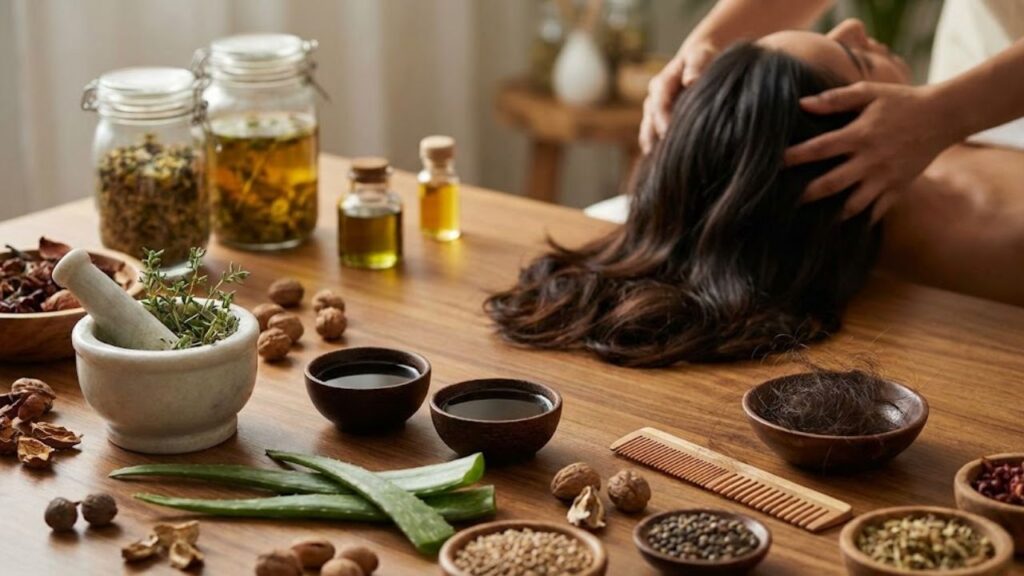
Oil massages go beyond routine grooming—they’re deeply restorative practices. Warming oil before application helps improve circulation and encourages scalp relaxation. Coconut oil limits protein loss, castor oil supports moisture retention, while almond, sesame, and olive oils each offer distinct benefits. Blending oils to suit individual needs often delivers better results. Regular oiling strengthens follicles while creating moments of calm.

Why Technique Matters as Much as the Oil
The effectiveness of oiling depends largely on how it’s applied. Gentle circular motions with fingertips, starting at the hairline and moving backward, enhance blood flow and nutrient delivery. Just five to ten minutes a few times a week can awaken follicles, release tension, and gradually ease stress-related shedding.

Enhancing Oils with Herbal Infusions
Infusing oils with herbs adds another layer of care. Ingredients like rosemary, hibiscus, fenugreek, and curry leaves release their properties when gently heated and steeped. These herbs support circulation, improve texture, and enrich scalp nourishment. Preparing infused oils creates a closer connection between natural ingredients and consistent self-care.
Everyday Kitchen Remedies That Support Hair
Many effective treatments already exist at home. Yogurt, eggs, seeds, and aloe vera help maintain scalp balance and strand strength. These remedies don’t offer instant results, but with regular use, they encourage resilience. Preparing them by hand brings mindfulness into hair care and supports steady routines.
Fenugreek for Scalp Strength
Fenugreek seeds, soaked overnight and blended into a paste, provide protein-rich support for reducing shedding and improving texture. Applied once or twice weekly for short periods, they help enhance thickness and resilience. Moderation is key, and sensitivity should always be monitored.
Aloe Vera for Calm and Balance
Aloe vera gel cools and soothes while helping regulate oil production. It’s especially beneficial for oily or irritated scalps. Left on for 20–30 minutes, it clears buildup and supports follicle health. Aloe can be used alone or mixed with oils or yogurt for added softness.

Protein Masks for Fragile Strands
Heat exposure and sunlight can weaken hair over time. Occasional masks made from egg and plain yogurt coat strands with natural protein, reducing breakage and improving smoothness. Used sparingly, they offer quick recovery without overwhelming the hair.
How Lifestyle Directly Shapes Hair Health
Hair often reveals internal imbalances before anything else. Nutrient gaps, hormonal changes, lack of sleep, and chronic stress all influence hair behavior. External care supports the surface, but internal balance sustains growth. Diets rich in protein, iron, and healthy fats provide essential building blocks, while hydration and mindful routines protect long-term health.
The Subtle Connection Between Stress and Shedding
Stress can quietly disrupt hair cycles. Shedding often appears months after a stressful period when hair enters a resting phase. Gentle movement, breathing practices, and reduced screen time help regulate stress hormones. Over time, these habits allow growth cycles to stabilize.
Daily Habits That Help Protect Hair
Small daily choices shape hair’s future. Using mild shampoos, avoiding overwashing, and focusing cleansing on the scalp prevent dryness. Conditioning the lengths reduces friction, while limiting heat styling minimizes breakage. Loose hairstyles and smooth pillowcases also help protect delicate strands.
Nutrients That Play a Key Role in Hair Strength
- Protein: Essential for keratin; found in lentils, eggs, tofu, paneer, fish, seeds, and nuts.
- Iron: Supports oxygen flow to roots; present in spinach, beetroot, pumpkin seeds, and legumes.
- Biotin & B-Vitamins: Aid energy and follicle renewal; available in whole grains, eggs, almonds, and greens.
- Omega-3 Fatty Acids: Maintain moisture and reduce inflammation; found in flaxseeds, chia seeds, walnuts, and oily fish.
- Zinc & Selenium: Support tissue repair and follicle protection; sourced from dairy, nuts, grains, and seeds.
Gentle Detangling as a Protective Practice
Detangling technique plays a significant role in preventing damage. Starting from the ends and working upward with a wide-toothed comb reduces breakage. A few drops of leave-in conditioner or oil help minimize snagging and increase awareness of dryness or weakness.

Creating a Simple, Balanced Hair Routine
An effective routine doesn’t need complexity. Consistent oil massages, one nourishing mask weekly, gentle detangling, nutrient-rich meals, and stress management form a strong foundation. Over time, these small, steady habits support reduced shedding, improved texture, and visible new growth.
 At-Home Brow Lamination Methods That Create Fuller Thicker Brows Without Salon Appointments
