
The banana on the counter was already half brown, soft in places, ignored by everyone in the kitchen. The kids had grabbed the cookies instead, my partner had gone for yogurt, and I was left staring at a little pile of curved yellow guilt. Three peels in the compost bowl, one blackened peel on the cutting board, and that thorny question again: what are we doing with all this food waste, really?
I scrolled my phone, more to procrastinate than to find a solution, and stumbled on a video with a strange promise: “Don’t throw away banana peels, bake them for 30 minutes instead.”
Thirty minutes? A baking tray? For garbage?

I tried it once just to see.

The smell that came out of the oven felt like a quiet, practical revolution.
Why banana peels suddenly matter a lot more than we thought
If you eat bananas regularly, you’re probably tossing the equivalent of a small bag of food every week without thinking about it. The peel goes straight in the trash, maybe the compost if you’re disciplined, and that’s the end of the story. Except it isn’t.
Because that yellow skin is not just a wrapper, it’s a bundle of fiber, potassium, and nutrients we literally pay for, then throw away. On a global scale, we’re talking millions of tons of banana peels every single year, quietly rotting in landfills.
And out of nowhere, this simple oven trick is starting to change people’s habits.
The trend started popping up on TikTok and Instagram Reels: quick videos of people lining banana peels on a tray and sliding them into the oven like it’s the most normal thing in the world. No fancy setup, no chef-level editing, just regular kitchens and tired parents narrating their new discovery. One video showing baked banana peel “spice” jumped past a million views in a weekend.
Someone else posted a before-and-after shot of their trash bin: fewer food scraps, less smell, more neat. The comments were full of variations of the same sentence: “Why did nobody tell us this sooner?”
This is how tiny domestic revolutions usually start: in blurry vertical videos with noisy children in the background.
There’s a logical reason this trick is spreading so fast. Banana peels used to feel like a dead end: too tough to chew, too stringy to cook as-is, too “waste-looking” to ever feel appetizing. Once they’re baked though, they change state completely.
They dry, darken, crisp slightly, and lose that rubbery texture. Suddenly they’re stable, easy to grind, easy to store, and frankly unrecognizable as trash. **That single transformation unlocks several new lives for the same peel**.
Food waste turns into pantry ingredient, garden ally, or even a sneaky nutrient boost in your meals.
The 30-minute banana peel trick, step by step
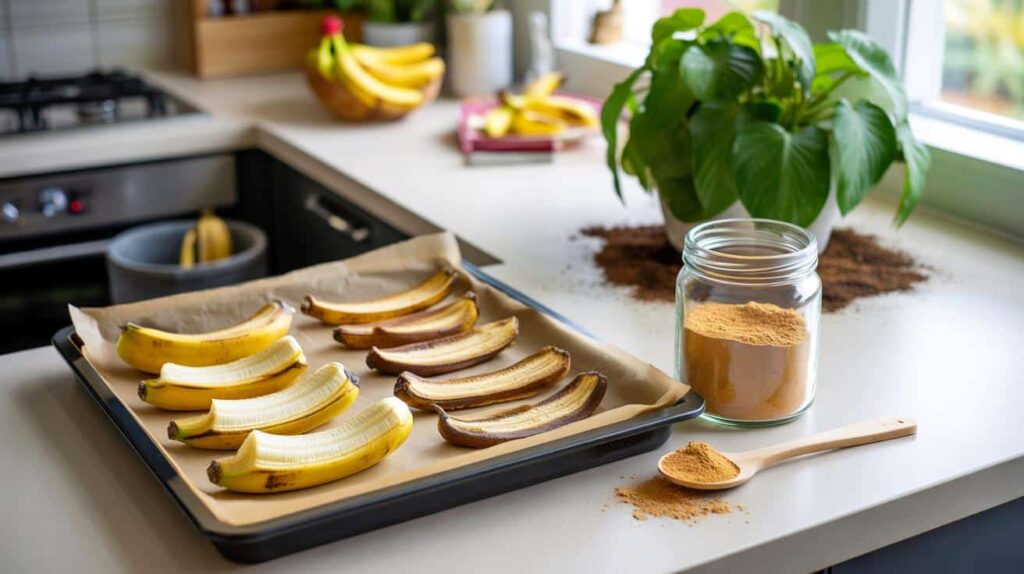
Here’s the version people are actually using on a Tuesday night, not the Instagram-perfect one. Preheat your oven to around 100–120°C (210–250°F). You want gentle heat, not roasting. While it warms up, rinse your banana peels under cold water, especially if the bananas weren’t organic. Pat them dry with a kitchen towel.

Lay the peels flat on a baking sheet lined with parchment paper. Spread them so they’re not overlapping. Slide the tray in the oven and leave them there for about 30 minutes, turning them once if you remember.
When they come out, they should be dry, darker, and slightly crisp at the edges. That’s when the magic starts.
From there, you can choose your adventure. Let the peels cool, then blitz them in a blender or coffee grinder until you get a coarse powder. That powder can be sprinkled into smoothies, oatmeal, cookie dough, pancake batter, or even bread. You won’t taste “banana skin”; you’ll mostly notice a mild, almost nutty backdrop.
Some people stop before grinding and just break the dried peels into small pieces. Those chunks make a quietly powerful fertilizer for houseplants and balcony herbs. Simply bury a piece in the potting soil or crumble it around the base of the plant. Slowly, the nutrients release into the soil rather than going straight to landfill.
Two paths, one tray. Edible boost, or slow-release plant food.
This is where expectations sometimes collide with reality. People see a 15-second clip and believe banana peel powder will change their whole diet, cure all deficiencies, and solve climate change before breakfast. That’s not how this works.
Let’s be honest: nobody really does this every single day. You’re going to forget, you’ll sometimes throw the peel away, you’ll burn a tray or two. *The point isn’t perfection; it’s direction.* Each time you turn peels into something useful, you’ve quietly shifted the line between waste and resource.
And the trick is surprisingly low effort once it becomes a low-pressure habit rather than an eco-obsession.
“Baking banana peels sounds like a gimmick, but it’s exactly the kind of small, repeatable change that actually sticks in busy households,” says a nutrition-minded food blogger I spoke to. “You’re not adding a new recipe, just repurposing something you already touch every week. That’s why people keep doing it after the trend cools down.”
- Dry them slowlyLow oven temperature keeps the peels from burning and preserves more nutrients.
- Use ripe, not rotten peelsSpotted is great, black and slimy is not. Rotten peels can bring off-flavors and bacteria.
- Store the powder rightA glass jar with a lid, kept dry and away from light, can hold banana peel powder for weeks.
- Start with tiny amountsA teaspoon in batter or oatmeal is enough. Your gut and your taste buds adjust gradually.
- Skip it if you’re uncomfortableIf the idea of eating peels just feels wrong, use them for plants and call that a win.
More than a hack: a different way of looking at “trash”
After a few weeks of baking peels, something subtle happens in the kitchen. You start seeing everything on the cutting board with new eyes. Carrot tops, leek greens, broccoli stems: they all raise the quiet question, “Are you really garbage, or could you be something else first?”
Not every experiment will work, and not every family will sign up for peel-based nutrition. Still, this one tiny ritual of sliding banana skins into the oven becomes a kind of daily nudge. It tells you that some problems we’ve accepted for years — like overflowing food waste — might be solved not with big speeches, but with a baking tray and half an hour.
We’ve all been there, that moment when the trash bag is heavy and there’s a faint smell of rot and regret in the kitchen. Turning part of that smell into something useful feels oddly satisfying, almost like a quiet, private protest against a throwaway culture.

And who knows: the next time you watch a banana peel land in the bin at a friend’s house, you might catch yourself wanting to say, “Give it 30 minutes. You might be surprised by what comes out of the oven.”

| Key point | Detail | Value for the reader |
|---|---|---|
| Dry peels in the oven | 30 minutes at low heat transforms banana skins into a stable, usable ingredient | Simple habit that fits into existing kitchen routines |
| Two main uses | Grind into powder for food, or crumble as slow-release fertilizer for plants | Less waste, more nutrients for body and garden |
| Small change, big mindset shift | Turning “trash” into a resource reshapes how you see everyday leftovers | Reduces guilt around waste and encourages more creative, sustainable cooking |
FAQ:
- Question 1Can you eat banana peels safely once they’re baked?
- Answer 1Yes, for most people baked banana peels are safe to eat in small amounts, especially when washed well and ground into powder. If you have allergies, digestive issues, or are on medication, talk to a health professional before turning them into a regular supplement.
- Question 2Do the peels have to be organic?
- Answer 2Organic peels are preferred because they tend to carry fewer pesticide residues. That said, many people use non-organic peels too, but they wash and scrub them thoroughly before baking. If pesticide exposure worries you, keep this hack for your plants instead of your plate.
- Question 3What does banana peel powder taste like?
- Answer 3Surprisingly mild. Once baked and ground, the flavor is more earthy and slightly nutty than “banana-ish”. Mixed into oats, smoothies, or baked goods, most people don’t notice it unless they’re told it’s there.
- Question 4How long can I store dried peels or powder?
- Answer 4If they’re fully dry and kept in an airtight jar away from moisture and light, they usually keep for several weeks. If you notice a strange smell, clumping, or any sign of mold, toss the batch and start fresh with a lower oven temperature and longer drying time.
- Question 5Will my plants really benefit from baked banana peels?
- Answer 5Yes, many plants appreciate the slow dose of potassium and trace minerals released as the dried peel pieces break down in the soil. They won’t replace a balanced fertilizer entirely, but they work well as a natural booster for houseplants, herbs, and container gardens.
