
The cabinet door squeaks the same way it did twenty years ago. The wood is still solid, but the surface tells another story: water rings from rushed breakfasts, pale scratches from moving boxes, a dull film that no pricey “wood polish” seems to fix. You stand there with a spray bottle from the supermarket in one hand, scrolling through before-and-after photos on your phone with the other, wondering if those transformations are even real.
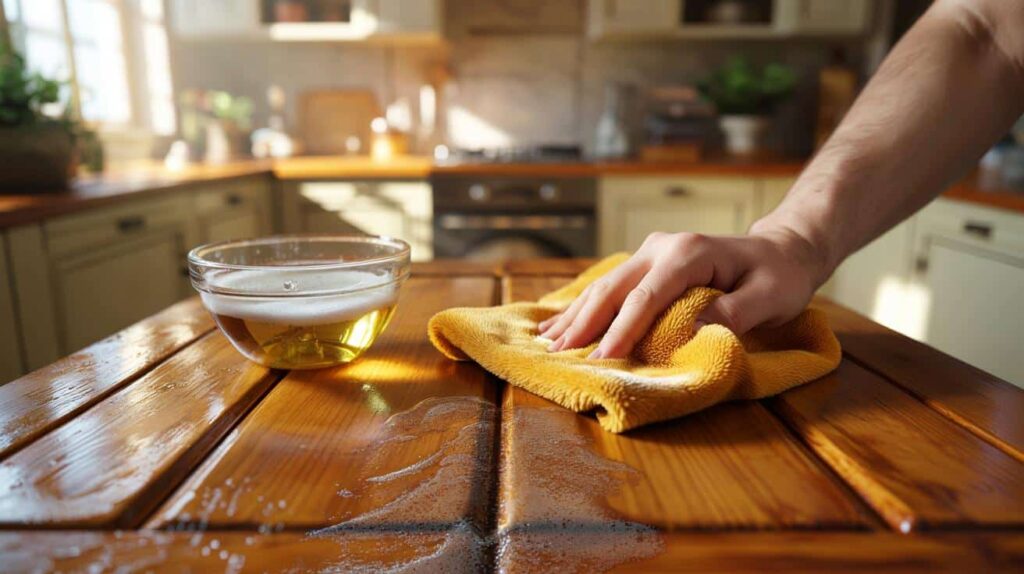
A restoration video autoplays. A gloved hand, a simple bowl, a microfiber cloth. A mix of pantry staples glides over a ruined table and the wood suddenly wakes up, like someone turned the color back on.
You pause, replay, and think: could it really be that easy?

The quiet tragedy of tired wooden furniture
Old wooden furniture rarely dies in a dramatic way. It just slowly loses its shine under layers of dust polish, cooking fumes, and daily life, until one day you realise that warm oak has turned into a flat, sticky brown. The grain looks shy, almost hidden.

We’ve all been there, that moment when you step back and think your once-loved table now makes the whole room look tired. And that’s usually when the mental math starts: refinish, replace, or just live with it.
Ask any professional restorer, and they’ll tell you the same story. A client wheels in a “ruined” sideboard, embarrassed by water stains and cloudy patches. They expect a full strip-down, sanding, and expensive refinishing. Instead, the expert pulls out a microfiber cloth, a bowl, and a couple of basic ingredients you probably have in your kitchen.
Twenty minutes later, a section of the wood is glowing again. The client stares, touches the surface twice, then says the same word nearly everyone says in that moment: “Seriously?”
What’s really happening on that surface isn’t magic. Most old furniture doesn’t need to be rebuilt; it just needs the build-up to be gently undone. Years of silicone sprays, waxy aerosols, and greasy fingerprints form a sort of invisible film that kills the light. The wood isn’t “dry” or “dead” as we tend to think. It’s buried.
Restoration experts know that the first battle is almost never with the wood itself. It’s with what’s sitting on top of it.
The simple homemade mix restorers secretly swear by
Here’s the method restorers quietly lean on when a piece still has its original finish: a bowl, a soft microfiber cloth, and a gentle, two-part solution. One part white vinegar. One part good-quality olive or mineral oil. Swirl it together so it turns slightly cloudy, not separated.

Dip a corner of the cloth into the mix, then wring it out hard. You want it damp, not dripping. Work on a small, hidden area first. Rub in light circles, then follow the grain. Watch what comes off onto the cloth. That grayish film? Years of polish, smoke, and kitchen life leaving the party.
A lot of people go wrong at this point, grabbing an old T-shirt and scrubbing like they’re cleaning a pan. Wood doesn’t like aggression; it responds to patience. Professionals talk about “listening” to the surface, which sounds poetic, but it just means paying attention to how the finish reacts.
If the cloth glides and the wood slowly deepens, you’re in the safe zone. If the surface starts to feel sticky or patchy, you’re probably lifting a weak finish and you need to back off. Let’s be honest: nobody really does this every single day. That’s exactly why this occasional reset feels so dramatic — you’re clearing years in one go.
“People think I’m hiding some secret product,” laughs Paris-based restorer Léa B. “But most days I’m just working with **vinegar, oil, a neutral soap, and a lot of microfiber cloths**. The trick isn’t the product. The trick is knowing when to stop.”
- Mix equal parts white vinegar and olive or mineral oil in a small bowl.
- Test on the back or underside of the furniture first.
- Use a clean microfiber cloth, slightly damp, not soaked.
- Work in small sections, always following the grain.
- Buff with a dry part of the cloth until the surface feels smooth, not greasy.
*Most restorers will tell you: the real danger is not under-cleaning, but over-enthusiastic scrubbing and over-wetting.*
When a simple cloth becomes a second chance
Something happens when you watch dull wood wake up under your own hand. The room shifts a little. That scratched coffee table you’ve been hiding under a runner suddenly has a story again. The sideboard from your grandparents stops looking like a problem to solve and starts looking like a piece worth keeping.
 After replacing 90% of his staff with AI, an Indian entrepreneur reveals an unexpected outcome
This small ritual with a microfiber cloth and a homemade mix doesn’t just save you from buying yet another mass-produced piece. It gently rewrites your relationship with what you already own. You start looking at other “ruined” things with a more patient eye.

| Key point | Detail | Value for the reader |
|---|---|---|
| Homemade solution | Equal parts white vinegar and olive or mineral oil | Uses low-cost pantry staples instead of expensive products |
| Gentle method | Microfiber cloth, light pressure, working with the grain | Reduces risk of damaging original finishes |
| Test first | Always try on a hidden area before full treatment | Offers peace of mind on valuable or sentimental pieces |
FAQ:
- Question 1Will this solution work on all types of wooden furniture?
- Question 2Can I use apple cider vinegar instead of white vinegar?
- Question 3How often should I repeat this treatment?
- Question 4What if the wood becomes sticky or cloudy after application?
- Question 5Is this method safe for antique or highly valuable pieces?
