No drama, no scene — they’re simply gone.
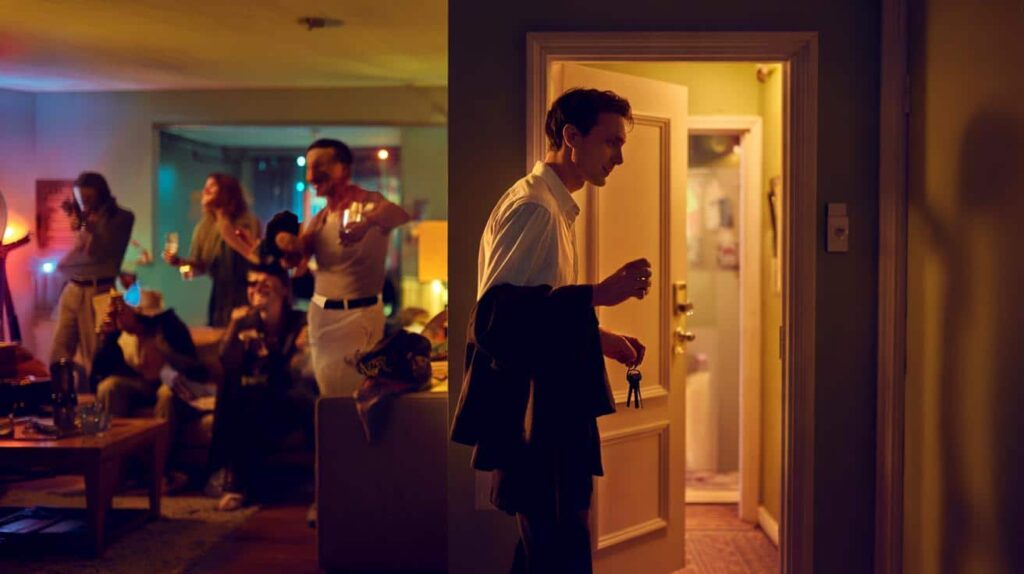
Hosts sometimes take it personally, friends feel puzzled, and social rules say you should at least wave goodbye. Yet psychology suggests these “ghost leavers” often share a cluster of personality traits that are far less rude than they look on the surface.
The quiet art of the early exit
In social psychology, how we leave situations says as much about us as how we arrive. Some people thrive on being the last to go, stretching out conversations in the hallway. Others rehearse their exit on the way in, mentally checking when and how they’ll leave.

Leaving a gathering early and silently is rarely random; it often lines up with stable personality tendencies and emotional needs.

Psychologists see these silent exits as part coping strategy, part boundary-setting. Far from being a simple breach of etiquette, the “Irish goodbye” or “French exit” can be a sign of self-knowledge and psychological self-defence.
1. They treat their time like a limited resource
People who slip out early usually keep a close eye on their energy and schedule. They weigh up what a night out costs them against what it brings.
If the conversation has peaked, they feel tired, or the next day looks demanding, they’re more willing to cut things short. That calculation often happens automatically, without a big internal debate.
For these guests, leaving is not a snub to the host; it’s an act of loyalty to their own priorities and limits.
They tend to be more deliberate in general: they plan their week, think about sleep, and worry less about “FOMO” (fear of missing out). Time feels finite, so they spend it carefully, even if that means breaking unspoken social rules.
2. Introversion is often part of the story
Many early leavers fit the classic description of introversion. They can enjoy company, crack jokes, and hold a crowd — but after a certain point, the social battery runs flat.
For an introvert, two hours of small talk in a noisy room can feel like a long-haul flight. They may appear fine on the surface while internally tracking how drained they are.
- They prefer one-on-one chats to big group banter.
- They need quiet time afterwards to mentally “reset”.
- They often plan a personal exit time long before the party ends.
Leaving without a round of hugs lets them protect what energy they have left without turning their exit into yet another social task.
3. Heightened sensitivity to noise, lights and tension
Another recurring trait is sensory and emotional sensitivity. Some people react strongly to loud music, bright lighting, or crowded rooms. Their nervous system is simply set to a higher volume.
In that state, every raised voice, every clink of glasses, every flash of a phone screen adds up. What looks like a “fun buzz” to one guest can feel like a slow-motion avalanche to another.
For highly sensitive people, an early exit works as emotional first aid, preventing overwhelm before it spills into anxiety or irritability.
They also tend to pick up on subtle social tensions — a couple bickering in the corner, a friend feeling left out — and that emotional load can tire them just as much as the sound and light.
4. They prefer to avoid unnecessary conflict
Staying until the end often means bumping into awkward conversations: “Have another drink”, “Why are you going already?”, “You’re no fun if you leave now”. For conflict-averse personalities, that’s a headache.
Many ghost leavers have a strong wish to keep things smooth. They dislike confrontation so much that they’d rather vanish quietly than argue, defend their choices, or disappoint anyone face-to-face.
Saying nothing can be their way of dodging pressure, guilt and debates at the door. The intention is less “I don’t care” and more “I don’t want this to turn into a scene”.
5. A strong sense of autonomy
There’s also a thread of independence running through this behaviour. People who slip out without fanfare are usually comfortable making decisions that differ from the group’s rhythm.
They trust their own judgment: “I’ve had enough. I want my bed. That’s okay.” They rely less on approval from others and more on internal signals like tiredness, overstimulation or boredom.

Leaving early can be a quiet expression of agency: my body, my evening, my call.
This autonomy shows up in other areas too. They might turn down invitations more easily, set clearer work boundaries, or ignore trends that don’t suit them.
6. A discreet form of consideration
At first glance, walking out without goodbye looks inconsiderate. Yet many people who do it report the opposite motivation. They worry that a big farewell tour will interrupt conversations, stall the music, or trigger a wave of “Oh no, don’t go yet”.
For hosts juggling food, playlists and guests, a lengthy exit scene can be one more demand. Silent leavers sometimes believe they’re doing everyone a favour by not adding emotional weight or logistical fuss.
They also avoid encouraging others to leave with them, which can thin out a party fast. Slipping out maintains the flow: the night continues, nobody has to perform exaggerated sadness at the door.
7. Comfort with their own identity
Beneath all these traits sits a deeper one: self-acceptance. Regular early leavers tend to be relatively at peace with who they are, socially and emotionally.
They still feel social pressure, but it doesn’t dictate every choice. If their body tells them “enough”, they listen, even if friends might gossip or tease later.
Self-acceptance lets someone act in line with their needs, rather than chasing constant approval in social spaces.
This doesn’t mean they love disappointing others; it means they can tolerate it. That inner steadiness makes the silent exit possible: they know some people won’t understand, and they’re willing to live with that.
What hosts and friends often misread
Not rejection, but regulation
Many hosts interpret a ghost exit as a sign the guest was bored, upset or unimpressed. In most cases, it’s far more mundane: the person hit their internal limit and chose self-regulation over etiquette.
Psychologists point out that humans vary widely in their social stamina. Expecting identical staying power from all guests ignores differences in temperament, mental health and work-life pressures.
When a pattern might signal something deeper
There are times when frequent, abrupt exits go beyond personality style. If someone always leaves early and also withdraws from messages, seems highly anxious beforehand, or dreads any social plan, that can hint at social anxiety or low mood rather than simple introversion.
| Behaviour | Possible interpretation |
|---|---|
| Leaves early but engages warmly while present | Energy management, introversion, sensory sensitivity |
| Cancels often and seems tense about invitations | Possible social anxiety or stress overload |
| Storms out after conflict | Impulsivity, unresolved tension, not a “ghost exit” |
Practical scenarios: navigating the ghost exit
If you’re the one who leaves early
You can protect your boundaries without fuelling misunderstandings. One option is to let the host know your style in advance: “I tend to slip out when I’m tired, so don’t worry if I disappear.” That small sentence can defuse hurt feelings later.
Another approach is a limited goodbye: choose one or two close people, say a quick, honest “I’m heading off, thanks for tonight”, and keep moving. That avoids the chain reaction of a big public farewell while still showing respect.
If your friend keeps vanishing from parties
Instead of confronting them at the next event, pick a calm moment. You might say: “I noticed you often leave without a goodbye. Is that just your way of doing things?” This leaves room for explanation instead of accusation.
They may mention anxiety, overstimulation, childcare or an early shift the next day. That context helps shift the narrative from “They don’t care” to “They’re managing something I don’t always see”.
Why this behaviour is becoming more common
Shorter attention spans, demanding jobs and the blurred lines between work and home all play a role. Many people arrive at parties already tired, juggling notifications, deadlines and family responsibilities.
In that climate, a strict loyalty to staying out late clashes with the reality of burnout. Quietly leaving becomes a survival tactic, especially for those who feel social spaces intensely.

There is also a cultural shift: younger generations tend to speak more openly about mental load, overstimulation and boundaries. The silent exit, once framed as rude, is slowly being reframed as just one valid way of managing social life.