In everyday life, we read someone’s eyes long before we register their words. Yet the reasons people avoid eye contact stretch from shyness to cultural rules, from anxiety to outright manipulation. Knowing which is which can change how you judge colleagues, partners and even strangers on the street.
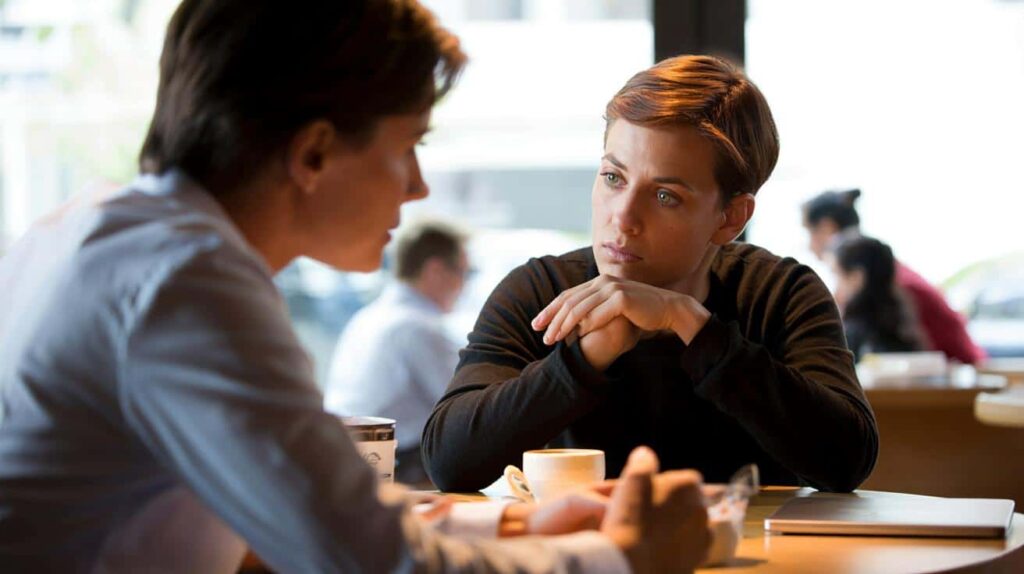
Why eye contact matters more than we think
Psychologists estimate that in a typical conversation, direct eye contact takes up around 40 to 60 per cent of the time. That doesn’t sound like much, but in those brief glances your brain is working at high speed: recalling memories, weighing what to say next, assessing the other person’s mood and intentions.
Eye contact acts as a social “on/off switch”. Looking at someone signals, “I’m listening, you have my attention.” Looking away can mean, “I’m thinking,” “I’m uncomfortable,” or occasionally, “I’m hiding something.” The trick is telling these signals apart.

Our eyes often reveal what our words are trying hard to hide.

When looking away hints at lying – and when it doesn’t
Popular culture loves the idea that liars can’t look you in the eye. Reality is subtler. Some studies suggest that when people fabricate a story, their gaze may briefly dart to one side, while looking to the other side can signal they’re pulling up a real memory. Interviewers and police officers are trained to notice these micro-movements.
Yet relying on this alone is risky. Confident liars can train themselves to stare steadily. Honest but anxious people may look away simply because they feel judged. Handedness might also play a role: depending on whether someone is left- or right-handed, different brain regions activate, affecting where their eyes move when they think.
Avoiding eye contact is not a built-in “lie detector”; context and patterns matter far more than a single glance.
Signs around the eyes that shift the meaning
Reading eye behaviour works best when you look at several signals at once rather than obsessing over one detail.
- Intense, prolonged eye contact: Often shows interest and focus. Paired with slightly raised eyebrows, it usually means the person is engaged. If it lasts too long or feels sharp, it can come across as a challenge or dominance play.
- Narrowed or “compressed” eyes: Suggest defensiveness or expectation of criticism. The person may feel attacked or on guard.
- Frequent blinking: Common in nervous people. It can point to stress, embarrassment or cognitive overload.
- Widened pupils: Typically appear when someone finds something interesting, appealing or emotionally stirring.
Seen together, these details can transform the meaning of a brief look away. A quick glance to the side with soft features and a half-smile is very different from the same glance paired with tight lips and a stiff jaw.
Eye contact and feelings of shame, fear or insecurity
In psychological research, avoiding gaze consistently shows up as a marker of insecurity, shame or social fear. People who feel threatened or judged often drop their eyes first. For someone with social anxiety, holding a stranger’s stare can feel almost physically painful.
In these situations, breaking eye contact is a self-protection tool, not a confession of guilt. The person is trying to reduce their sense of exposure. Children who have been frequently criticised, for instance, may automatically look down when addressed by an adult, even years later in professional life.
When someone refuses to look up, they may not be hiding the truth; they may be hiding their vulnerability.
How context reshapes the message
The same behaviour can carry different meanings depending on where and with whom it happens. A teenager staring at the floor while being told off by a teacher signals something very different from a partner avoiding your eyes when you ask about their day.

| Situation | Likely meaning of low eye contact |
|---|---|
| Job interview | Nerves, fear of making mistakes, low confidence |
| Heated argument | Shame, emotional overload, desire to withdraw |
| Casual chat with friends | Distraction, boredom or simply relaxed comfort |
| Questioning about a sensitive topic | Fear of consequences, secrecy or emotional pain |
When someone always looks at the ground while walking
Eye behaviour doesn’t just matter when you’re standing face to face. The way people look at the ground while walking also tells a story. In social psychology, constantly gazing down is often linked to a defensive or withdrawn posture. The body curls slightly inwards, shoulders may hunch, and the person appears to be shrinking their presence.
Yet that is only one reading. In several Asian cultures, lowering the gaze in public, especially with elders or authority figures, is taught as a sign of respect. In such contexts, an upward, direct stare can feel confrontational or rude.
There are also practical reasons. Someone may look down because of neck pain, headaches, sensory overload or simple exhaustion. People who feel unsafe, particularly at night or in unfamiliar areas, often scan the ground to watch their step and stay alert.
Body language never tells the full story on its own; it always sits on top of personal history, culture and health.
Why you shouldn’t judge from eyes alone
Humans are pattern hunters, and we love quick shortcuts. “Shifty eyes mean guilt” is an appealing rule, but it creates real risks. Quiet, neurodivergent or traumatised people can be seen as untrustworthy simply because they struggle with direct gaze. People with autism, for instance, frequently find eye contact overwhelming and may focus on a person’s mouth or hands instead.
At the same time, some highly skilled manipulators know the stereotype and deliberately hold extra-strong eye contact to signal honesty. They use stillness and steadiness to disarm suspicion. This mismatch between expectation and reality is precisely why professionals are trained to look at clusters of cues, not single signals.
How to respond when someone won’t look you in the eye
Before you accuse someone of lying or disengagement, it helps to run a quick mental checklist: How well do you know them? Are they usually shy? Is the topic sensitive? Are they tired, stressed or ill?
Rather than pushing them to “look at me when I’m talking”, a softer approach works better. You can slightly shift your own gaze, break eye contact now and then to ease pressure, or move the focus to a shared object like a document or a screen. This creates a triangle of attention and reduces the emotional intensity.
- Ask open, non-accusatory questions instead of grilling them.
- Notice whether their story is consistent, not just where their eyes go.
- Watch other signals: voice pitch, hand movements, posture, breathing.
Key terms and practical scenarios
Two concepts often crop up in research on gaze: social anxiety and dominance display. Social anxiety refers to a deep fear of negative evaluation. People experiencing it may avoid eye contact, talk quietly and keep their bodies small to reduce attention. Dominance display sits at the opposite end: strong, steady eye contact, wider stance, and minimal blinking signal power and control.
Picture three everyday scenes. In the first, a junior employee stares at their notes in a meeting, only glancing up briefly. Their low eye contact likely reflects fear of saying something foolish. In the second, a couple has a tense conversation, and one partner gazes out the window while insisting, “I’m fine.” The avoidance hints at emotions they cannot yet face. In the third, a confident salesperson locks eyes with you as they talk you through a deal. Here, direct gaze is used strategically, to build trust and steer the interaction.

Understanding these patterns does not turn you into a human lie detector, but it can make your reactions fairer. Instead of jumping to conclusions when someone looks away, you start asking better questions about context, culture, comfort and intent. Over time, that shift can make conversations kinder, interviews more accurate and everyday judgments a little less harsh.