
Blame isn’t where you think.
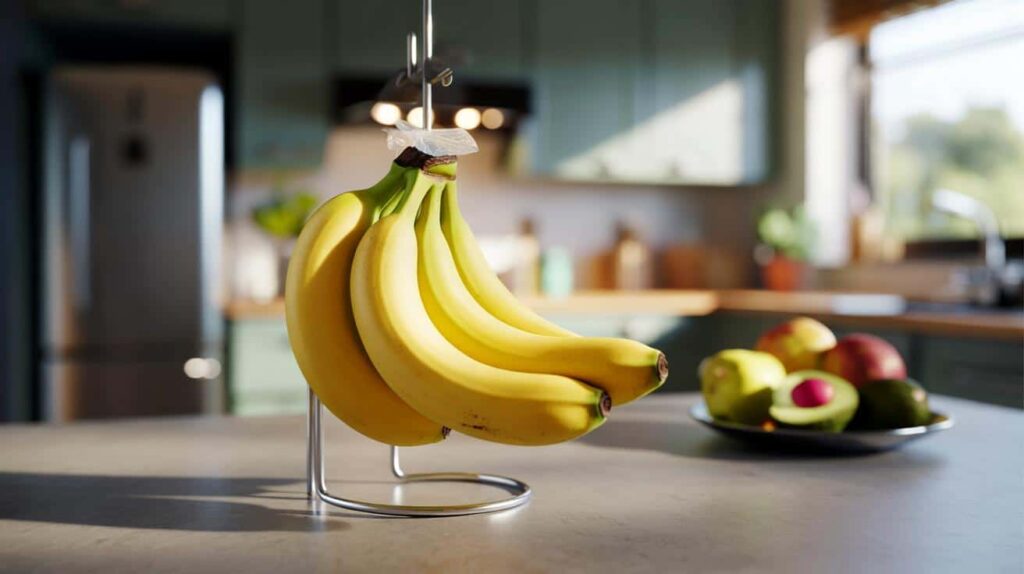
Bananas are one of the most popular fruits in British and American kitchens, yet they’re also among the most frequently binned. Many people instinctively hide them in a cupboard or shove them into the fridge, only to watch them darken within days. A small change in where and how you store them can buy you several extra days of bright yellow fruit.
The real reason bananas turn brown so fast
Bananas don’t just ripen quietly; they actively speed up their own ageing. The key player is ethylene, a natural plant gas.

Ethylene acts like a turbo button for ripening: once it builds up around the fruit, yellow quickly drifts towards brown.

This gas is produced mainly at the stem end of the banana. As it diffuses into the surrounding air and meets oxygen, it triggers chemical reactions in the peel and the flesh. Pigments change, starches turn to sugars, and the texture softens. That’s brilliant if you want banana bread, less great if you were planning packed-lunch snacks for the week.
Heat and poor airflow amplify that process. A closed cupboard, a sunny windowsill or a warm spot above the oven all help ethylene accumulate. That’s why your bananas sometimes seem to go from firm and flawless to overripe in what feels like a single night.
The best place to keep yellow bananas
The ideal home for ripe, yellow bananas is neither the fridge nor a dark cupboard. They do best at normal room temperature, in a cool, ventilated area of the kitchen.
The sweet spot: a banana hanger or fruit stand on the counter, away from heat and direct sunlight, with the stems wrapped.
Here’s the combination that works particularly well:
- Temperature: around 16–20°C (60–68°F), typical of a cool room, not next to the hob or radiator.
- Airflow: open air rather than a closed drawer or cabinet, so ethylene can disperse.
- Position: hanging or resting on a stand so they’re not being squashed under other fruit.
You don’t need special equipment, but a simple banana hook helps keep bruises away and lets air circulate all around the fruit. If space is tight, a shallow fruit bowl on the worktop works, as long as it’s not crammed full and not sitting in full sun.
The simple stem trick that slows ripening
Location is only half the story. The most effective hack happens exactly where the ethylene is produced: at the top of the bunch.
Wrapping the stems of your bananas slows down the release of ethylene and can keep them yellow for several extra days.
How to wrap the stems properly
The method is quick and low-tech:
- Keep the bananas in a bunch; don’t separate them yet.
- Use a small piece of cling film, foil, or even beeswax wrap.
- Wrap only the crown — the cluster of stems at the top — as tightly as you reasonably can.
- Place the wrapped bunch on a hanger or in a fruit bowl at room temperature.
By covering that cluster, you’re trapping some ethylene right at the source instead of letting it circulate around the fruit. Several supermarket trials have shown that wrapped bananas stay bright and firm for longer compared with unwrapped ones stored in the same conditions.
Plastic film, foil or something reusable?
Any reasonably airtight material will do the job. If you’re trying to reduce plastic waste, a small strip of reusable beeswax wrap or a piece of foil you reuse can work well. The key is a snug seal around the stems, not around the entire fruit, which needs to breathe.
| Method | Effect on ripening | Pros | Cons |
|---|---|---|---|
| Stems unwrapped, on counter | Fast ripening | No effort, natural flavour | Bananas brown in a few days |
| Stems wrapped, on counter | Slower ripening | Stays yellow longer, cheap trick | Needs a minute of prep |
| Whole fruit in fridge | Peel darkens, flesh stays firm briefly | Buys short extra time for ripe fruit | Skin looks unappealing, risk of chill damage |
What to keep bananas away from
Even in the right place, banana storage can go wrong when they sit next to other produce.
Bananas ripen themselves — and everything around them. Keep them away from other ethylene-heavy fruit if you want them to last.

Try to avoid placing bananas directly beside:
- Apples and pears – both pump out ethylene as they ripen.
- Avocados – will ripen faster near bananas, and push bananas along too.
- Tomatoes – sensitive to ethylene and also produce it.
- Very ripe fruit of any kind – they generate extra gas.
If your goal is the opposite — say you bought rock-hard avocados — pairing them in a paper bag with a banana can help soften them more quickly. Just be aware that your banana may pay the price.
When the fridge makes sense
Refrigeration is not the best first choice for yellow bananas, but it can be a handy last resort once they’re at the perfect ripeness.
Chilling a ripe banana slows the inside from turning mushy, even if the peel turns brown and unappealing.
Cold temperatures interfere with the banana’s cells, which is why the skin darkens. The flesh, though, often stays reasonably firm and sweet for a few more days. If you do use the fridge:
- Place bananas in the door, which tends to be slightly warmer.
- Pop them in a paper bag instead of plastic, to reduce condensation.
- Use them quickly in bakes, porridge or smoothies once out.
Freezer tricks for bananas that are on the edge
Once the peel is heavily speckled or brown, the fruit is usually too soft for most people to eat as is. That stage is ideal for freezing.
Basic freezing method:
- Peel the bananas and slice them into coins.
- Spread the slices on a tray or plate in a single layer.
- Freeze for a few hours until solid.
- Transfer to a freezer bag or box, label and date.
Those frozen slices work well in:
- Smoothies – they act like ice and add creaminess.
- “Nice cream” – blitz with a splash of milk or plant drink for instant soft-serve.
- Baking – defrost and mash for banana bread, muffins or pancakes.
Why stretching banana life matters
Food waste has become a serious concern in UK and US households, and bananas sit high on the list of fruits thrown away. Throwing out a blackened bunch doesn’t just hurt your budget; it also means wasted land, water and energy used to grow and ship that fruit.
Using one small storage habit to gain two or three extra days of freshness can cut both your waste and your weekly shop.
There’s a health angle too. Bananas are rich in potassium, vitamin B6, vitamin C and fibre. Keeping them on hand as a regular snack rather than something that spoils before you get to it nudges you away from ultra-processed alternatives.
How ripeness changes nutrition and use
The stage of ripeness changes what the banana does for you and how best to use it:
- Green to yellow with a hint of green: starchier, lower in sugar, more resistant starch that feeds gut bacteria and may keep you fuller longer.
- Fully yellow: balanced sweetness and texture, good for snacking and lunchboxes.
- Spotted to brown: softer, sweeter, with more available sugar and less starch; ideal for quick energy or baking.
Adjusting your storage — and that simple stem wrap — lets you “hold” bananas at the stage you prefer for a bit longer.
Practical scenarios: planning your bunch
If you buy a big bunch once a week, you can stagger ripening. Keep most of the bananas together, stems wrapped, on a hanger in a cool part of the kitchen. Take one or two off the bunch and unwrap their individual stems if you want them to ripen faster for a recipe or a packed lunch.

Families can also split a purchase: firmer bananas for adults who prefer less sweetness, softer ones saved for children’s snacks or weekend baking. A single storage tweak and a thoughtful spot on the counter give you far more control over how quickly that bunch moves from greenish to cake-ready.
 “I’ll buy it until I’m 90”: a dermatologist reveals the name of her favorite supermarket shampoo
