Deep inside, it starts secretly acting as if you were already in bed.
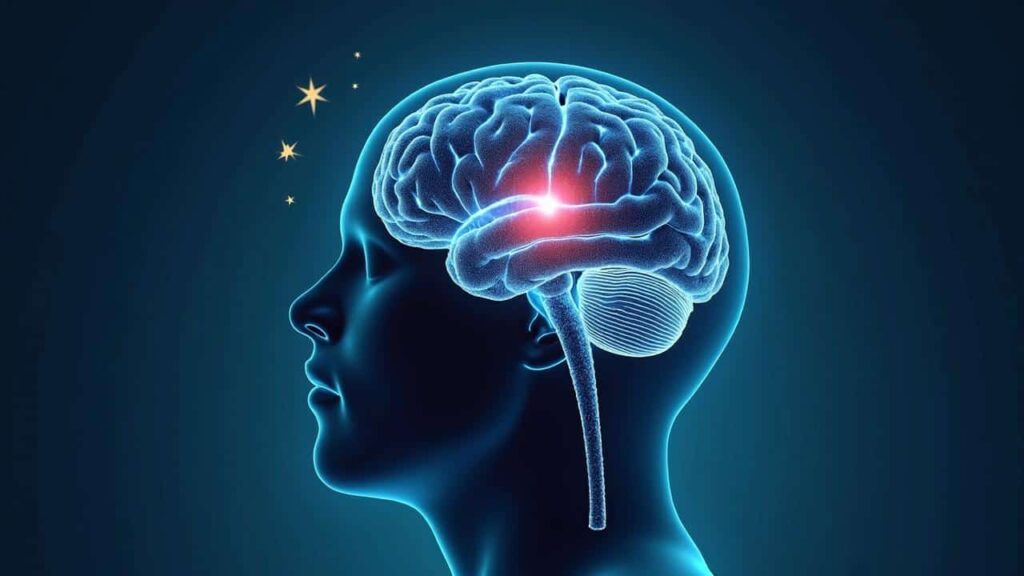
New research from MIT and Boston University suggests that when you push through exhaustion, parts of your brain briefly “switch off” and launch cleaning routines usually reserved for deep sleep. On the surface, you look awake. Inside, you are slipping into tiny, invisible micro-sleeps that can derail attention in a fraction of a second.
When your attention drops, your brain may be doing something else
Most people think of tiredness as a simple lack of focus: you yawn, you scroll, you miss a sentence in a meeting. The new study shows something much more physical is happening in the brain.
 Psychology reveals why your mood shifts after certain interactions without obvious reasons
During sleep deprivation, every lapse of attention is tied to a wave of fluid sweeping through the brain, as if it were briefly asleep.

Researchers followed 26 volunteers in a sleep lab. Each participant completed attention tasks twice: once after a normal night’s sleep, and once after staying awake all night. Inside a fast functional MRI scanner and hooked to an EEG, they had to react to simple visual signals.
After the sleepless night, their performance collapsed. They forgot to respond. They pressed the wrong button. Their reaction times stretched out. These failures were not random: they lined up precisely with a measurable physical event in the brain.
Each time attention failed, MRI scans showed a clear wave of cerebrospinal fluid (CSF) exiting the brain’s ventricles. At the same time, brain activity dipped and several body signals shifted. Then, as the person “came back” and performance improved, an opposite wave of fluid flowed back in.
This pattern indicates that, without sleep, wakefulness becomes unstable. The brain periodically forces a rapid “micro-reset” to protect itself, even while the person is technically still awake and trying to work, drive or make decisions.
What these mysterious fluid waves actually do
Cerebrospinal fluid is often described as a cushion for the brain, but that view is incomplete. Over the last decade, scientists have learned that CSF also helps wash away metabolic waste left behind by constant neural firing.
During deep sleep, slow rhythmic waves of CSF pulse through the brain, clearing out accumulated toxins and by-products of waking life.
Under normal conditions, these cleaning waves happen during non-REM sleep, especially in the deeper stages. They are tightly coordinated with slow electrical brain waves and a drop in blood flow in certain regions. The whole sequence is like a nightly maintenance cycle.
In the MIT–Boston University study, something striking appeared: those same slow CSF waves also emerged while people were awake — but only when they were sleep-deprived. Every time their attention dropped, a strong CSF pulse appeared, similar in strength to what’s seen in light sleep stages.
Measurements showed that after a sleepless night, the frequency and intensity of CSF pulses were dramatically higher. Brain fluid activity looked much less like wakefulness, and much more like early sleep, even though participants remained conscious and were still inside the scanner performing tasks.
The event followed a precise sequence: first, the pupils shrank around 10–15 seconds before the attention lapse. Brain electrical activity then decreased. Next came an outward flow of CSF from the ventricles. A few seconds later, as responsiveness returned, the fluid shifted back.
This suggests the brain is trying to squeeze in vital “clean-up” operations while you are still awake, stealing resources away from attention and reaction.
The body follows: heart, breathing and pupils change together
What surprised the researchers was not only what happened in the brain, but how the rest of the body moved in sync.
Before each micro-sleep-like episode, several things occurred:
- pupils narrowed, reaching their smallest size a few seconds before the fluid wave
- heart rate dropped
- breathing slowed
- global brain activity decreased
These are classic signs that the autonomic nervous system is shifting gears, away from an alert state toward a quieter, more rest-like mode. The same control systems that adjust your heart rate and pupils when you relax seem to be tied directly to the brain’s cleaning schedule.
Researchers point to a key structure deep in the brainstem: the locus coeruleus. This small but influential nucleus uses the neurotransmitter noradrenaline to regulate arousal, attention, blood vessel constriction and pupil size. When it shifts activity, everything else follows.
The tightly timed coupling between pupil size, heart rate and CSF flow hints at a single master system juggling vigilance and brain maintenance.

The data suggest that when the locus coeruleus eases off to relieve the exhausted brain, attention falters, blood flow patterns change, and CSF is pushed in and out like a tide.
A fragile bargain between staying awake and staying healthy
The study undermines the comfortable idea that you are either fully awake or fully asleep. Under sleep debt, the brain behaves like a patchwork of states, switching tiny regions into quasi-sleep while you push through emails or a night shift.
Researchers describe this as a kind of “functional micro-sleep”: short, often unnoticeable periods when certain brain networks temporarily drop offline while the rest of the system stays superficially awake. There is no full loss of consciousness, but there is a drop in responsiveness and quality of thought.
In practice, this means your brain constantly negotiates between two non-negotiable demands:
| Brain priority | What happens during normal sleep | What happens when you force wakefulness |
|---|---|---|
| Maintain attention | Paused for several hours at night | Partially sacrificed in brief lapses and errors |
| Clean up metabolic waste | Handled in long, coordinated fluid waves | Compressed into short CSF bursts during wakefulness |
| Protect long-term brain health | Supported by regular sleep cycles | Potentially undermined by chronic fragmentation |
These brief interruptions may protect the brain in the short term by allowing minimum maintenance to continue. Yet they carry a cost. Reaction times slow down. Decisions become less reliable. Complex tasks become more error-prone.
Over months or years of frequent sleep loss, this unstable pattern could affect learning, memory consolidation and emotional balance. Tasks that depend on constant sustained attention, such as caring for patients or monitoring industrial systems, become especially vulnerable.
Invisible micro-sleeps, very visible risks
On the road, a micro-sleep can last just a second or two. At 70 mph, that is enough to travel the length of a football pitch without really seeing it. The driver’s eyes may be open, hands on the wheel, but key brain circuits are briefly offline.
The danger is not feeling tired; the danger is thinking you are still in control when parts of your brain are already checking out.
For surgeons, pilots, lorry drivers, and night-shift workers, these tiny brain shutdowns can have blunt, irreversible consequences. An unnoticed moment of inattention in an operating theatre or at a railway signal is all it takes.
Students and office workers face a different, quieter risk. All-nighters before exams or project deadlines often feel productive. Yet the very brain waves and fluid flows that help consolidate memories at night are being carved into fragments during the day. The mind is technically awake, but less able to encode and stabilise new information.
Key terms that change how we think about sleep loss
Several concepts in this research deserve a closer look, because they reshape how sleep deprivation is understood:
- Micro-sleep: extremely brief episodes, from fractions of a second to a few seconds, when parts of the brain behave as if asleep. People usually do not notice them.
- Cerebrospinal fluid (CSF): clear liquid surrounding the brain and spinal cord. It cushions, transports nutrients, and helps flush waste products.
- Glymphatic system: the network through which CSF clears waste from brain tissue, more active during sleep.
- Locus coeruleus: a tiny area in the brainstem that regulates arousal and attention via noradrenaline. It is central to the timing of both vigilance and fluid dynamics seen here.
Understanding these terms makes one point stand out: sleep is not just “rest”. It is a highly active, organised service session for your brain, with powerful plumbing built in.
What this means for daily life and future risks
Imagine a junior doctor finishing a 24-hour shift. Their pupils are sluggish, heart rate irregular, attention fractured. On the ward, they may appear functional. Their brain, though, is punctuated by hidden CSF waves and brief local shutdowns. Each prescription, each clinical judgement, rides on a fragile balance between staying alert and the brain’s forced maintenance cycles.
Or picture a long-haul driver pushing through the night with coffee and loud music. Stimulants can nudge the arousal system, but they do not rewrite the underlying biology. The locus coeruleus can be pushed only so far before it drops its output and lets part of the brain slip into those micro-rest states. The steering wheel may still be straight, but attention is flickering.
These findings also raise questions about chronic sleep restriction, not just complete all-nighters. Regularly sleeping five or six hours a night might create a milder but constant pattern of internal tug-of-war, with more frequent fluid pulses and subtle cognitive costs during the day.
On a broader scale, this research encourages a different approach to safety in high-risk jobs. Instead of blaming individual willpower for attention failures, policies could treat lapses as predictable biological events when people work beyond safe sleep limits. Scheduling, mandatory rest periods and monitoring of fatigue could be treated less as perks and more as infrastructure for brain maintenance.
 “I’ll buy it until I’m 90”: a dermatologist reveals the name of her favorite supermarket shampoo
The central message is stark: when you deny your brain sleep, it will take it back in small, hidden instalments. Those instalments show up as micro-sleeps, fluid waves and split-second mistakes that can change lives long after the night shift ends.