Across Europe, and particularly in France, criminals are increasingly targeting payment cards whose owners still use predictable PIN codes. Some combinations are so common that fraudsters try them first, often with shocking success.
Why certain PIN codes are a goldmine for thieves
Your bank card is effectively a key to your accounts. Once someone has both the plastic and the PIN, they can pay in shops, withdraw cash, or even test the card at unattended terminals. That is why the strength of your four digits matters as much as the physical security of the card itself.
Many banks now allow customers to choose their own PIN. That freedom is useful, but it also leads a lot of people to pick something “easy to remember” – which usually means “easy to guess”.

If your PIN is simple or follows an obvious pattern, a thief with your card may only need a handful of attempts to drain your account.

Security researchers and banks regularly publish lists of the most common and most predictable combinations used in real life. These popular codes are exactly what criminals test first after stealing or finding a card.
PINs you should never use
Some codes appear again and again in leaked data and security audits. If yours is among them, you need to change it urgently.
The following PINs are widely recognised by experts as dangerously common and should be avoided at all costs.
- 1234
- 1111
- 0000
- 1212
- 7777
- 1004
- 2000
- 4444
- 2222
- 6969
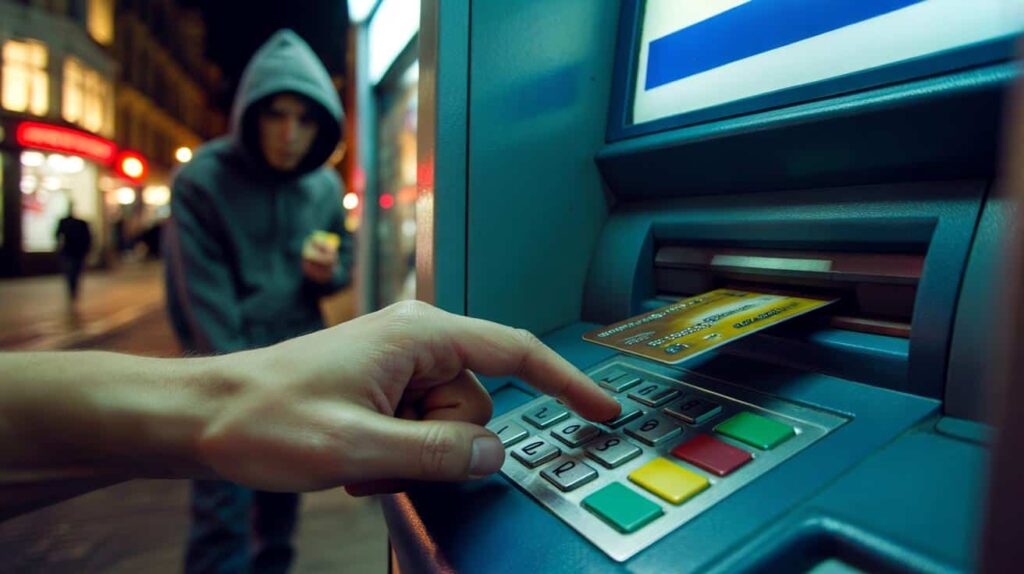
These digits look innocent, but they are so frequently used that many card thieves treat them almost as a default. In some cases, criminals stand next to cash machines and try these combinations on cards taken from lost wallets or snatched handbags.
French figures show how attractive card fraud has become. In 2024, around 42% of all card fraud cases recorded in Europe involved French cards, according to national statistics cited in the original French report. Analysts say that weak or predictable PINs are a key part of the problem.
Why people still choose weak PINs
The main reason is fear of forgetting. People want something they can recall under stress, at a checkout or an ATM. That leads to patterns like repetition, sequences, or meaningful dates. Sadly, those “memory tricks” are exactly what attackers anticipate.
Another factor is underestimating the risk. Many cardholders assume that thieves will never guess a code before the terminal blocks the card. In reality, a determined criminal might try several ATMs or point-of-sale terminals in quick succession, or use the card where the number of attempts is higher.
How to choose a stronger PIN without going blank at the ATM
You do not need a genius-level code. You just need something that is not on every fraudster’s cheat sheet and cannot be deduced from your personal life.
A good PIN is random, personal only to you, and stored in your head – not on paper or in your phone.
Bad PIN habits to drop today
- Using your date of birth or a loved one’s birthday
- Using your address number, part of your phone number, or your car plate
- Repeating digits (1111, 2222, 9999)
- Simple sequences (1234, 2345, 6789)
- Mirrored patterns like 1221 or 2112
- Sharing the same PIN across all your cards
- Writing the PIN on a note stored in your wallet or on the card itself
A quick method to build a safer PIN
One simple strategy is to create a private rule only you understand. For example:
- Think of a short word, like “CAT”.
- Map letters to numbers on a phone keypad: C (2), A (2), T (8).
- Add a fixed number to each (for example +3), giving 5, 5, 1.
- Add a final digit such as the number of letters in the word (3), ending up with 5513.
This code looks random, does not match obvious dates or sequences, and if you forget it you can reconstruct it using your rule.
Daily habits that protect your bank account
The PIN is only one line of defence. Card fraud is often spotted late because people do not monitor their accounts closely enough.
 Goodbye footprint marks on your sandals: the trick to erase them and make them look new again
Regularly checking your account lets you catch a suspicious payment early, limit damage and trigger a refund process faster.
Useful behaviours include:
- Reviewing your bank statements at least once a week via app or web banking
- Activating real-time alerts for card payments and cash withdrawals
- Covering the keypad every time you type your PIN, even at familiar shops
- Refusing to let anyone “help” you at an ATM by pressing buttons for you
- Using contactless only with low limits, and deactivating it if your bank app allows
Social networks also create unexpected weaknesses. Photos of birthday cakes, travel dates, or car plates can give scammers clues about the numbers you might choose. Using any personal date or clearly linked number as a PIN becomes much more dangerous in a life that is partly public online.
What to do if your card is stolen or misused
If your card goes missing or you notice a transaction you do not recognise, speed matters. The faster you react, the more chance you have of limiting the loss and proving you acted responsibly.
As soon as you spot a problem, block the card, report the fraud to your bank, and file a formal complaint with the authorities.
In most European countries, including France and the UK, banks are required to refund unauthorised payments as long as you did not act with gross negligence. That means you must not share your PIN with anyone, write it where it can be found easily, or ignore obvious warning signs.
Keep all documents that support your case: bank statements, ATM receipts, email alerts, or screenshots of suspicious messages. These can help show that the transaction was not made by you and was reported promptly.
Card fraud often starts online
The plastic card itself is not the only weak point. Many card scams begin with phishing emails, fake text messages, or bogus websites imitating your bank, delivery firms, or streaming platforms. The goal is usually to get you to type in your card details and sometimes your PIN.
Red flags include urgent messages asking you to “confirm” your card within minutes, links that lead to web addresses with strange spellings, and requests for your full PIN or complete card number by email or phone. Legitimate banks do not ask for your four digits in this way.
Understanding the risks: from one weak PIN to a drained account
Picture this situation. Your wallet is stolen in a crowded metro. The thief now has your card but not the PIN. If your code is 1234, 0000 or your birthday, they may guess it within a few attempts at an ATM nearby. With each successful try, they can empty your daily withdrawal limit and then use the card for contactless payments in several shops.
If you do not check your account for several days, the fraud can go unnoticed until your next statement. By that time, you may spend hours gathering proof, filing reports and waiting for a refund decision, all while your balance is lower than expected.
Now compare that to a situation where your PIN is a random code unrelated to your life, you have alerts activated, and you check your balance once a week. The same thief might fail the PIN attempts, trigger the card lock, and walk away with a useless piece of plastic. You notice a failed login alert on your app, call your bank and get a replacement card before any loss occurs.
Key terms and checks worth knowing
Two concepts are handy to understand in this context:

- PIN (personal identification number): the four or sometimes six digits confirming that you are the card’s legitimate user at an ATM or payment terminal.
- Phishing: a technique where criminals pretend to be a trusted organisation to trick you into giving away confidential data such as card numbers or PINs.
Ask your bank which settings you can control through the mobile app: card limits, online payment options, geographic restrictions, or instant blocking and unblocking. Combined with a solid PIN and careful daily habits, these tools can sharply reduce the chance that a stolen code turns into a wiped-out account.