
The woman in front of me at the market was staring at a crate of vegetables as if they’d just told her a secret. The sign read “Same species, different shapes” and underneath, in rough black marker: cauliflower, broccoli, cabbage. She laughed nervously and asked the stallholder, “Wait… are you telling me these are basically the same thing?” He shrugged, sliced a piece of raw cauliflower, handed it to her and said, “Same family, same plant, many stories.”
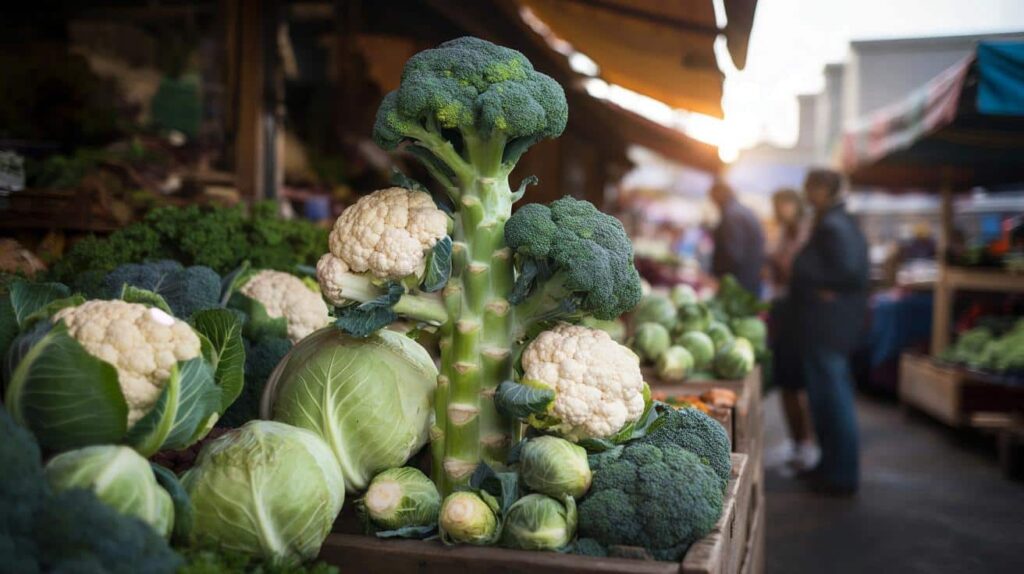
Around us, people slowed down, listening in. A teenager poked a broccoli head as if it might answer back. An older man muttered that in his day, cabbage was just cabbage.
And yet the more you look at them, the more they feel like siblings who chose very different lives.

The odd part is: most of us had no idea they’re literally variations of the same plant.
 If you feel a constant need to improve yourself, psychology suggests this internal pressure
One plant, a whole supermarket aisle
At first glance, cauliflower, broccoli and cabbage could not look more different. One is a tight white cloud. One is a green tree. One is a flat, layered ball that squeaks under the knife. Our brains file them into separate folders: side dish, diet food, something kids push to the edge of the plate.
Yet botanists look at the same scene and see just one thing: *Brassica oleracea*.
Not three species. One.
Over centuries, humans have stretched, nudged and reshaped that one coastal plant into a parade of forms. The grocery aisle is basically a gallery of human stubbornness and curiosity sitting on crushed ice.
There’s a story vegetable growers like to tell. Imagine wild Brassica oleracea, a scruffy plant clinging to salty cliffs along the Atlantic coast, wind-beaten and modest. Farmers in ancient Greece and Rome started noticing that some plants had thicker leaves, some had fatter stems, some had tighter flower buds.
So they kept the odd ones. Saved the seeds. Grew them again. Generation after generation, selecting tiny differences no one else cared about.
Fast forward a few hundred years. Out of that single wild plant, we end up with head cabbage (selected for compact leaves), broccoli and cauliflower (selected for swollen flower buds), kale (selected for large leaves), kohlrabi (a plant obsessed with its own stem). This isn’t just gardening. It’s slow-motion sculpture with DNA as the clay.
What’s happening, in simple terms, is selective breeding. When you consistently choose seeds from plants that show a trait you like — more leaves, chunkier stems, denser buds — that trait strengthens in the next generations. Tiny genetic variations, harmless and natural, get amplified.
With Brassica oleracea, those traits affect where the plant puts its energy. Into leaves? You get cabbage. Into dense flower heads? You get broccoli and cauliflower. Into stems? There’s your kohlrabi.
*Same species, different architecture.*
That’s why plant scientists will calmly say that cabbage and cauliflower are closer to each other than many dog breeds are to each other’s ancestors. Our plates are full of living experiments we’ve forgotten we ran.
How to cook “one plant” three totally different ways
Once you realise they’re all versions of the same plant, you start spotting patterns in the kitchen. That’s where it gets fun. Think of Brassica oleracea as one personality with several moods.
Cauliflower is the introvert: dense, quiet, it soaks up flavours. Roasting it with olive oil and smoked paprika turns it nutty and almost sweet. Broccoli is the energetic sibling: a quick blister in a hot pan with garlic and chili and it brightens up like it just got good news. Cabbage, thinly sliced and sautéed in butter until it almost caramelises, tastes far from the boiled sadness some of us grew up with.
The secret move is this: start treating them as interchangeable parts in your recipes, not as three unrelated strangers.

Many home cooks underestimate how similar their “rules” are. You can roast all three on a sheet pan, you can shred all three into slaws, you can drop all three into soups near the end of cooking for crunch. I once tested one simple recipe three ways: olive oil, salt, lemon, high heat. First with cabbage wedges, then broccoli florets, then cauliflower steaks.
The timing shifted a bit, the textures came out differently, but the basic method sang through each version. The family resemblance was suddenly obvious — same faint brassica sweetness, same toasty edges, same way they go tender at the core.
Let’s be honest: nobody really weighs out the “perfect” amount of vegetables every single day. Opening your fridge and knowing you can swap cabbage for broccoli in your stir-fry without disaster is… a tiny, quiet superpower.
There is a catch, and it’s not about cooking times or seasoning. It’s the smell. That famous “school canteen” odour that can fill a home and send kids running. All three share sulfur compounds that get stronger with long boiling. That’s why your grandmother’s overcooked cabbage haunted the curtains for hours.
The solution is simple: high heat, short time, plenty of air. Sear, roast, stir-fry, or steam briefly. Keep the lid off for part of the cooking so the steam escapes. Season boldly — lemon, vinegar, soy sauce, toasted nuts all play beautifully with that earthy base.
You’re not just hiding the flavor. You’re giving those sulfur compounds some company so they don’t shout alone in the room. The plant stays itself. You just nudge its voice.
What this hidden family says about us
Behind the supermarket story of Brassica oleracea lies something oddly intimate. We took a wild plant clinging to cliffs and, patiently, over centuries, bent it to our tastes. That says a lot about human beings. About our habit of noticing small oddities and refusing to let them go.
A plant with thicker leaves becomes peasant food that feeds entire winters. A plant with puffed-up flower buds becomes a delicacy on white tablecloths. Same DNA, different context. It’s hard not to see a metaphor hiding there for our own lives, for the talent or quirk someone once decided to encourage.
We’ve all been there, that moment when you stare at your fridge and feel a small wave of discouragement. A half-head of cabbage, a lonely broccoli stem, a few cauliflower florets in a plastic tub, and the temptation to let them all wilt.
The gentle truth is that these aren’t leftovers from three different stories. They’re one story that hasn’t been finished yet. Toss them together on a tray with oil and spices, or shave them raw into a big messy salad. Nobody at the table needs to know a botanist would call it all the same plant. They’ll just taste something comforting and oddly unified.
“Once you realise that cabbage, broccoli and cauliflower are all versions of the same plant, you start cooking with curiosity instead of fear,” says Lucie, a small-scale grower who runs a vegetable box scheme. “People tell me, ‘I don’t like cabbage’, and I always laugh. I ask them if they like coleslaw, broccoli cheese, roasted cauliflower. Most of the time they say yes. They just never connected the dots.”
- Look for the family resemblanceNotice the thick midribs in cabbage leaves, the firm stems of broccoli, the compact branches of cauliflower. You’re seeing the same plant expressing itself in three directions.
- Play the swap gameUse shredded cabbage where a recipe calls for kale. Try broccoli in place of cauliflower in a gratin. You’re not breaking rules, you’re stretching a family recipe.
- Cook “high and fast”, not “low and sad”Roast at 220°C/425°F, stir-fry in a hot pan, or steam briefly. This keeps flavor bright and avoids the heavy boiled smell many of us dread.
- Use bold finishing touchesA squeeze of lemon, a spoon of mustard, toasted seeds, or a splash of vinegar turns their earthy base into something vivid and modern.
- Tell the story at the tableNext time you serve them, casually mention they’re the same species. It sparks conversation, especially with kids, and suddenly the green stuff feels a bit more magical.
A single plant, many ways of being
Once you’ve seen Brassica oleracea behind the masks, it’s hard to unsee it. The market stall becomes a family reunion. Cabbage, broccoli, cauliflower, kale, kohlrabi, Brussels sprouts — they stop being a random cluster of “healthy things” and start to look like variations on a theme.
It makes you wonder what else in your daily life you’ve mentally separated even though it shares the same roots. Foods, people, jobs, cities. Maybe the point isn’t to spot differences faster, but to trace connections more patiently. There’s a quiet pleasure in learning that the thing you thought you didn’t like has cousins you already love.
Next time you’re shopping, stand for ten seconds in front of the brassica shelf. Imagine coastal cliffs, wind, salt, and a tough little wild plant that had no idea it would one day end up as coleslaw, roasted florets, and creamy soup. Then pick the one that calls to you — or pick three and throw them together, as if calling the family home.

The recipe doesn’t have to be perfect. The cuts can be rough. What lands on the plate is a reminder that from one single starting point, countless forms are possible. Including yours.

| Key point | Detail | Value for the reader |
|---|---|---|
| Same species | Cabbage, broccoli and cauliflower are all Brassica oleracea | Changes how you see and use these vegetables, reduces food fear |
| Shared cooking logic | All respond well to high heat, short cooking, bold seasoning | Easier meal planning, fewer failures, more flexibility with leftovers |
| Story behind the plant | Centuries of selective breeding shaped different plant parts | Gives everyday food a narrative, sparks curiosity and conversation |
FAQ:
- Are cauliflower, broccoli and cabbage really the same plant?Yes. They’re all cultivated forms of the species Brassica oleracea, selectively bred to emphasise different parts: leaves (cabbage), flower buds (broccoli, cauliflower), stems (kohlrabi) and so on.
- Do they have the same nutrients?They share a similar nutritional “base” — fibre, vitamin C, vitamin K, and protective plant compounds — but amounts vary. Broccoli, for example, tends to be richer in certain antioxidants, while cabbage shines in fermented forms like sauerkraut.
- Can I swap one for another in recipes?Often, yes. You might need to adjust cooking times and cut sizes, but in stir-fries, sheet-pan roasts, soups and gratins, they usually substitute well for each other.
- Why do they sometimes smell strong when cooking?The whole brassica family contains sulfur compounds that intensify with long boiling. Shorter cooking with higher heat — roasting, stir-frying, quick steaming — limits the smell and keeps flavors brighter.
- Are kale, Brussels sprouts and kohlrabi related too?They’re part of the same species family as well. Kale is selected for leaves, Brussels sprouts for side buds along the stem, and kohlrabi for a swollen stem. One wild plant, many human inventions.
