One messy bedroom, one ticking clock, and one deceptively simple formula that forced some brutally honest decisions.
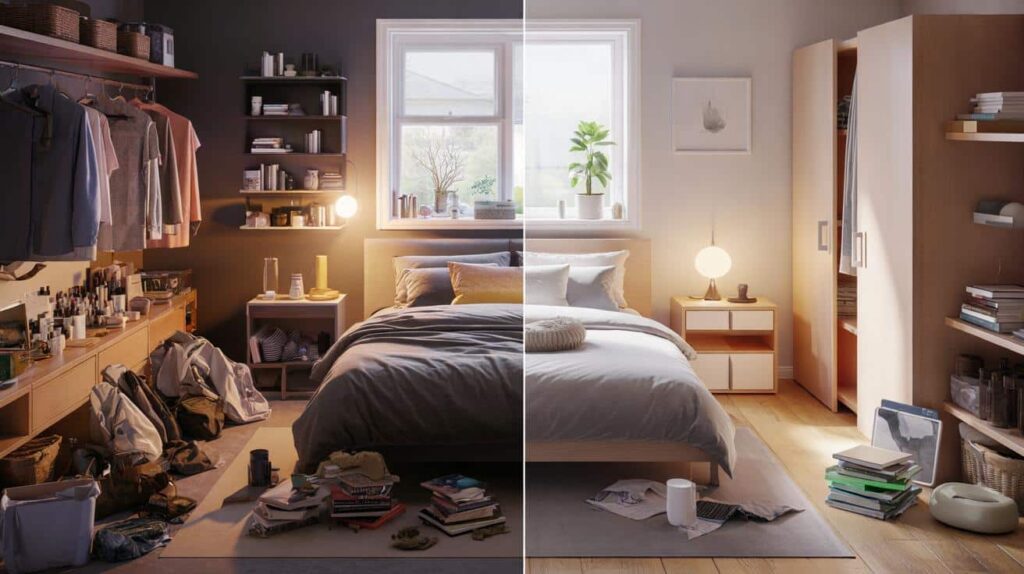
The 12:12:12 method sounds like another internet fad, but when you’re standing in a room you can barely walk through, you’re suddenly willing to try anything. Faced with an overflowing wardrobe, rogue mugs and a graveyard of beauty products, I used the technique to slice my bedroom clutter in half in under an hour.
What the 12:12:12 method actually is
The 12:12:12 method was created by minimalist writer Joshua Becker as a fast reset for chaotic spaces. Instead of tackling your whole home, you focus on a single room and three clear actions.
 The forgotten kitchen liquid that effortlessly turns grimy cabinets smooth, clean, and shiny again
12 things go in the bin, 12 things are donated, and 12 things are simply put back where they should have been all along.

That’s it. No colour-coded charts, no sentimental journalling about your socks. You move quickly, and you stick to the numbers as far as you can.
The psychology sits in that fixed quota of 12. The number is just high enough to push you out of your comfort zone. When you’re forced to hit a target, you start questioning items you normally skim past. That forgotten jumper at the back of the rail suddenly looks more like guilt than clothing.
Step one: the “chuck” pile
I started with the easiest category: chuck. This is anything that is broken, expired, genuinely unusable, or simply beyond repair.
Targeting obvious clutter first
The first victims were the plants on my desk. “Plants” is generous. Four shrivelled pots had been gathering dust for months, making the whole area feel tired. Into the bin they went. My desk immediately looked calmer and more intentional.
From there I moved straight to my beauty stash. This is where the numbers clocked up fast. I found:
- Empty lip gloss tubes
- Mascaras drier than the Sahara
- Foundations in shades I have never matched
- Face creams long past their expiry date
Within minutes I’d exceeded 12 obvious throwaways. It felt ruthless, but also weirdly energising. The bathroom bag actually closed properly for the first time in months.
The “chuck” stage works best when you move fast and trust your first reaction: if it’s broken, gross or clearly unused, it goes.
Step two: donating what you don’t use
Next came the donate pile. These aren’t bad items; they’re simply not serving you anymore. They’re the things someone else can actually use.
The wardrobe reality check
My wardrobe was practically groaning. Within 10 minutes I had pulled out three jumpers I hadn’t worn once this winter. That was the wake-up call. If you don’t reach for an item during the very season it’s designed for, how likely are you to wear it next year?
I pushed on and added in jeans that no longer fit quite right and a dress I only kept because of how much it cost. Crossing the 12-item mark felt oddly satisfying, like hitting a daily step count.
Books that deserve better than dust
Then I turned to my bookcase. I’m guilty of treating books as decor long after I’ve finished them. Confronted with the 12:12:12 rule, that habit felt wasteful. A stack of thrillers and paperbacks I knew I’d never reread suddenly looked like easy donations rather than treasured trophies.
Having a number to hit turns vague good intentions into an actual decision: either it stays for a reason, or it leaves today.

Step three: re-homing the wanderers
The most surprising part of the method was the “re-home” category: 12 items that don’t belong in the room at all.
The things that just drifted in
The first re-homes were almost laughably obvious: three mugs, a bowl and a water bottle balanced around my desk like some kind of crockery shrine. All back to the kitchen.
Then it got more interesting. I asked of every item: “If I were buying this today, would it live in my bedroom?” The answer was often no. Winter coats went to the hallway rack. Several skincare products migrated to the bathroom, where I might actually use them. A stash of cleaning sprays moved from under my bed to the kitchen and laundry area.
Re-homing freed up visible space without throwing anything away, proving that clutter is often about location, not quantity.
How the method halved my bedroom clutter
By the time I’d worked through all three categories, the bedroom felt dramatically lighter. I didn’t measure every inch, but visually the difference was stark: clear surfaces, a wardrobe that closed, and far fewer random objects staring back at me.
| Category | Action | Visible impact |
|---|---|---|
| Chuck | Removed dead plants, expired makeup, broken items | Cleaner desk, less visual noise, easier cleaning |
| Donate | Cleared clothes and books I no longer used | Wardrobe with breathing room, less stuffed shelves |
| Re-home | Moved mugs, coats, products to better locations | More floor space, calmer bedroom, better organisation |
Did I hit exactly 12 items in every single category? Not perfectly. Some rooms make it easier than others, and there were moments where I stalled at item nine or ten. But the pressure of the number still did its job: it pushed me to challenge my automatic “might need it one day” script.
Why this method works on your brain
Part of the appeal is that the 12:12:12 method turns decluttering into a game with clear rules. That structure cuts through decision fatigue, which is usually what keeps us stuck.
You’re not asking, “Should I declutter today?” You’re asking, “What are my 12 things to bin, 12 to donate, 12 to re-home?” That small shift matters. The task feels finite, not endless.
There’s also a built-in balance. You’re not only getting rid of things. You’re donating useful items and giving others a proper place. That mix makes the process feel less like loss and more like redesigning your space on purpose.
Tips if you want to try it yourself
If you’re tempted to run this in your own bedroom, a few small tweaks make it much easier:
- Set a timer for 45–60 minutes so the job doesn’t drag on.
- Start with “chuck” to warm up; it’s usually the least emotional pile.
- Keep a donation bag and a bin bag right beside you.
- Allow yourself to stop at 8 or 10 in a category if you genuinely run out; the mindset shift is the real win.
- Repeat the method every month in a different room to keep clutter under control.
Extra gains: emotional and practical
There’s a surprising emotional side-effect to this method. Walking into a room that no longer nags you in the background lowers stress more than you expect. Fewer piles mean fewer unfinished tasks screaming at you every time you glance up from your phone.
On a practical level, the 12:12:12 method pairs well with other strategies. Some people use it as a fast reset, then follow up with more detailed systems such as capsule wardrobes or drawer organisers. Others treat it like a monthly “audit” for surfaces and storage spaces that slowly fill up again.
If you live with other people, you can even turn it into a household challenge: everyone picks a room and races to complete their 36 items. You end up with a lighter, calmer home without dedicating a whole weekend to sorting through every possession you own.
 If you feel a constant need to improve yourself, psychology suggests this internal pressure
The method doesn’t promise a perfectly styled show home. What it offers is something more realistic: a simple, slightly uncomfortable exercise that forces honest decisions and gives you visible results before your motivation runs out. For one cluttered bedroom and one frazzled owner, that was exactly enough.