Crocodiles lounge on muddy riverbanks.
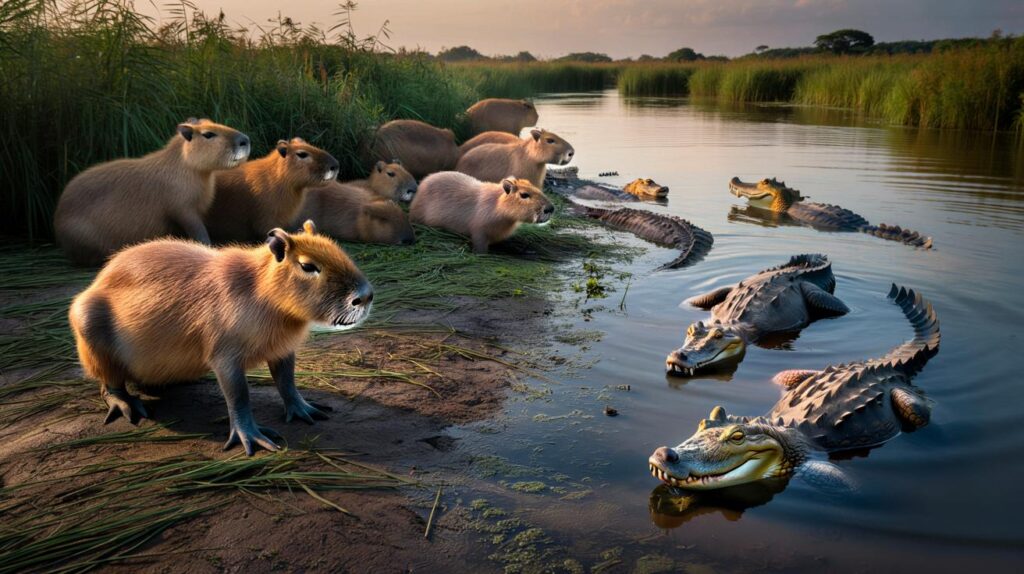
Capybaras graze a few metres away. Both know the other is there — and mostly ignore it.
Across South America’s wetlands, a strange truce plays out between a heavyweight reptile and a giant rodent. On paper, capybaras look like perfect prey. In reality, crocodiles rarely bother. The reasons behind that quiet stand-off say a lot about how predators make choices, and how ecosystems keep their balance.

Crocodiles are hunters, but also accountants
Energy, not drama, drives most attacks
Crocodiles built their reputation on shocking ambushes and bone-crushing jaws. Yet their daily lives are less action film, more strict budgeting exercise. Every lunge has a price in energy, risk and injury.

Crocodiles do not ask, “Can I kill this?” so much as, “Is it worth the effort today?”
Researchers who track crocodilian diets describe them as opportunistic feeders. They eat what is easiest, safest and close at hand. What that looks like depends heavily on:
- Species and size of the crocodile
- Water level and visibility in rivers and marshes
- Time of year and breeding season
- How much fish, birds and smaller mammals are around
- Competition from other predators, including larger crocs
Young crocodiles stick mostly to insects, crustaceans and small fish. As they grow, they add bigger prey like wading birds, turtles and mammals. At each stage, they still apply the same logic: pick meals that offer the best reward for the least risk.
What counts as “good prey” for a crocodile
The ideal victim is distracted, slow to react and easy to handle in water. Herd animals that panic and scatter, birds that land too close to the bank, or fish schooling near the surface all fit this pattern.
By contrast, large mammals able to fight back or injure a crocodile pose a real problem. A crocodile with a broken jaw or damaged eye may starve. That kind of long-term danger makes some potential prey simply not worth it – especially if the wetland is already full of easier meals.
In rich wetland systems, crocodiles can afford to be picky. Capybaras often fall on the “too much trouble” side of the ledger.
Capybaras: seemingly perfect, quietly difficult prey
A giant rodent built for water and escape
Capybaras are the largest rodents on the planet, often the size of a medium dog and sometimes heavier. They live beside rivers, lakes and flooded plains — the very territory where crocodiles dominate. That proximity makes their low predation rate even more surprising at first glance.
Yet capybaras carry an impressive toolkit for survival. They are powerful swimmers and can slip under the surface for several minutes when spooked. Their eyes, ears and nostrils sit high on the head, a bit like a periscope, letting them watch and listen while most of their body stays below the waterline.
This head-on-a-raft posture matters. A lurking crocodile relies on surprise. A capybara that can keep its sensory organs above water while staying largely hidden is far harder to ambush cleanly.
Safety in numbers: the social shield
Capybaras rarely live alone. Most groups include a dominant male, several females, young animals and sometimes subordinate males. In open wetlands, groups can merge into loose communities of dozens.
| Group size | Typical vigilance | Predation risk |
|---|---|---|
| Solitary | Low | High |
| 5–10 individuals | Moderate | Medium |
| 20+ individuals | High | Low |
Several pairs of eyes scan the horizon while others graze. At the slightest splash or rustle, one animal’s alarm can trigger a mass rush towards deeper water. A crocodile may manage to grab a straggler, but hunting into a stampeding, biting herd raises the risk of failure or injury.
One alert capybara is manageable. Twenty nervous capybaras ready to bolt become a chaotic, dangerous proposition.
What field studies actually show on the riverbank
Side by side, not locked in battle
Long-term research in Brazil’s Pantanal wetland, one of the best places to watch this pairing, paints a calmer picture than nature documentaries might suggest. Scientists have catalogued thousands of moments where capybaras and caimans – a type of crocodilian – share the same bank or channel.
Predation attempts show up in fewer than one in 200 of these encounters, and successful kills are rarer still. Much of the time, the two species act almost indifferent to each other. Capybaras graze or rest, glancing occasionally at the reptiles. Caimans bask or float nearby, barely moving.

Similar patterns appear in Venezuela’s flooded plains, where spectacled caimans and capybaras share space. There, capybaras often show only mild alertness, not full-blown panic, when a crocodilian surfaces close by. That muted response suggests generations of learning: crocodiles are a risk, but not an everyday emergency.
When crocodiles do take capybaras
Attacks do still happen. Young capybaras separated from the group, injured adults lagging at the back, or animals forced into narrow channels during drought become more vulnerable. In these edge cases, the balance shifts and a crocodile may judge the effort worthwhile.
Even then, data from fieldwork indicates that such incidents form a tiny fraction of crocodilian diets. Fish, aquatic invertebrates, birds and smaller mammals remain the mainstay on the menu.
Why capybaras rarely make the cut
The energy maths behind a non-meal
From the crocodile’s viewpoint, an adult capybara is a dense package of meat wrapped in problems. It can run fast on land, twist and kick in water, and turn a silent approach into a violent struggle. Add a watchful group ready to stampede or bite, and risk multiplies.
Attacking a fit capybara can mean burning precious energy for nothing, or worse, swimming away with an injury and no meal.
If fish are plentiful and wading birds clumsy, why chase something that fights back? In stable wetlands, crocodiles tend to prioritise predictable, lower-risk food. Capybaras sit in a grey zone: technically edible, strategically awkward.
Abundant alternatives keep the peace
South American floodplains brim with small to mid-sized creatures. Seasonal fish booms, nesting colonies of waterbirds, frogs, turtles and crabs all offer easier wins. Some require just a quick lunge; others can be cornered in shrinking pools as water levels fall.
These alternatives reduce pressure on crocodiles to tackle trickier prey like adult capybaras. Only in stressed conditions — deep droughts or damaged habitats — might that calculation change and push crocodiles towards riskier targets.
How this uneasy truce shapes the wetland
Two species, different jobs in the same place
Capybaras and crocodiles may not eat each other very often, but their coexistence still shapes the landscape. Capybaras act as living lawnmowers, grazing reeds and grasses along the banks. Their feeding opens up paths for smaller animals, maintains patches of short vegetation and recycles nutrients through dung.
Crocodiles and caimans, meanwhile, thin out fish populations and pick off weaker individuals. That helps maintain a balance between species, reduces overcrowding and can indirectly influence water quality. Both roles keep South American wetlands productive and diverse.
The apparent truce is not just a curiosity; it is a working arrangement that supports the wider health of rivers and marshes.
Putting the relationship into practical context
Why tourists often misread the scene
Visitors on wildlife tours sometimes see a capybara sitting next to a caiman and assume deep friendship or domestication. The reality is more calculated. Each species has learned, over time, how far it can push that proximity without triggering trouble.
Guides often use these moments to explain a key idea: predators do not attack simply because something edible is near. They weigh risk, energy and past experience. Capybaras, through size, agility and teamwork, have nudged that calculation in their favour most of the time.
Key terms that help make sense of it
Two concepts often used by biologists help unpack this odd pairing:

- Energetic economics – the idea that every hunting attempt is an energy investment. A predator will usually favour prey that provides the most calories for the least effort and risk.
- Coexistence pattern – a stable way in which different species share space over long periods, shaped by experience, behaviour and environmental conditions rather than constant conflict.
Thinking in these terms turns a simple question – “Why don’t crocodiles eat capybaras?” – into a richer picture of trade-offs, habits and long-term ecological deals. Under the calm surface of a South American lagoon, those silent negotiations are playing out every day.