
On a damp October morning, the kind where your breath hangs briefly in the air, I watched a familiar scene unfold on a suburban street. Gardeners in fleece jackets, neighbors with rakes, the low growl of leaf blowers echoing from yard to yard. In less than an hour, every golden, copper, and rust-colored leaf was herded into perfect plastic bags, stacked at the curb like autumn never happened.
Then the wind picked up, and a new layer started to fall, soft and stubborn, as if the trees were gently saying, “You missed a spot.”
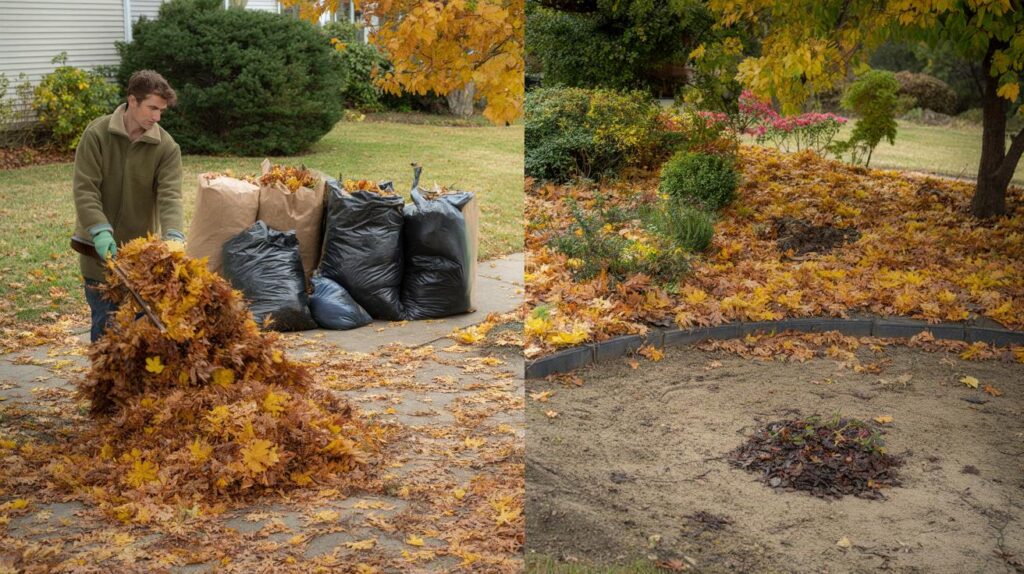
We keep fighting the same battle every year.
And we might be losing more than just our patience.

The autumn ritual that quietly wrecks your soil
Walk through any neighborhood in late fall and you’ll see the annual choreography: blow, rake, bag, repeat. Lawns shaved bare, beds stripped clean, every leaf treated like a mess to be erased. It looks tidy from the sidewalk, almost professional.

But underneath that short-lived neatness, the soil is left naked and exposed. No cover against pounding rain, no blanket against sudden frost, no food for the millions of tiny organisms doing the slow, invisible work of keeping your garden alive.
We don’t just “clean up” the leaves.
We strip the ground of its armor.
One gardener I spoke to, Helen, 62, has kept her front lawn immaculate for years. Every Saturday from late September to November, she runs her leaf blower in precise lines. By noon, her lawn is spotless, her bags are full, and the curb is lined with brown paper soldiers ready for collection.
Yet every spring, she complains her soil is “tired”. She adds bag after bag of commercial compost, spreads fertilizer, waters constantly. The grass bounces back for a while, but her beds stay stubbornly dry and lifeless.
She never realized that the very thing she throws away each fall is the missing ingredient her garden keeps begging for.
So what’s actually going on beneath those leaves? Fallen foliage is nature’s recycling system. Leaves are packed with nutrients trees pulled up from deep in the ground. Left on the soil, they slowly break down, feeding worms, fungi, and microbes that turn dry dirt into rich humus.
Strip the leaves away and the soil loses that steady food source. Rain hits the bare ground hard, washing away fine particles and compacting what’s left. Sun and wind suck out moisture faster. Over time you get crusted, lifeless soil that needs more irrigation, more fertilizer, more effort.
This quiet damage doesn’t show up in dramatic ways overnight. It sneaks in over years, one “clean” autumn at a time.

What to do with your leaves instead of bagging them
The shift starts with a different gesture: instead of dragging every leaf to the curb, you redirect them. Rake or blow leaves off your lawn, yes, but move them onto flower beds, under hedges, around shrubs, and at the base of trees. Spread them in a loose, uneven blanket, a few centimeters deep.
If the layer is thick, run a mower over them first to shred them. Shredded leaves decompose faster and are less likely to mat into a dense, suffocating layer. That single pass with the mower turns “yard waste” into one of the best mulches you can get for free.
The lawn stays breathable.
The beds get a winter duvet.
A lot of gardeners worry they’ll “do it wrong”, so they default to stuffing everything in bags. Leaves over the lawn, gone. Leaves in the beds, gone. Then they buy bark mulch in spring to cover the very spots they just stripped bare in autumn.
There’s a quieter path. Don’t aim for a perfect, magazine-ready yard. Aim for a living one. Some leaves can stay under trees and in shady corners. Some can be piled loosely in a corner to become leaf mold, that dark, crumbly material gardeners pay good money for. *Nature doesn’t color-code where every leaf should land, and neither do you have to.*
Let’s be honest: nobody really does this every single day.
You adjust a little each weekend, and that’s more than enough.
“Every bag of leaves at the curb is a bag of nutrients exported from the garden,” says soil ecologist Dr. Laura Jenkins. “If you repeat that year after year, the soil goes hungry. People then spend money trying to fix a problem they quietly created.”
- Leave a light layer on beds
Spread 2–5 cm of leaves around perennials, shrubs, and trees to protect roots and feed the soil. - Keep grass from suffocating
Move thick leaf carpets off the lawn or shred them with a mower so light and air still reach the grass. - Start a simple leaf pile
Stack extra leaves in a corner; by next year you’ll have crumbly leaf mold for potting mixes and mulching. - Avoid smothering crowns
Pull leaves back from the base of young plants and from low, damp spots where rot might start. - Skip the noisy cleanup frenzy
Work in small sessions, let some “mess” stay, and think of it as habitat, not failure.
Rethinking “messy” gardens and what healthy soil really looks like
Once you start seeing leaves as a resource instead of a nuisance, autumn looks different. That thick golden carpet under the maple? Free mulch. The damp, slowly collapsing pile behind the shed? Future leaf mold for seed starting. The rustle under the shrubs at night? A hedgehog or beetles finding shelter in a place you didn’t over-clean.
A garden with a few scattered leaves, uneven mulched beds, and a quiet corner pile doesn’t photograph as well as a bare, raked lawn. Yet that slightly “imperfect” space holds moisture better, resists erosion, and wakes up faster in spring with healthier plants and fewer weeds.

You don’t have to become a wild gardener overnight.
You just decide, one autumn, not to repeat the same mistake again.

| Key point | Detail | Value for the reader |
|---|---|---|
| Use leaves as mulch | Spread or shred leaves onto beds and around trees | Feeds soil life and reduces the need for fertilizers |
| Protect, don’t strip, the soil | Avoid leaving bare ground exposed all winter | Prevents compaction, erosion, and moisture loss |
| Start a leaf pile | Let leaves break down into leaf mold over time | Provides free, high-quality organic matter for the garden |
FAQ:
- Should I leave all my leaves on the lawn?Not quite. A thin layer is fine, but a thick, wet carpet can smother grass. Shred the leaves with a mower or move most of them onto beds and around trees.
- Are some tree leaves bad for the garden?Thick, leathery leaves like oak or magnolia break down slowly. They’re still useful, but best shredded first or added to a leaf pile so they decompose faster.
- Will leaves attract pests if I leave them?Leaves attract life, which includes insects and small animals. Most are beneficial. Pull leaves slightly away from the foundations of your home and from plant crowns to avoid issues.
- Can I use leaves in pots and containers?Yes, but mix them. Use finely shredded leaf mold blended with compost and regular potting soil rather than raw whole leaves, which can mat and stay too wet.
- How long does it take for a leaf pile to turn into leaf mold?Usually 6–18 months, depending on climate and whether you turn it. Even partially broken-down leaves still make a useful mulch over beds and paths.
