
On a grey February morning, the only color in some British suburbs isn’t in the sky, it’s on the bird table. Plastic tubs of discount fat balls, neon-branded seed mixes, and 99p peanut bags line up along fences like a budget buffet. Robins, tits, sparrows – they’ve all learned the new routine, swooping in at 8 a.m. sharp, the second a back door clicks open.
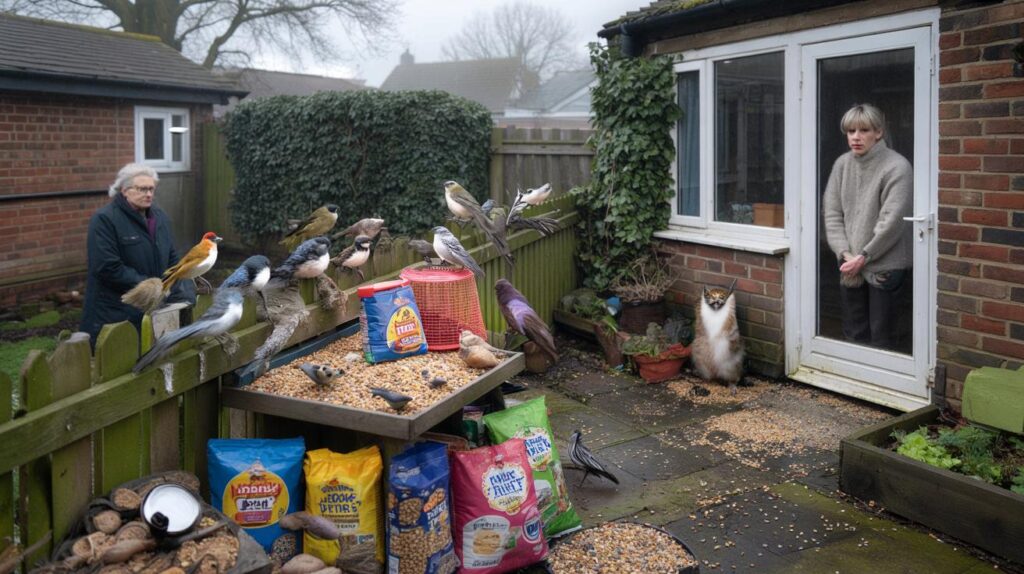
From the kitchen window, it looks heartwarming.
From the pavement, some neighbors say it looks like addiction in real time.

What started as a small winter kindness has turned into a daily ritual that splits streets into two camps: the February feeders who top up bargain treats every morning, and the furious residents who claim this fake generosity is wrecking birds’ natural foraging instincts.

Outside, the birds just keep coming back.
When kindness turns into a daily hook
Stand in any cul-de-sac this month and you can almost set your watch by the flutter. At 7:45, bins roll out. At 8:00, doors open. By 8:05, the same blue tits and great tits are already waiting on the branches, heads cocked towards the garden where the cheap fat balls always appear.
The soundtrack is bright and busy, a scratchy chatter over the soft thud of seed hitting the tray. It looks like a wildlife success story, yet there’s a nagging detail: the birds no longer bother checking the hedge or the ivy first. They go straight for the red plastic net, like regulars pushing into a café that opens at the same time every day.
On one terraced street in Leeds, it escalated fast.
In early February, a retired couple started putting out big bags of cut-price sunflower hearts “for the little guys,” as they told neighbors. Within a week, finches and sparrows were descending in flocks, scattering shells across three adjoining gardens. A fortnight later, a WhatsApp group pinged to life: “Can they stop? Birds are ignoring the hedges and garden beds, and the mess is out of control.”
Photos followed. Windows smeared with droppings, a vegetable patch dug up by opportunistic pigeons, a cat losing its mind at the patio door. The original feeders were stunned. They thought they were helping. Suddenly, they were the villains.
Behind the drama is a simple dynamic. Cheap, calorie-dense food offered at the same place and time every day creates a predictable reward loop. Wild birds are smart; they optimise their energy. If they know they can get high-fat, no-effort food from a plastic feeder, why spend hours combing seed heads or probing bark?
That’s what angers some residents: the feeling that birds are being “trained” away from their natural behavior by a type of generosity that looks caring but is closer to conditioning. It’s less about one handful of seed, more about a habit that quietly reshapes every flight path across the neighborhood.

Feeding without flipping the wild switch
There’s a different way to fill a feeder in February. It starts with breaking that rigid daily pattern. Instead of topping up every single morning, wildlife groups suggest randomising your routine. Skip days. Vary the time. Offer smaller portions that birds can finish quickly, then push them back towards the trees, hedges, and leaf litter they evolved to explore.
Think in seasons, not in shopping baskets. Late winter is tough, yes, but it’s also when birds need to keep their foraging skills sharp for spring. A modest, irregular snack supports that. A bottomless budget buffet, refilled on the dot, quietly erodes it. *Feeding should feel like a surprise, not a subscription.*
The emotional trap sits right in the word “kindness”. You buy the bargain tub, you see birds swoop in, you feel good. Who wouldn’t? Then a neighbor knocks about droppings on their car or a flooded gutter stuffed with discarded husks, and it stings.
We’ve all been there, that moment when something meant as a small act of generosity suddenly feels like a problem you created. The temptation is to double down: “They’re just jealous” or “I’m saving these birds.” Yet birds are not pets. They don’t need saving every hour on the hour. Let’s be honest: nobody really does this every single day with a clear plan in mind. Often, it just… happens, until someone complains.
Even among bird lovers, the tone is shifting.
“Feeders are a supplement, not a lifestyle,” says one long-time birdwatcher who finally removed his daily fat-ball line. “When the birds started queuing on the fence before I’d even opened the curtains, I realised I wasn’t supporting nature anymore, I was programming it.”
To dial back the damage without ditching birds entirely, many experts now recommend:
- Rotating food types instead of bulk-buying one sugary or ultra-fat mix
- Leaving wild seed heads and berry bushes so birds have real foraging options
- Clearing spilled seed often to avoid rats, pigeons, and neighbor complaints
- Setting a rough “season end” date in late winter so support doesn’t roll on forever
- Talking openly with neighbors before going big with multiple or oversized feeders
A new kind of neighborhood bird pact
Strip away the plastic tubs and the passive-aggressive notes, and what remains is something oddly hopeful. People care enough about wild birds to argue over them. Some are furious about “hooking” them with daily treats. Others feel wounded that their small joy is being called harmful. In the middle are the birds, still scanning every hedge, still landing on the same wobbly perches out of learned habit and raw survival.

The next phase probably won’t be a ban or a grand rulebook. It will be quieter: neighbors agreeing on how many feeders feel right for a shared courtyard, someone swapping cheap fat balls for smaller, better-quality seed, another person planting hawthorn instead of buying a third plastic silo. What looks like a silly February squabble might be the start of a new, gentler deal with the wild visitors at our windows – one where kindness doesn’t mean control, and feeding doesn’t flatten the very instincts we say we love.

| Key point | Detail | Value for the reader |
|---|---|---|
| Randomise feeding routines | Avoid strict daily schedules and constant refills | Supports birds’ natural foraging and reduces “addictive” visits |
| Use feeders as a supplement | Smaller portions, diverse food, clear seasonal limits | Helps birds through tough weeks without creating dependence |
| Talk to your neighbors | Share plans, placement, and cleaning habits in advance | Prevents conflict, keeps gardens cleaner, protects local goodwill |
FAQ:
- Question 1Are bargain fat balls and cheap seed mixes really that bad for birds?
- Question 2How often can I feed birds in February without harming their instincts?
- Question 3My neighbors are angry about mess and droppings – what can I change quickly?
- Question 4Will birds “forget” how to forage if I’ve been feeding daily for years?
- Question 5What’s a simple, responsible setup for someone who still wants birds in the garden?
