
The snow started falling before dawn, thick and wet, swallowing the sound of traffic that never came. On the local police scanner, you could hear the strain in the dispatcher’s voice: “If you don’t have to be out, stay home. Conditions are life-threatening.” A few streets away, the parking lot of a distribution center flickered with harsh floodlights, as if it were any other Tuesday. Workers trudged through knee-deep drifts, phones buzzing with messages like: “Attendance mandatory. Roads open, operations continue.”””
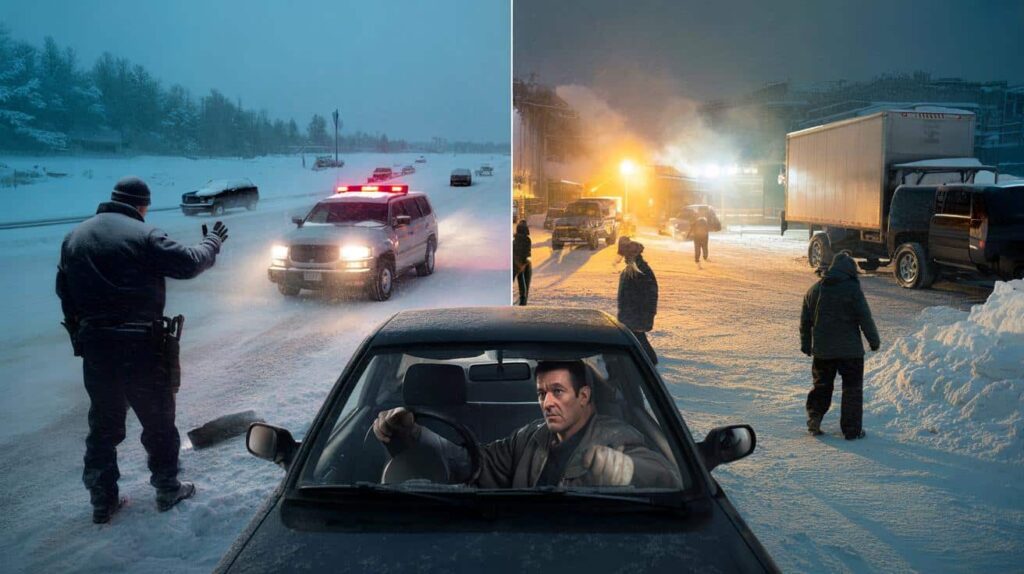
Out on the highway, plows fought a losing battle, steel blades scraping over black ice hiding beneath fresh powder. Cars sat sideways in the median, hazard lights pulsing in slow, desperate rhythm. Inside those cars were people who had read the same alerts, heard the same warnings, and still felt they had no real choice. Rent is due. Kids need food. The boss said, “We really need everyone in today.”
By noon, social media was on fire. Police departments posting “Stay home, don’t drive.” Major chains posting “We’re open!” with cheerful snowman emojis. And right between those two messages, ordinary people asking a quiet, furious question: when snow turns deadly, whose decision is it to risk a life for a paycheck?

Stay home or show up: a deadly split-screen reality
On one screen, you’ve got mayors, governors, highway patrols all but begging: “Stay off the roads. Conditions are treacherous.” On the other, corporate emails and app notifications pinging in capital letters: “STORE OPEN. REGULAR HOURS. ATTENDANCE EXPECTED.” The clash feels surreal. Two worlds sharing the same map, the same storm, but not the same level of risk.

For the nurse living ten miles out of town, that plea from the state trooper isn’t just a suggestion. It means white-knuckle driving past jackknifed trucks. For the warehouse picker or call-center worker, the message from HR is colder than the blizzard outside: show up, or lose your hours. One authority speaks the language of safety. The other, the language of consequences.
During January’s historic whiteout in the Midwest, some cities saw more than 200 weather-related crashes in a single day. Schools closed. Public offices shut their doors. Meanwhile, several big-box retailers, logistics hubs, and factories still demanded in-person shifts. Photos went viral of employees sleeping on breakroom floors because driving home was too dangerous. People weren’t asking for hero status. They were asking why their lives seemed worth less than a day’s profit.
Behind the outrage sits a painfully simple tension. Public officials have a legal and moral duty to protect citizens. Big business has a legal duty to protect its bottom line. Those two instincts collide violently when snow turns highways into ice rinks and visibility into a white wall. Companies argue they’re supplying essentials, keeping the economy moving, honoring customer expectations. Workers hear something else: “Your safety is optional. Our revenue is not.”
Inside the storm: what “business as usual” really looks like
Drive past an industrial park during a blizzard and you’ll see it. Plumes of exhaust from loading docks. Forklifts moving pallets in the ghostly white. Employees wrapped in thin company hoodies, not snow gear, hurrying between buildings as ice pellets lash their faces. On paper, operations are “normal.” In real life, everything feels one bad step away from disaster.
At a suburban mall outside Cleveland, employees filmed their cars stuck in an unplowed parking lot while police cruisers slowly blocked off nearby roads. Inside, the overhead speakers played upbeat music. Corporate had decided: remain open. A young retail worker described how three of her co‑workers called in, then panicked when managers hinted at disciplinary “points.” She showed up, slid through two intersections, and watched a truck spin out just ahead of her. After closing, she slept on a store couch because the storm had only worsened.
That story repeats itself in different uniforms: grocery clerks, line cooks, factory technicians, rideshare drivers. Many of them are hourly. No work, no pay. Some companies do offer storm policies or hazard pay, but those often depend on formal states of emergency or closed roads. When authorities merely “strongly advise” people to stay home, the ambiguity lands squarely on workers’ shoulders. And let’s be honest: nobody really reads the fine print on those emergency policy memos until they’re already staring at whiteout through their windshield.
For big corporations, the math looks rational from far away. Shutting an entire regional operation for a day can cost millions. Contracts might be broken, shelves might go empty, online orders might be delayed. Shareholders don’t love that. Managers are trained to “keep the engine running,” and storms become logistics puzzles rather than moral decisions. The trouble is, that spreadsheet doesn’t show the terror of driving 30 mph on ice because calling off might get you fired. It doesn’t show the parents texting, “Let me know when you get there. I’m scared.”

In the middle of the blizzard: what workers can actually do
When the snow is coming sideways and your phone dings with “We’re open, see you soon!”, it feels like you’ve got no room to move. You do have a few levers, even if they’re small. First, screenshot everything: weather alerts, police warnings, city announcements telling people to avoid travel. If you call or email your manager, refer to those specific advisories. Say clearly, “Authorities are saying roads are dangerous. I don’t feel safe driving.” Short, calm, factual.
If you’re part of a union, this is exactly the moment to reach out to your rep and ask what protections exist. Even without a union, talk with coworkers. A single person canceling looks like an absence. Ten people raising the same safety concern reads as a pattern. Some companies back down quickly when they see coordinated pushback, especially if they know screenshots could end up online. *Nobody wants to be the viral post that screams “profits over lives” the day after a deadly crash.*
We’ve all been there, that moment when your gut says “Don’t go,” but your bank account says “You can’t afford not to.” Guilt and fear pile up faster than the snow. That’s why protecting your future self means planning before the storm hits. Ask your employer, in writing, what happens if local officials advise staying off the roads. Clarify whether you can work from home, shift your hours, or use paid time off without penalty.
There’s a quiet strength in refusing to downplay the danger just because someone in a distant office calls it “a little snow.” Speak about risk in simple, concrete terms: visibility, ice, distance, the kind of car you drive. Those details matter more than a generic “roads are bad.” And if your manager brushes it off, document that response too. One plain-truth sentence can change the whole tone of the conversation: you are not being dramatic for wanting to get home alive.
“They told us, ‘Drive safe, we really appreciate you,’ like appreciation would help my tires grip the ice,” said Jasmine, a 27‑year‑old warehouse worker who spun out on her way to a 5 a.m. shift. “When I sent a photo of my car in a ditch, my supervisor just wrote back, ‘Keep us posted.’ That was it.”
- Ask for the policy before the storm season starts
Get clarity on closures, pay, and penalties when everyone’s calm, not when snow is already falling. - Collect local safety advisories
Saving alerts from police, transit, and weather services gives you solid ground when you say “I can’t drive.” - Talk with coworkers, not just managers
Shared stories help you see patterns, and sometimes collective action quietly shifts company behavior. - Note what your employer does this year
Their choices in one storm tell you a lot about how they value you the rest of the year. - Consider your “line in the snow” now
Decide in advance which conditions you will not drive in, so fear and pressure don’t make the decision for you.
When profit meets a snowplow: what this storm says about us
Every big winter storm leaves more than just dirty snowbanks and bent guardrails. It leaves a trail of screenshots, group chats, and whispered stories in break rooms. People remember which employers shut down early and paid staff anyway. They remember which ones stayed open at full blast, then sent “thoughts and prayers” emails after someone didn’t make it home.
Cities and states are starting to pay attention to that gap. Some are exploring stronger legal protections for workers who refuse unsafe travel, or rules that trigger automatic closures based on road conditions. Public agencies can’t force a private company to care, but they can raise the cost of ignoring safety. The more those conversations go public, the harder it becomes for a brand to market itself as “family” while quietly treating workers as disposable.
At the same time, there’s a deeper, uncomfortable question hanging in the air every time the forecast turns ugly. What do we really consider essential? Groceries, yes. Emergency services, yes. Half‑empty outlet malls and next‑day delivery of novelty gadgets, maybe not. When a snowstorm shows us the difference between what we want and what we truly need, it also shows who shoulders the risk of keeping all that “want” running.

On the next blizzard day, those two voices will come back: the state trooper saying “Please, stay home,” and the automated text saying “Remember, attendance affects your employment status.” Between them stands a real person, in a real car, trying to see through the white. That gap is where our choices live — as voters, as customers, as workers, as bosses. Whether we accept business as usual in deadly snow, or demand something better, says a lot about the kind of society we’re willing to slide through the storm to defend.

| Key point | Detail | Value for the reader |
|---|---|---|
| Authorities vs. employers | Police and officials advise staying home while some companies demand attendance | Helps you recognize conflicting pressures and trust your own safety judgment |
| Real risks behind “business as usual” | Workers face dangerous commutes, unclear policies, and fear of lost income | Validates your experience and shows you’re not alone in this dilemma |
| Practical steps for workers | Document advisories, ask for written policies, coordinate with coworkers | Gives you concrete tools to navigate storms without feeling powerless |
FAQ:
- Question 1Can my employer force me to drive to work during a dangerous snowstorm?
- Question 2What should I say if I don’t feel safe driving but my job is still “open”?
- Question 3Do I have any legal protections if I refuse to travel in severe weather?
- Question 4Why do some companies stay open when authorities say stay off the roads?
- Question 5How can we push our workplace to adopt better severe-weather policies?
