
The smell hits first, sharp and promising. A kitchen bowl on the floor, rubber gloves pulled halfway on, a phone timer blinking 15:00. In the harsh light of the bathroom, the grout between the tiles looks like a before-and-after ad gone wrong: yellowed, stained, vaguely sticky despite last week’s rushed mop.
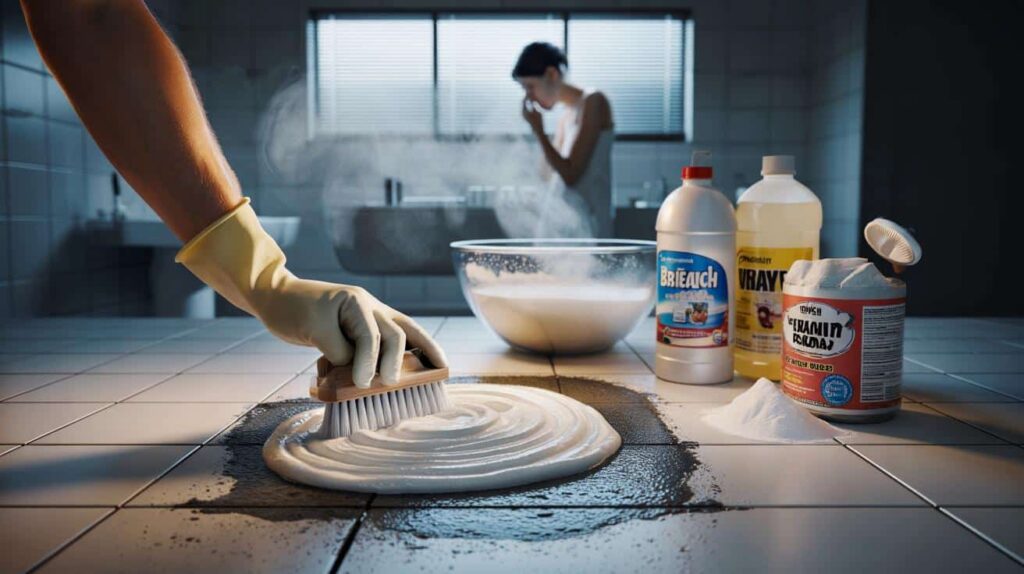
Your friend swore by this “magic mix” on TikTok. Three ingredients from the cupboard, a quick smear on the lines, and the grout comes out blindingly white. No scrubbing for hours, no expensive products, just a homemade paste that feels almost too good to be true.
You bend down, brush loaded, feeling half domestic god, half chemist. The paste foams, the stains retreat.

Then your throat starts to scratch, eyes prickling just a bit.
What’s actually floating in the air right now?

The viral grout trick that turns a bathroom into a chemistry lab
There’s a certain satisfaction in watching dirty grout surrender. One swipe, two swirls of a toothbrush, and the brownish lines shift toward light grey, then close to white. That’s the addictive appeal of the latest DIY cleaning hack circulating on social networks: mix three everyday ingredients, smear them on the grout, wait 10–15 minutes, rinse, and admire.
People post the recipe in comment sections like a secret spell: something acidic, something alkaline, something “to boost the power.” It looks simple. It feels clever. And it gives you a result that commercial products sometimes promise but rarely deliver in a quarter of an hour.
On one French Facebook cleaning group, a woman proudly shared before/after photos of her bathroom floor. In the first shot, the grout was almost the same color as her beige tiles, years of soap scum and shoe marks baked in. In the second, the lines were almost white, like she had just retiled the whole room.
The recipe? She detailed it casually: a generous squirt of bleach, a good splash of white vinegar, plus baking soda to make a paste that foams “like crazy.” Her post collected thousands of likes and a flood of “OMG trying this tonight” comments.
Hidden among the praise, a few lonely messages talked about headaches, coughing, and eyes that burned for hours.
Chemists who saw the videos weren’t surprised. The mix sounds familiar because it’s essentially a tiny, improvised lab reaction happening on your bathroom floor. Bleach brings sodium hypochlorite, vinegar brings acetic acid, baking soda brings sodium bicarbonate, and the combination doesn’t just “activate” cleaning, it can create gases you don’t want in your lungs.
That foaming, satisfying fizz? It’s not just “dirt leaving.” It’s a sign of reactions and releases. **When acids and chlorine-based products meet, the shine may be real, but the fumes are too.** And your nose, your throat, and your lungs pay the price long before the grout starts to sparkle.
What really happens when you mix those three “miracle” ingredients
The gesture is always the same. You grab a bowl or an old yogurt pot, squeeze in bleach “by eye,” pour vinegar until it smells strong, then spoon in baking soda until the texture looks spreadable. The paste begins to bubble. A faint white vapor sometimes rises, especially if the bathroom is small and the window shut “just for a few minutes.”
You kneel, brush in hand, and spread a generous layer across the grout lines. It clings nicely, thanks to the creamy texture. You set a timer for 10 or 15 minutes and walk away, pleased with yourself. By the time you come back, the paste has dried in some places, crusted in others. You rinse, wipe, and under the damp cloth the grout suddenly looks brand new. Magic, right?
The trap is that the mistake feels harmless. These are “normal” products, things every household owns: bleach to disinfect, vinegar to descale, baking soda for everything from fridges to drains. Your grandmother used them. Your neighbor uses them. You see them in eco-cleaning recommendations. How bad can it be to just mix a bit?

A young dad from Lyon told a toxicologist hotline that he’d “barely used a capful” of bleach for his grout mix. He ended up sitting by an open window, eyes streaming, chest tight, convinced he was having an allergy attack. Only later did he learn that bleach and vinegar together can release chlorine gas, even in amounts you can’t always see clearly but can definitely feel.
The chemistry is almost brutally simple. Bleach contains hypochlorite ions. Vinegar brings acid. Together, they can form chlorine gas, the same suffocating substance once used as a weapon. Baking soda, added on top “to make it bubble”, doesn’t neutralize the danger. It mainly changes the texture and contributes carbon dioxide to the mix.
So you end up with a thick, sticky paste that cleans well because it’s corrosive, oxidizing and acidic all at once. **Health experts warn that repeated exposure to these fumes can irritate airways, trigger asthma, and cause eye and skin irritation.** In a small, closed bathroom, that 15-minute waiting time feels short, but it’s long enough for gases to build up. Let’s be honest: nobody really airs a bathroom like a laboratory between two cleaning hacks.
How to get clean grout without turning your lungs into collateral damage
There is a way to use simple ingredients and still walk out of the bathroom without burning lungs. It starts with one decision: stop mixing random products “because they’re strong.” Pick one type of cleaner at a time. If you like vinegar, use only vinegar (diluted with water) and maybe a bit of dish soap. If you prefer bleach, use only bleach, diluted as indicated on the bottle.
For a gentle but effective grout-cleaning session, many professionals start with a paste of baking soda and water only, applied directly onto the grout. After 10–15 minutes, they scrub with a firm brush, then rinse well. For stubborn stains, they might follow with a separate step: a diluted, store-bought grout cleaner or oxygen-based bleach, never mixed into the same bowl.
The big misconception is that more products equal more power. In reality, more mixtures often equal more risk. Health agencies repeatedly repeat the same warning: never combine chlorine bleach with vinegar, ammonia, or acids. Yet, in the rush of everyday life, it’s easy to forget what’s “chlorine-based” or what counts as an acid.
If you already mixed things before reading this, you’re not alone. *We’ve all been there, that moment when we do something “everyone does” and only later read the fine print.* The key now is to slow down, ventilate whenever you clean, and read labels for phrases like “Do not mix with other household chemicals.”
Toxicologist Dr. Léa Martin summed it up this way during a radio show: “The grout might look perfect, but if your throat is burning and your eyes are watering, that’s not ‘the smell of clean’ — that’s your body warning you something is wrong.”
- Safe combo #1
Baking soda + water + a drop of dish soap, applied with a toothbrush, is slow but gentle for light to medium dirt. - Safe combo #2
Hydrogen peroxide (3%) + baking soda paste can brighten grout without the same toxic gas risks as bleach-acid mixes, when used in a ventilated space. - Habits that protect you
Open a window, wear simple gloves, rinse thoroughly, and never reuse a mystery mixture you find in an unlabelled bottle under the sink.
Between shiny grout and invisible fumes, choosing the right kind of clean
Once you’ve seen your grout go from grey to white in 15 minutes, it’s hard to go back. The quick result is seductive. Yet the more health agencies warn about “toxic fumes from casual mixing,” the more obvious a question becomes: what kind of clean do we really want? The one that looks dazzling in a photo, or the one that doesn’t leave you coughing into your sleeve after scrubbing?
Maybe the real shift is mental. Instead of treating our bathrooms like battlefields where only the strongest combos win, we could see them as spaces we share with our own lungs, our kids, our pets. A little less aggressive chemistry, a little more patience and ventilation.

Next time you see a viral “3-ingredient miracle” in your feed, you might pause for a second before reaching for the bleach bottle and vinegar. The grout can wait five more minutes. Your lungs will be around much longer.

| Key point | Detail | Value for the reader |
|---|---|---|
| Hidden risk of mixing cleaners | Bleach + vinegar (and similar combos) can release chlorine gas and other irritating fumes | Helps avoid dangerous DIY mixtures while cleaning grout |
| Safer grout-cleaning methods | Use single-product steps: baking soda paste, hydrogen peroxide, or dedicated grout cleaners with rinsing and ventilation | Offers practical alternatives that still deliver visible results |
| Simple protective habits | Ventilate rooms, wear gloves, read labels, never mix unknown products in one container | Reduces risk of irritation, headaches, and long-term respiratory issues |
FAQ:
- Can I ever mix bleach and vinegar for stronger cleaning?Health professionals advise against it. The acid in vinegar can react with bleach and release chlorine gas, which irritates eyes and lungs even in small spaces.
- What’s a safe homemade paste for dirty grout?A thick paste of baking soda and water, possibly with a drop of dish soap, applied with a toothbrush and rinsed well, is a common, low-risk option.
- Are all strong fumes dangerous when I clean?Not every smell is toxic, but harsh, stingy fumes that make you cough, tear up, or feel dizzy are a red flag. Leave the room, ventilate, and stop using that mix.
- Is hydrogen peroxide safer than bleach on grout?At low concentrations (around 3%), hydrogen peroxide is generally milder than chlorine bleach and can help lighten stains, as long as you ventilate and avoid mixing it with other products.
- How often should I deep-clean my grout?Most homes don’t need a deep scrub more than every few months. Regular mopping and quick spot-cleaning usually reduce the need for aggressive products.
