
The first time Emma saw her landlord step through the side gate, basket in hand, she thought he was lost.
He didn’t knock, didn’t call, just walked straight across the lawn and began picking figs from the tree by the fence, as if he were strolling through his own orchard.
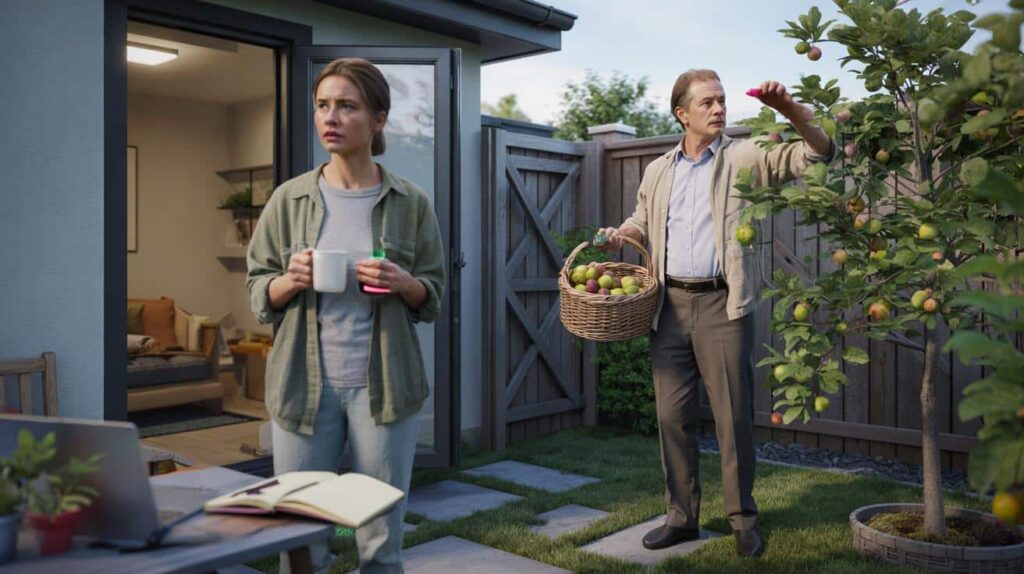
Her coffee went cold on the table while she watched through the kitchen window, half frozen, half furious.
He waved at her with a casual “Just grabbing my fruit!” like it was the most normal thing in the world.
Something in her stomach dropped.

In that moment, her garden stopped feeling like home and started feeling like a place on loan.
And that quiet, ugly feeling is now spreading among renters everywhere.

When your garden isn’t really yours
Emma’s story isn’t some quirky anecdote from a bad sitcom.
It’s becoming a recurring theme in tenant forums, neighborhood Facebook groups, and late-night kitchen rants.
The script is eerily similar.
A landlord plants or keeps fruit trees, vines, or vegetable beds on a rental property, then claims the right to enter “their” garden whenever the harvest is ready.
Sometimes they text first.
Sometimes they don’t.
For tenants, the message between the branches is brutal: your name may be on the lease, but your life is on my terms.
It’s not about a few plums.
It’s about power.
Scroll through any big rental subreddit and you’ll see the screenshots.
Landlords insisting they can come by “for a quick pick,” or that the lease doesn’t cover the “produce rights,” or that “this is how it’s always been done.”
One UK renter described her landlord turning up three weekends in a row to strip the apple tree bare, bringing friends as if it were a family outing.
Another in the US was told her rent was lower “because of the fruit,” as though the tenants should feel lucky to host an uninvited harvest.
These aren’t edge cases from some legal twilight zone.
They’re ordinary people, paying market rent, watching strangers walk past their windows to reach a tree they water and care for all year.
Legally, the picture is more nuanced than many landlords like to claim.
In most countries, the right to “quiet enjoyment” of a rented home includes the garden and outdoor spaces.
That right doesn’t vanish just because there’s a pear tree involved.
Yes, landlords keep ownership of the property itself, trees and all.
But tenants usually rent exclusive use of the whole space, not just the square meters inside the walls.
Entering that space without clear consent or proper notice can quickly drift into harassment or breach of contract.
The legal details shift by jurisdiction, yet a simple principle sits underneath: when you rent a home with a garden, you’re not just renting the view from the window.
You’re renting the feeling of being safe on your own patch of ground.

Drawing the line without starting a war
The first move in these awkward fruit battles rarely happens in court.
It starts with a calm, clear conversation.
Not a text fired off in anger, but a message you’d be willing to read out loud in front of a judge if you had to.
Spell out how you experience the landlord’s visits.
Say that surprise entries into the garden make you feel watched, unsettled, or unsafe.
Not dramatic.
Just honest.
Then move from feeling to boundary.
You can say, in plain language, that no one enters the garden without prior agreement, and that any access has to work around your schedule, your consent, and your privacy.
This is where many tenants freeze.
They worry that pushing back means risking a rent hike, a hostile inspection, or a “non-renewal” next year.
That fear is real, and landlords know it.
One practical tactic is to shift the frame from conflict to clarity.
Offer options: maybe the landlord can collect windfalls you leave by the gate, or agree on one pre-arranged harvest day when you’re home.
Some tenants propose a symbolic buyout: “If I care for the tree and harvest it, the fruit is part of my use of the property.”
Let’s be honest: nobody really does this every single day.
Most of us avoid talking about it until the third time we catch a stranger in our supposedly private space.
The earlier you set the line, the less personal it feels.
Sometimes the plain truth is disarmingly simple: when a landlord insists on walking into your garden for “their” fruit, they’re not just picking cherries — they’re testing how much of your home they still own in practice.
- Put it in writing
Send an email summarizing what access you do and don’t consent to, including the garden. Keep it factual, not emotional. - Ask for a lease clarification
If the garden isn’t mentioned, ask for a short addendum stating that outdoor areas are part of your private, exclusive use during the tenancy. - Offer reasonable alternatives
Suggest options like you harvesting and leaving a small share in a box, or scheduling one annual visit at a fixed time. - Document every visit
Note dates, times, and whether you were informed. Photos or short videos of unannounced entries can be crucial if things escalate. - Know your local rules
Tenant unions, housing charities, or legal aid sites often have simple guides on entry rights, privacy, and harassment in your area.
What this says about renting, power, and “home”
Once you see it, you can’t unsee it.
A landlord crossing the garden line for “just some fruit” is acting out a bigger story: who is allowed to feel at home in a place they don’t own on paper.
For many renters, this isn’t about figs, lemons, or grapes.
It’s about the creeping sense that your lifetime is built on land someone else can walk into whenever they feel like it.
That your Sunday coffee on the patio is a privilege, not a right.

*We’ve all been there, that moment when a tiny incident suddenly reveals the whole imbalance of the situation.*
Once your privacy has been shaken, you start second-guessing every sound at the gate, every car door outside, every casual “I might swing by” message.

| Key point | Detail | Value for the reader |
|---|---|---|
| Know your “quiet enjoyment” right | Most leases and laws protect your privacy in all rented spaces, including gardens | Gives you a legal and moral backbone when you push back |
| Set boundaries early | Address garden access the first time it happens, and follow up in writing | Reduces drama, stops patterns forming, protects your peace at home |
| Use support networks | Tenant unions, legal clinics, and online communities share scripts and case examples | Helps you act smarter, not louder, and feel less alone in the fight |
FAQ:
- Question 1Can my landlord come into the garden whenever they want to pick fruit?
- Answer 1
- Question 2What should I say the first time this happens?
- Answer 2
- Question 3Should the garden be mentioned in the lease?
- Answer 3
- Question 4What if I’m scared they’ll not renew my lease if I refuse?
- Answer 4
- Question 5Is this really worth fighting over “just some fruit”?
- Answer 5
