
The first thing she noticed wasn’t the missing fruit. It was the half-crushed lavender by the garden gate and two sets of muddy footprints pressed into the damp soil. Her landlord’s car was still parked outside when she came home from work, but he was nowhere to be seen. Then she looked up at the old plum tree. Branches stripped. Buckets stacked by the shed. A ladder still leaning, like someone had left in a hurry.
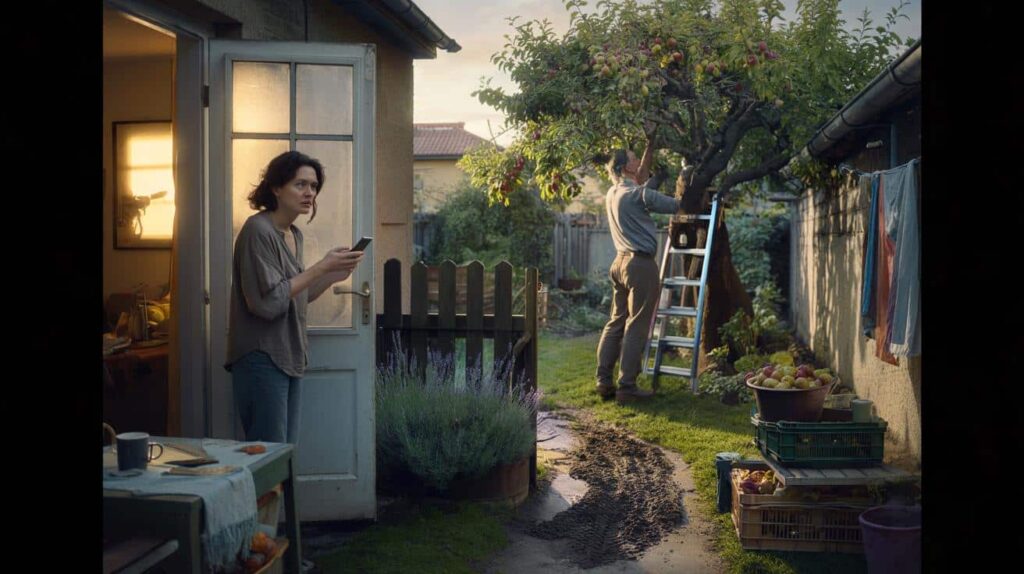
Her heart raced. This was her garden, her sanctuary, the one place the world couldn’t barge in without knocking. Or so she thought.
Was this a legal right, or just a landlord who’d gone way too far?

When your “private” garden stops feeling private
For a lot of tenants, the garden is what sells the lease. A patch of lawn for summer dinners, a tree for shade, a corner where nobody’s watching. You sign the rental contract, you pay the deposit, and that outdoor space instantly becomes part of your routine, your mental health, your home.

So when the landlord wanders in without warning to harvest “his” apples or figs, something cracks. It’s not just about fruit in a basket. It’s about a stranger’s footsteps in the place where you hang your laundry, argue with your partner, or drink coffee in your pajamas.
Stories like this are popping up across tenant forums and social media. A woman in London discovered her landlord in her garden at 7 a.m., happily filling crates with pears while she was still in bed. A couple in California came home from a weekend away to find their lemon tree stripped and their landlord’s Instagram full of “homegrown harvest” pictures. Another tenant in Sydney watched their landlord walk right past the living room window with a ladder, without so much as a text.
The reactions are always the same: shock, a punch of anger, and then that awkward doubt — “Am I even allowed to complain about this?”
Legally, the situation is much less fuzzy than many landlords suggest. In most countries, when a property is rented, the tenant gets exclusive possession of every part included in the lease: the house, the garage, and yes, the garden, patio, or balcony stated in the contract. That means the landlord can’t just stroll in “because the tree is mine” or “because I planted it ten years ago”. They usually need proper notice and a legitimate reason linked to maintenance, inspection, or repairs.
Ownership of the land doesn’t cancel out a tenant’s right to quiet enjoyment and privacy. **Those rights don’t stop at the back door.**
How to react when your landlord “harvests” your garden
The first thing to do is slow down before you explode. Take photos of what you find: the picked trees, the footprints, any equipment left behind. Note the date and time. If there are messages where the landlord admits coming in for the fruit, screenshot them. That’s not being dramatic, that’s building a clear record.
Then read your lease. Look closely at sections on “premises”, “garden use”, “access”, and “landlord entry”. If the garden, yard, or outdoor area is included, that usually means you have the right to control who enters that space day-to-day.
Next step: talk, but in writing. A short, calm email often sets the tone. Describe what happened, say how it made you feel, and state clearly that you expect prior notice and your consent before anyone enters the garden again. You don’t need legal jargon. Something as simple as “I value my privacy and I wasn’t comfortable with you entering the garden without my knowledge” goes a long way.

We’ve all been there, that moment when you’re rehearsing a message three times in your head because you don’t want to sound “difficult”. Let’s be honest: nobody really wakes up eager to start a conflict with their landlord.
This is also where outside support helps. Many regions have tenant advocacy groups, city mediation services, or housing hotlines that can confirm what your rights actually are in your area. Send them your lease, explain the situation, and ask for a plain-language answer. Often, just knowing the law gives you the courage to push back politely but firmly.
“I felt crazy at first, like maybe I was overreacting,” one tenant told me. “Then the legal advisor said, ‘No, he cannot enter your garden to take fruit without your permission.’ That one sentence changed everything.”
- Ask for written notice before any visit to the property.
- State clearly that the garden is part of your rented home.
- Offer a compromise if you feel comfortable (sharing part of the harvest, specific times).
- Keep every message and reply in an email thread.
- Reach out to a tenants’ union or lawyer if the behavior repeats.
Where the law ends and the power games begin
What makes these stories hurt is not just the legal breach, it’s the power imbalance wrapped around it. Your landlord controls your lease, your rent, your sense of stability. So when they casually let themselves into your garden “just to grab a few peaches”, it doesn’t feel like a neutral act. It feels like a reminder of who owns the keys, the land, the future of your tenancy.
*That’s why a simple basket of fruit can suddenly feel like a battle line.*
In some cases, landlords genuinely think they’re doing nothing wrong. They planted the tree, they watched it grow, they’ve always picked “their” fruit. Maybe previous tenants never complained, or they quietly accepted the unspoken rule. Tenants, on the other hand, often move in assuming the word “private” actually means private. Both sides are walking around with different maps of the same space.
The clash happens when those maps finally collide: one claiming ownership, the other claiming privacy.
Once you understand that, the question shifts from “Is he allowed to do this?” to “What boundaries am I willing to set here?” The law usually backs the tenant more than people think, especially on peaceful enjoyment and unlawful entry. But using that protection means being willing to say no, to put conditions in writing, to risk being seen as “the tenant who complains”. **That’s not abuse of power from your side. That’s you insisting that your home — including your garden — is not a stage where someone else can walk in mid-scene.**

The rest is a conversation our housing systems are still avoiding: when you rent, how much of your life do you actually own?

| Key point | Detail | Value for the reader |
|---|---|---|
| Garden = rented space | If the garden is part of the lease, the tenant usually has exclusive possession of it. | Helps you know when a landlord’s entry crosses a legal line. |
| Consent and notice | Landlords typically need notice and a valid reason to enter any rented area, inside or outside. | Gives you a clear standard to request in writing. |
| Document and respond | Photos, dates, and calm emails create a solid record and reset boundaries. | Shows concrete steps to protect your privacy without escalating blindly. |
FAQ:
- Can my landlord enter my garden without telling me?
In most places, no. If the garden, yard, or outdoor space is part of your rented premises, your landlord usually needs notice and a proper reason to enter, just like with the interior.- What if the landlord owns the fruit trees?
Even if the landlord planted or owns the trees, your right to quiet enjoyment of the rented space often comes first. Ownership of the tree doesn’t automatically allow unannounced entry or harvesting.- Is it trespassing if they come in anyway?
It can be. Depending on your local laws, repeated entry without notice or consent may be considered unlawful entry or harassment. A tenants’ association or lawyer can tell you how your region treats it.- Should I offer to share the fruit as a compromise?
Only if you actually want to. Some tenants are happy to agree on a harvest day together, others prefer full control. A written agreement avoids future awkwardness.- What if I’m afraid of retaliation if I complain?
Many jurisdictions forbid retaliatory actions like rent hikes or evictions in response to a tenant asserting their rights. Get advice from a tenant support group, document everything, and don’t stay alone with that fear.
