
The other night, I was standing in my kitchen, staring at a pot of potatoes bubbling in plain water, and I suddenly felt… bored. The smell was flat, like background noise. The kind of cooking you do on autopilot when your mind is already halfway on the dishes and the emails you haven’t answered. So I did what we all secretly do when we’re tired of our own routine: I started messing around. I grabbed the ends of tired carrots, an onion on its last good day, a half lemon, a handful of herbs, and tossed everything into the pot. Ten minutes later, my little apartment smelled like a bistro.
I realised I wasn’t cooking potatoes anymore.
I was cooking an experience.
And I haven’t gone back to plain water since.
Why plain water potatoes feel like a missed opportunity
Boiled potatoes are the definition of neutral. They’re the blank page of the plate, waiting politely for butter, salt, or sauce to save them. That’s fine on a rushed Tuesday, but over time, it starts to feel like you’re wasting potential. The heat, the steam, all that time on the stove… for what? Soft, mild cubes that taste like whatever you throw on them at the last second.
Once you taste potatoes cooked in a fragrant broth, that neutrality suddenly feels like a mistake.
You realise the flavor could start much earlier in the process.
The “click” moment for me came during a dinner at a friend’s place. She served potatoes she called “fake confit.” Same shape as regular boiled potatoes, same simple look. But the taste was richer, deeper, almost like they’d spent the afternoon hanging out with a roast chicken.
I asked what she’d done. She shrugged and said: “I just don’t use water anymore. I cook them in what’s basically a lazy broth.”
Nothing fancy. Vegetable scraps, garlic, salt, and a bay leaf. Yet every forkful felt like it had a story.

There’s a simple reason this works so well. Potatoes are sponges. While they simmer, they quietly drink up whatever they’re sitting in. In water, they pull almost nothing except a bit of salt. In an aromatic broth, they soak in subtle layers: sweetness from carrot, depth from onion, warmth from garlic, a slight grassiness from herbs.
You’re not turning them into soup. You’re giving their insides a head start on flavor.
*The end result tastes like you cooked longer and harder than you actually did.*

The aromatic broth that changes everything
Here’s the method that changed my weeknight potatoes for good.
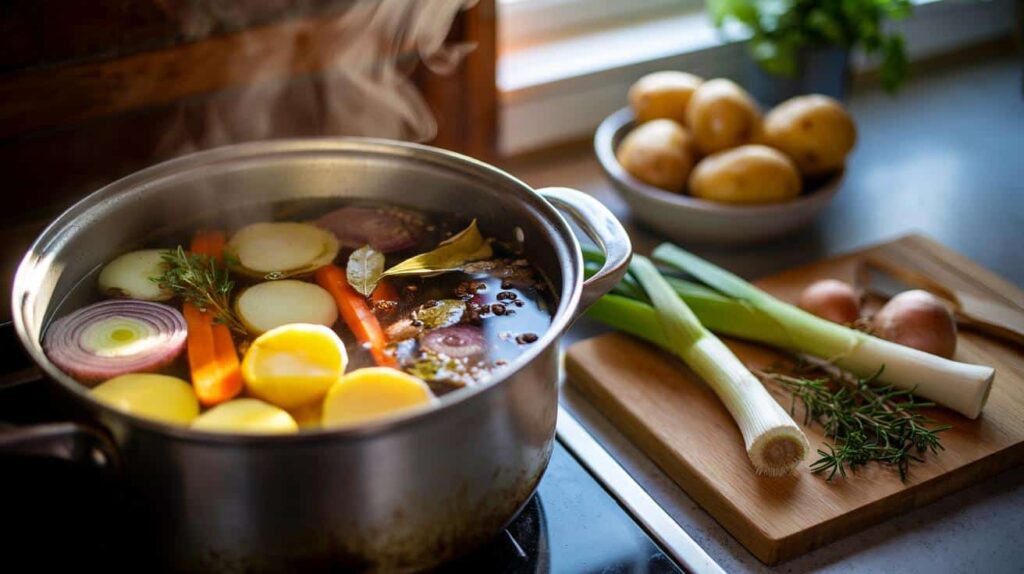
Instead of filling your pot with plain water, cover the potatoes with a light broth made on the spot. Toss in onion wedges (no need to peel fully), a carrot cut in big chunks, a few garlic cloves crushed under the knife, and the green tops of leeks if you have them. Add a bay leaf, a sprig of thyme or rosemary, a teaspoon of salt, and a few peppercorns.
Pour in just enough water to barely cover everything. Bring to a gentle simmer, not a violent boil, and let time do its work.
Here’s where many people give up: they think broth means complexity. That you need bones, hours, and seven kinds of vegetables. Let’s be honest: nobody really does this every single day.
This broth is the opposite. It’s scrappy, forgiving, built from what’s already in your fridge. The soft celery stalk you forgot, the parsley stems you usually throw away, those last two mushrooms looking a bit sad.
You’re not aiming for a restaurant consomme. You’re just giving your potatoes a fragrant bath instead of a bland one.
 Michael Schumacher, the new separation
“Once you start cooking potatoes in aromatic broth, plain water tastes like silence,” a chef told me one afternoon. “You don’t need more technique, you just need more aroma in the pot.”
- Onion or shallot – cut in quarters, skin mostly on, brings sweetness and depth.
- Carrot or parsnip – big chunks, for a round, gentle sweetness.
- Garlic cloves – lightly crushed, not chopped, so they perfume without dominating.
- Fresh herbs – thyme, rosemary, parsley stems, or bay leaf, one or two is enough.
- Acid touch – a slice of lemon, a dash of vinegar, or a piece of tomato for brightness.
- Salt and peppercorns – not too much, you can always adjust at the end.
What this tiny change does to your everyday cooking
The first time you strain your potatoes out of this broth and taste one, still steaming, something shifts. Suddenly, “just boiled potatoes” work on their own. You can drizzle olive oil and stop there. You can crush them roughly with a fork, no butter yet, and they’re already interesting.
And the broth you have left? That’s liquid gold. It’s a base for soup, a way to cook rice, or a shortcut for a quick sauce. One pot, two victories.
There’s also a quiet emotional effect. We’ve all been there, that moment when dinner feels like another task to survive, not a moment to enjoy. Dropping a few aromatics into the pot doesn’t fix your day, but it nudges it. The kitchen smells warmer. Things feel slightly more under control.
You start looking at the bottom of the vegetable drawer differently: not as guilt, but as possibilities.
A forgotten half-onion turns into flavor, not waste.

If you try this, you may notice a ripple effect on the way you cook everything else. Potatoes are just the gateway. Once you get used to them simmering in broth, you start wondering: what if I poached chicken this way? What if my lentils met the same treatment?
This is the quiet revolution of cooking: not new gadgets, not complicated recipes, but small, repeatable shifts. Using broth instead of water is one of those understated changes that makes the everyday plate feel cared for.
Not fancy. Just more alive.

| Key point | Detail | Value for the reader |
|---|---|---|
| Broth instead of water | Simmer potatoes in a quick aromatic broth (onion, carrot, garlic, herbs) | Deeper flavor without extra effort or special ingredients |
| Use kitchen scraps | Onion skins, herb stems, tired vegetables become aroma | Reduces waste and saves money while upgrading taste |
| Reusable cooking liquid | Leftover broth can start soups, grains, or sauces | One pot creates multiple meals and shortcuts |
FAQ:
- Can I use store-bought stock instead of making a quick broth?
Yes, but dilute it with water so it’s not too salty or overpowering. Add a few fresh aromatics (like garlic or herbs) to give it a homemade touch.- Which potatoes work best with this method?
Waxy or all-purpose potatoes (Yukon Gold, Charlotte, Nicola) hold their shape and soak up flavor nicely. Floury potatoes also work if you plan to mash them afterward.- How long should I cook the potatoes in the broth?
Usually 15–25 minutes, depending on size. Start testing with the tip of a knife around the 15-minute mark; they’re done when it slides in easily.- Can I reuse the same broth several times?
You can cool it quickly, store it in the fridge for up to 3 days, and use it once more for soup, grains, or another batch of vegetables. After that, the flavor and safety decline.- What if I don’t have fresh herbs or many vegetables?
Even just onion, garlic, and a bay leaf or dried herb mix can transform the water into a simple aromatic broth. Start small; the difference is still real.
