Performing 100 bodyweight squats a day can improve lower body strength, muscle tone, and functional movement, especially when combined with proper form and recovery practices ✅. However, doing so without attention to technique or progression may lead to overuse and stalled results ⚠️. Adding squats with resistance bands increases muscle activation, particularly in the glutes and hip stabilizers, making the exercise more effective for building strength and correcting imbalances 🏋️♀️. This guide explains what 100 daily squats can do, how resistance bands enhance the workout, and how to structure a sustainable routine that avoids injury while maximizing benefits. If you’re new to fitness or looking to boost lower-body training efficiency, this approach offers an accessible entry point — provided you prioritize form, variation, and rest.
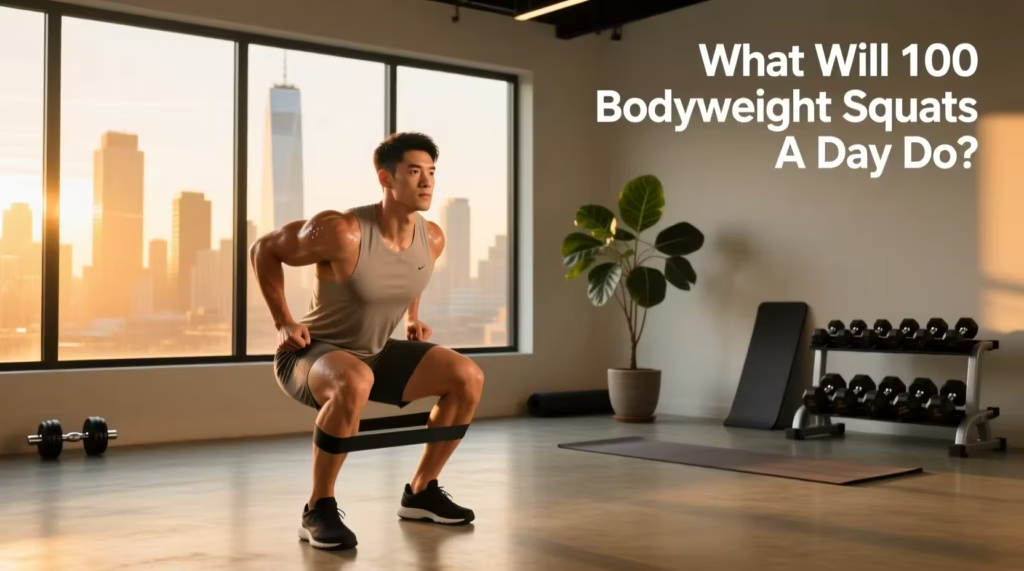
About 100 Daily Squats and Resistance Band Training
The practice of doing 100 bodyweight squats per day has gained traction as a minimalist fitness challenge aimed at building leg strength and endurance without equipment 🌿. It’s often marketed as a quick way to tone the glutes and thighs through consistency rather than intensity. When performed correctly, bodyweight squats engage major lower-body muscle groups including the quadriceps, hamstrings, and gluteus maximus 1. They also require core engagement to maintain balance and spinal alignment, contributing to improved posture and stability.
Resistance bands add variable tension to the squat movement, increasing difficulty without requiring weights 🛠️. These elastic tools are portable, affordable, and adaptable to all fitness levels. By placing bands around the legs or anchoring them overhead or underfoot, users alter resistance patterns to target specific muscles or phases of the squat. For example, loop bands above the knees encourage outward knee drive, activating the gluteus medius — a key stabilizer often underused in standard squats 2.
Why 100 Daily Squats with Resistance Bands Is Gaining Popularity
This combination appeals to individuals seeking efficient, equipment-light workouts that fit into busy schedules ⏺️. The rise of home-based fitness and interest in functional training has fueled demand for exercises that mimic real-life movements like sitting and standing. Squats naturally align with these goals, and adding resistance bands enhances their effectiveness without needing a gym membership.
Moreover, social media challenges promoting the “100 squats a day” rule have made the routine viral, especially among beginners looking for measurable progress 📈. Users report visible improvements in leg definition and stamina within weeks. Meanwhile, fitness professionals advocate for banded variations to correct common form issues such as knee cave-in or weak glute engagement. As awareness grows about muscle imbalances and joint stability, integrating resistance bands becomes not just a performance booster but a preventive tool.
Approaches and Differences
Different approaches to daily squat routines yield varied outcomes depending on execution, progression, and use of aids like resistance bands.
- ✅ Standard Bodyweight Squat Routine (100 reps/day)
- Pros: No equipment needed; easy to start; improves baseline strength and mobility.
- Cons: Risk of plateau due to lack of progressive overload; potential for poor form if fatigue sets in.
- ⚡ Bodyweight Squats with Loop Resistance Bands
- Pros: Enhances glute and hip activation; improves squat mechanics; reduces risk of knee valgus.
- Cons: Requires proper band placement; may feel awkward initially.
- 🏋️♀️ Progressive Banded Squats (Adding Sets Over Time)
- Pros: Allows gradual increase in volume and resistance; supports long-term adaptation.
- Cons: Needs planning; may require multiple band strengths.
- 🔄 Split Routine (e.g., 50 squats morning + 50 evening)
- Pros: Reduces fatigue per session; spreads muscular stress.
- Cons: Harder to maintain consistency; splits focus.
Key Features and Specifications to Evaluate
To assess whether a daily squat routine suits your needs, consider these measurable factors:
- Form Quality: Maintain a neutral spine, chest up, and knees aligned with toes throughout the movement.
- Range of Motion: Aim for at least parallel (hip below knee level), but only if form remains intact.
- Muscle Engagement: Feel activation in quads, glutes, and hamstrings — not just joints or lower back.
- Recovery Signs: Persistent soreness beyond 72 hours or joint discomfort suggests overtraining.
- Band Resistance Level: Choose bands by tension (light, medium, heavy) based on ability to complete reps with control.
- Progression Plan: Track weekly changes in ease of execution, added reps, or increased band resistance.
Pros and Cons
✨ Benefits: Improved lower-body strength, better daily function, enhanced core stability, increased energy, and accessibility anywhere.
- ✅ Pros:
- Builds functional strength used in everyday activities like climbing stairs or lifting objects.
- Promotes discipline and habit formation through simple, repeatable action.
- Can be modified with resistance bands to prevent plateaus and target weak areas.
- Requires no equipment beyond optional bands, making it ideal for travel or small spaces.
- ❗ Cons:
- Risk of overuse injury if done daily without adequate recovery.
- Limited hypertrophy stimulus without added resistance or progression.
- Potential reinforcement of poor technique if form deteriorates during high-rep sets.
- May not provide sufficient challenge for advanced exercisers after initial adaptation.
How to Choose the Right Daily Squat Approach
Selecting the best method depends on your current fitness level, goals, and lifestyle. Follow this step-by-step decision guide:
- Evaluate Your Starting Point: Can you perform 20–30 bodyweight squats with good form? If not, begin with fewer reps and master technique first.
- Define Your Goal: Are you aiming for general fitness, muscle tone, or strength gains? Banded squats are better for targeted strength development.
- Choose Band Type: Use loop bands above knees for glute activation; anchored bands below feet for added concentric resistance.
- Plan for Variation: Rotate between wide-stance, narrow, and split squats to avoid muscular imbalances.
- Schedule Recovery: Avoid doing intense squat sessions two days in a row. Alternate with upper-body or low-impact work.
- Avoid These Pitfalls:
- Skipping warm-up or cool-down stretches.
- Letting fatigue compromise form in later sets.
- Ignoring pain or persistent soreness as a signal to rest.
- Expecting rapid transformation without nutrition and sleep support.
Insights & Cost Analysis
The financial investment for this routine is minimal. A set of loop resistance bands typically costs between $10–$25 USD, depending on material quality and resistance range. Most users find 3–5 bands (light to heavy) sufficient for progressive training. Since no other equipment is required, this approach offers high value for budget-conscious individuals.
Compared to gym memberships (averaging $40–$80/month) or weight sets, the cost-effectiveness is clear. Even digital programs or apps focused on bodyweight training often charge recurring fees, whereas this method relies on self-guided practice. Long-term sustainability comes from low barriers to entry and flexibility in scheduling.
Better Solutions & Competitor Analysis
| Method | Best For | Potential Limitations |
|---|---|---|
| 100 Bodyweight Squats Daily | Beginners, habit-building, minimal equipment access | Plateau risk, limited strength gain, form breakdown |
| Squats with Resistance Bands | Glute activation, form correction, progressive overload | Requires learning proper setup, band durability varies |
| Goblet Squats (Dumbbell/Kettlebell) | Muscle growth, deeper engagement, controlled loading | Requires equipment, steeper learning curve |
| Barbell Back Squats | Maximal strength, athletic performance | High skill requirement, injury risk without supervision |
Customer Feedback Synthesis
Analysis of user experiences reveals consistent themes:
- ⭐ Frequent Praise:
- “Noticeable lift in my glutes after four weeks.”
- “Helped me fix knee wobble during squats using a band.”
- “Easy to do at home during work breaks.”
- 📌 Common Complaints:
- “Soreness lasted too long — I didn’t realize I needed rest days.”
- “Bands snapped after a few months of daily use.”
- “Hard to stay motivated doing the same thing every day.”
Maintenance, Safety & Legal Considerations
To ensure safety and longevity of practice:
- Inspect resistance bands regularly for cracks, tears, or loss of elasticity. Replace if damaged.
- Always perform squats on a non-slip surface to prevent falls.
- Never force depth beyond what your mobility allows — prioritize form over range.
- Listen to your body: sharp pain, joint instability, or swelling means stop immediately.
- No certifications or legal regulations govern personal squat routines, but follow manufacturer guidelines for band usage.
Conclusion
If you need a simple, low-cost way to build lower-body strength and improve daily movement, doing 100 bodyweight squats a day — especially with resistance bands — can be effective 12. However, success depends on maintaining proper form, allowing recovery time, and progressively challenging your muscles. For beginners, this routine builds foundational strength and confidence. For intermediate exercisers, adding resistance bands introduces needed variation and activation. Avoid treating it as a one-size-fits-all solution; tailor volume, frequency, and resistance to your individual capacity and goals. When integrated mindfully, this approach supports long-term physical resilience and functional fitness.
Frequently Asked Questions
- What will 100 bodyweight squats a day do?
- It can increase leg strength, improve muscle tone in the glutes and thighs, enhance core stability, and boost daily functional movement — especially when combined with proper recovery and form.
- Are squats with resistance bands more effective than bodyweight squats?
- Yes, resistance bands increase muscle activation throughout the movement, particularly in the glutes and hip stabilizers, leading to greater strength development and improved technique over time.
- Can I do 100 squats every day without rest?
- It’s not recommended. Muscles need recovery time to repair and grow. Consider alternating intense squat days with lighter activity or focusing on other muscle groups to avoid overuse.
- How do I choose the right resistance band for squats?
- Select a band that provides noticeable tension but allows you to complete your reps with controlled form. Start with light-to-medium resistance and progress as strength improves.
- Will 100 squats a day help lose fat?
- Squats alone won’t spot-reduce fat, but they contribute to overall calorie expenditure and muscle building, which can support fat loss when paired with balanced nutrition and consistent physical activity.