Doing 100 kettlebell swings a day can improve cardiovascular endurance, build posterior chain strength, and boost daily energy levels—especially for beginners or those establishing a consistent routine 1[5]. However, without proper form, adequate recovery, or variation in training, this challenge carries significant risks, including lower back strain and overuse injuries 2[7]. For most people, splitting the reps into sets, using appropriate weight, and incorporating rest days is safer and more sustainable than performing all 100 unbroken daily swings.
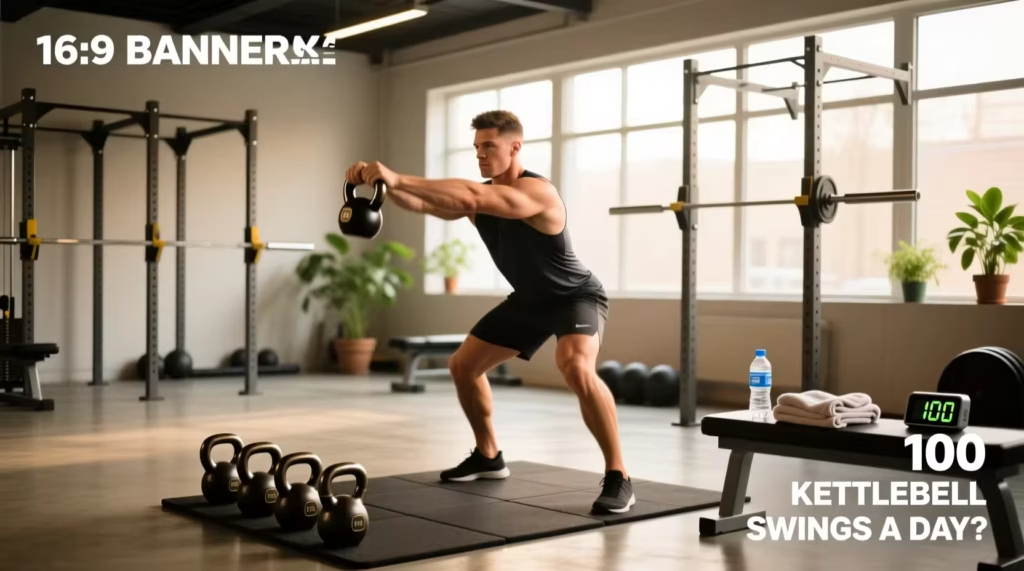
About 100 Kettlebell Swings a Day
The 100 kettlebell swings a day challenge has gained traction as a minimalist fitness trend, often promoted on social platforms as a quick way to build stamina and burn calories. It involves performing one hundred repetitions of the kettlebell swing exercise each day, typically using a single bell and focusing on hip-driven movement.
This routine falls under the broader category of strength training with kettlebells, which emphasizes explosive power, full-body engagement, and functional movement patterns. The kettlebell swing itself is a dynamic hip hinge motion that primarily targets the glutes, hamstrings, core, and lower back—collectively known as the posterior chain.
Common scenarios where individuals adopt this challenge include building morning movement habits, improving work capacity during short breaks, or jumpstarting physical activity after periods of inactivity. Because it requires minimal equipment and space, it appeals to home exercisers and time-constrained individuals seeking efficient workouts.
Why 100 Kettlebell Swings a Day Is Gaining Popularity
The rise of the 100 kettlebell swings challenge reflects broader shifts toward time-efficient, accessible fitness routines. In an era where many struggle to commit to long gym sessions, high-intensity, low-time-commitment exercises are increasingly appealing.
One key driver is its presence on platforms like TikTok and Instagram, where users share progress videos and emphasize mental discipline alongside physical gains. The simplicity of “just 100 swings” makes it easy to remember and start, lowering the psychological barrier to entry.
Additionally, the exercise delivers noticeable feedback quickly—users often report feeling stronger, more alert, and physically engaged within days. This immediate sensory return reinforces adherence, making it a popular choice for those exploring kettlebell training for beginners.
Another factor is the growing interest in functional fitness—training that enhances real-world movement capabilities. Since the swing mimics natural hip extension used in lifting and sprinting, it aligns well with goals around mobility, posture, and daily performance.
Approaches and Differences
People attempt the 100 swings challenge in various ways, each with distinct trade-offs in safety, effectiveness, and sustainability.
✅ Unbroken Daily Sets (High Risk)
Some aim to complete all 100 swings in one continuous set. While this may seem impressive, it dramatically increases fatigue, leading to compromised form and higher injury risk 3.
- Pros: Builds intense muscular endurance and mental grit.
- Cons: High chance of technique breakdown; not recommended for beginners.
✅ Split Into Sets (Recommended)
Breaking the 100 swings into smaller clusters—such as 5 sets of 20 or 10 sets of 10—allows for better focus on form and controlled pacing.
- Pros: Maintains quality movement; reduces injury risk; easier to sustain.
- Cons: Requires planning and consistency across multiple sessions.
✅ Alternate-Day Routine (Balanced)
Instead of daily execution, some perform the challenge every other day to allow muscle recovery while maintaining frequency.
- Pros: Supports adaptation and reduces overuse risk.
- Cons: May feel less habitual for those seeking daily structure.
Key Features and Specifications to Evaluate
To assess whether the 100-kettlebell-swing routine suits your needs, consider these measurable factors:
- Proper Form Execution: Can you maintain a neutral spine, engage hips (not arms), and avoid rounding your back throughout?
- Repetition Management: Are you able to split reps into sets with short rests to preserve technique?
- Weight Selection: Is the kettlebell 5–10% of your body weight? Heavier isn’t always better 4.
- Recovery Integration: Do you include rest days or complementary mobility work?
- Progress Tracking: Are you monitoring improvements in ease of completion, reduced soreness, or increased energy?
These criteria help determine if the practice is enhancing fitness or potentially causing harm due to misapplication.
Pros and Cons
| Benefit | Risk/Drawback |
|---|---|
| Improved Conditioning & Endurance: Elevates heart rate and strengthens posterior chain muscles [2][5] | Injury Risk from Poor Form: Fatigue can lead to rounded back or shoulder strain [2][3] |
| Full-Body Engagement: Activates glutes, core, back, and grip muscles efficiently [5] | Lack of Recovery Days: Daily repetition without rest may impair tissue repair [8] |
| Mental Discipline: Encourages consistency and daily commitment [1] | Limited Hypertrophy: Not optimal for building large muscle mass compared to resistance lifts |
| Fat Burning Potential: Increases calorie expenditure and EPOC effect [8] | Movement Imbalances: Overemphasis on posterior chain may neglect anterior muscles |
| Better Posture & Balance: Strengthens back and improves coordination [3] | Grip Fatigue: Sustained hold may cause forearm discomfort over time |
How to Choose a Safe and Effective Approach
If you’re considering the 100 kettlebell swings a day challenge, follow this step-by-step decision guide to stay safe and get results:
- Assess Your Experience Level: Beginners should prioritize learning proper hip hinge mechanics before adding volume.
- Select Appropriate Weight: Start with 8–16 kg (18–35 lbs) for women and 16–24 kg (35–53 lbs) for men, adjusting based on comfort and control.
- Break Reps Into Sets: Use 5–10 sets with 30–60 seconds rest between to maintain form.
- Incorporate Rest Days: Allow at least one full rest day per week to prevent overuse.
- Add Complementary Exercises: Include planks, push-ups, or squats to balance muscle development.
- Avoid Pushing Through Pain: Distinguish between effort and actual discomfort—stop if pain arises.
- Record Your Form: Film yourself periodically to check for technique drift.
Avoid attempting maximal weights or unbroken sets early on. Focus on consistency, not intensity, at first.
Better Solutions & Competitor Analysis
While the 100 swings challenge offers certain benefits, alternative routines may provide more balanced outcomes.
| Approach | Best For | Potential Drawbacks |
|---|---|---|
| 100 Daily Swings (Split Sets) | Building daily habit, cardio endurance | Risk of imbalance; limited strength gains |
| 3x Weekly Kettlebell Circuit | Strength, power, and symmetry | Requires more time and planning |
| Progressive Resistance Training | Muscle growth and joint stability | Slower visible results; steeper learning curve |
| HIIT with Mixed Modalities | Fat loss and cardiovascular health | Higher overall fatigue; supervision advised |
A structured kettlebell program with varied movements (e.g., cleans, presses, snatches) and periodized volume typically yields superior long-term adaptations compared to repetitive swing-only routines.
Customer Feedback Synthesis
Analysis of user discussions reveals recurring themes about the 100 swings challenge:
⭐ Frequent Praise: Users appreciate the simplicity, time efficiency, and energy boost. Many note improved posture and stronger glutes within weeks.
❗ Common Complaints: Several report lower back tightness, elbow irritation, or plateauing after initial progress. Some admit abandoning the routine due to monotony or accumulated fatigue.
Success stories often involve those who modified the plan—adding rest days, varying weights, or combining swings with other exercises.
Maintenance, Safety & Legal Considerations
Safety starts with mastering technique. Invest time in coaching videos or certified instruction before committing to high-volume routines. Use a flat, non-slip surface and ensure clearance around you during swings.
Maintain your kettlebell by checking for cracks or rough edges regularly. Store it in a dry area to prevent rust, especially if made of cast iron.
No legal regulations govern personal use of kettlebells, but gyms or group instructors may be liable for improper guidance. Always assume responsibility for your own form and progression.
Conclusion
If you need a simple way to build daily movement consistency and enhance posterior chain endurance, the 100 kettlebell swings a day challenge can be a useful starting point—provided you prioritize form, use manageable sets, and listen to your body. However, if your goal is balanced strength, muscle growth, or long-term joint resilience, a diversified training approach with recovery built in will serve you better. Think of the swing challenge not as a standalone solution, but as one tool among many in a thoughtful fitness strategy.
Frequently Asked Questions
What happens if I do 100 kettlebell swings every day?
You may experience improved stamina, stronger glutes and hamstrings, and increased calorie burn. However, doing them daily without rest increases the risk of overuse injuries and muscle imbalances.
Are 100 kettlebell swings good for fat loss?
They can contribute to fat loss by raising heart rate and increasing energy expenditure, especially when combined with a balanced diet. But they’re most effective as part of a broader active lifestyle.
How heavy should my kettlebell be for 100 swings?
Aim for 5–10% of your body weight. For most beginners, 8–16 kg (18–35 lbs) is appropriate. Choose a weight that allows you to finish all reps with good form.
Can beginners do 100 kettlebell swings a day?
Beginners can participate, but should start with fewer reps (e.g., 25–50) and focus on learning proper hip hinge technique before scaling up volume.
Should I split 100 kettlebell swings into sets?
Yes. Splitting into 5–10 sets helps maintain proper form, reduces fatigue-related injury risk, and makes the workout more manageable.