Short Introduction: What Actually Works in 100-Mile Training
If you’re aiming to complete your first 100-mile (century) ride, a structured 12-week training plan is the most reliable path—especially if you can already ride 50–60 miles comfortably 1. Recently, more riders have been attempting century events not for competition, but for personal challenge and mental resilience. This shift means training plans now prioritize sustainability over peak performance.
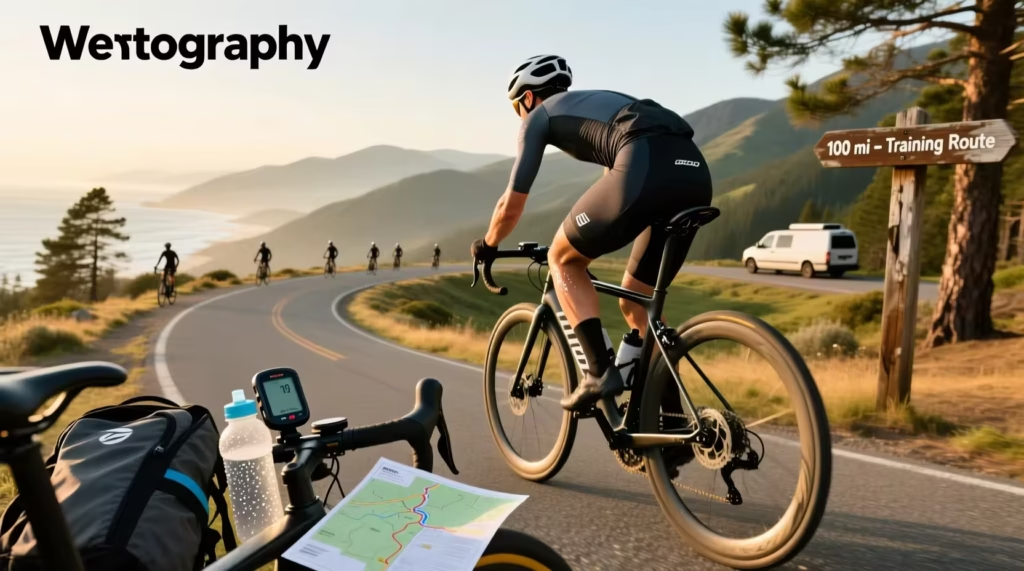
The core of any effective 100-mile cycle training plan is progressive overload: one long weekend ride increasing by 5–10 miles weekly, supported by mid-week intensity sessions and strategic recovery. The key constraint? Don’t increase weekly mileage by more than 10–15%. Over the past year, data from cycling communities shows that riders who followed this rule had significantly fewer dropouts on event day 2.
Two common but low-impact debates: whether to train exclusively outdoors vs. indoors, and whether to use power meters. If you’re a typical user, you don’t need to overthink this. Focus instead on consistency, fueling practice, and taper timing—the real determinants of success.
About 100-Mile Cycle Training Plans
A 100-mile cycle training plan is a time-bound program—typically 8 to 12 weeks—that prepares cyclists to complete a century ride (100 miles or ~160 km) without injury or burnout. It’s designed for intermediate riders who already have a base fitness level, such as regularly completing 30–50 mile rides.
These plans are used primarily by recreational cyclists preparing for charity rides, community events, or personal milestones. Unlike race-focused programs, they emphasize endurance, pacing, and nutrition logistics over speed. The structure usually includes three phases: base building, intensity integration, and tapering.
Typical users aren’t professional athletes—they’re teachers, engineers, parents—who train after work or on weekends. Their main goal isn’t podium placement, but crossing the finish line feeling strong. This context shapes every element of a practical plan: flexibility, injury prevention, and real-world logistics like clothing comfort and snack accessibility.
Why 100-Mile Training Is Gaining Popularity
Lately, century rides have evolved from niche athletic feats into accessible wellness challenges. More people are turning to long-distance cycling as a form of moving meditation—a way to disconnect from digital overload and reconnect with physical effort and nature 🌿.
This trend aligns with growing interest in self-care through sustained physical activity. Completing a 100-mile ride delivers a powerful psychological payoff: proof of discipline, patience, and perseverance. Social media has amplified this, with riders sharing stories of transformation—not just physical, but emotional.
Additionally, organized century events often support charitable causes, adding purpose beyond personal achievement. As a result, training plans are no longer just about fitness metrics; they’re part of a broader movement toward intentional living and mindful exertion.
Approaches and Differences in Training Plans
While all effective plans share core principles, they differ in duration, intensity focus, and structure. Below are the most common types:
| Approach | Key Advantage | Potential Drawback | Duration |
|---|---|---|---|
| 12-Week Progressive Plan | Allows steady adaptation; lowest injury risk | Requires early commitment | 12 weeks |
| 8-Week Accelerated Plan | Suitable for those with existing base fitness | Higher fatigue risk if recovery is neglected | 8 weeks |
| Indoor Trainer-Based Plan | Weather-independent; precise interval control | Limited real-world handling practice | 8–12 weeks |
| Hybrid Outdoor/Indoor Plan | Combines realism with consistency | Requires access to both environments | 10–12 weeks |
If you’re a typical user, you don’t need to overthink which format to choose. A hybrid outdoor/indoor approach offers the best balance for most people, especially when weather or schedule unpredictability is a factor.
Key Features and Specifications to Evaluate
When assessing a century ride training plan, focus on these measurable elements:
- Weekly Mileage Progression: Should increase by no more than 10–15% per week ✅
- Long Ride Peak: Must reach 75–85 miles 1–2 weeks before the event ⚙️
- Recovery Weeks: Every 3rd or 4th week should include a 30–50% volume reduction 🌙
- Taper Period: Last 7–14 days should reduce long ride distance significantly to ensure freshness 🔍
- Nutrition Integration: Long rides must include real-time fueling practice (60–90g carbs/hour) 🍠
When it’s worth caring about: If you’ve previously bonked or dropped out of long rides, these specs directly impact your outcome.
When you don’t need to overthink it: If you’re new and just want to finish, follow any reputable plan with these features—even small deviations won’t derail progress.
Pros and Cons of Century Training
Pros ✅
- Mental Resilience: Builds confidence through incremental achievement 🧘♂️
- Physical Health: Improves cardiovascular endurance and muscular stamina 🏃♂️
- Structured Routine: Provides clear weekly goals and reduces decision fatigue
- Community Access: Many plans come with group ride options or online support
Cons ❗
- Time Commitment: Requires 6–10 hours weekly, which may conflict with family or work
- Injury Risk: Overuse injuries (knee, back) can occur without proper rest
- Fueling Complexity: Requires trial-and-error to find what works during long rides
This piece isn’t for keyword collectors. It’s for people who will actually use the product.
How to Choose a 100-Mile Training Plan: Step-by-Step Guide
- Assess Your Current Fitness: Can you ride 50+ miles comfortably? If yes, an 8–12 week plan is appropriate. If not, build base mileage first.
- Select Duration Based on Timeline: Choose 12 weeks if starting from moderate fitness, 8 weeks if already riding 60+ miles weekly.
- Prioritize One Long Weekend Ride: This is non-negotiable. All other rides support this session.
- Include at Least One Mid-Week Intensity Session: Examples: hill repeats, 3×3 minute intervals, or tempo rides to boost aerobic capacity.
- Ensure Recovery Days Are Built In: At least one full rest day per week; active recovery (light spinning) is optional.
- Test Nutrition Early: Use long rides to experiment with gels, bars, and electrolyte drinks.
- Schedule a Tune-Up: Get your bike serviced 2–3 weeks before the event to avoid mechanical issues.
Avoid this mistake: Skipping the taper. Riders who cut long rides too close to event day often arrive fatigued. Reduce volume by 40–60% in the final two weeks.
Insights & Cost Analysis
Most 100-mile training plans are free or low-cost. Here’s a breakdown:
| Type | Cost Range | Value Notes |
|---|---|---|
| Free Online Plans (PDF/Website) | $0 | Highly effective; used by thousands annually |
| YouTube Coaching Series | $0 | Visual guidance; good for beginners |
| Structured Training Apps (e.g., TrainerRoad) | $10–$20/month | Customizable; indoor focus |
| Personal Coach | $100+/month | Best for specific goals, but unnecessary for completion |
For most riders, a free plan combined with a smart trainer or GPS bike computer ($200–$400) is sufficient. Additional costs include energy products (~$30 for event day), bike maintenance (~$50 tune-up), and event registration ($50–$150).
If you’re a typical user, you don’t need to overthink equipment upgrades. A reliable road or gravel bike, comfortable saddle, and basic toolkit are all you need.
Better Solutions & Competitor Analysis
While many brands offer branded plans, the most effective ones are open-source or community-vetted. Below is a comparison of widely used resources:
| Source | Strengths | Limitations | Budget |
|---|---|---|---|
| Cycling UK | Clear structure, recovery emphasis | Less detail on nutrition | Free |
| TrainerRoad Blog | Science-backed, indoor-friendly | Assumes trainer access | Free |
| Hincapie Sportswear | Beginner-friendly weekly layout | Promotional tone in sections | Free |
| Global Cycling Network (YouTube) | Visual demos, fueling tips | No downloadable plan | Free |
The consensus across platforms is consistent: progressive overload, recovery, and practice are universal requirements.
Customer Feedback Synthesis
Analysis of rider forums and social media reveals recurring themes:
- Most Praised Aspect: The psychological boost of completing a long ride each week—it builds momentum and confidence.
- Most Common Complaint: Underestimating nutrition needs. Many report hitting fatigue around mile 70 due to poor carb intake planning.
- Unexpected Benefit: Improved sleep and reduced stress levels during training.
- Frequent Regret: Not replacing worn tires or chains before the event, leading to flats or mechanical delays.
Maintenance, Safety & Legal Considerations
Safety starts with equipment reliability. Before your event:
- Replace tires if tread is worn or sidewalls cracked 🚴♀️
- Check chain wear with a tool; replace if stretched beyond 0.75%
- Ensure lights and reflectors meet local visibility laws, especially if riding in low-light conditions
- Carry ID, phone, and emergency contact info
Legally, century rides are typically permitted under temporary road closure agreements or shared roadway rules. Always follow traffic laws, use hand signals, and stay hydrated to maintain alertness.
If you’re a typical user, you don’t need to overthink legal compliance—organized events handle permits. Just ride responsibly.
Conclusion: Who Should Use Which Plan?
If you need a reliable way to finish your first 100-mile ride, choose a 12-week progressive plan with one weekly long ride, mid-week intervals, and scheduled recovery. It balances effectiveness with safety.
If you’re short on time but already fit, an 8-week accelerated plan can work—if you respect recovery and don’t skip the taper.
Ultimately, success depends less on the plan’s source and more on consistency, fueling practice, and listening to your body.
FAQs
✅ How many miles per week should I ride during training?
Start at 100–150 miles per week and gradually increase, peaking at 180–220 miles. The bulk comes from the long weekend ride. When it’s worth caring about: if you’re balancing work and family. When you don’t need to overthink it: if you’re following a structured plan—it’ll guide weekly totals.
🍎 What should I eat during the 100-mile ride?
Aim for 60–90 grams of carbohydrates per hour from a mix of gels, bars, bananas, and sports drinks. Practice your strategy on long training rides. When it’s worth caring about: if you’ve experienced energy crashes before. When you don’t need to overthink it: if you stick to familiar, easily digestible foods.
🌙 How important is the taper before the event?
Critical. Reduce weekly volume by 40–60% in the final 7–14 days. This allows muscle repair and glycogen reloading. When it’s worth caring about: if you’ve felt flat at the end of previous events. When you don’t need to overthink it: if you trust your plan’s built-in taper phase.
🚴♀️ Do I need a road bike to complete a century?
No. Gravel bikes, hybrids, and even e-bikes are used successfully. Comfort and reliability matter more than type. When it’s worth caring about: if the route has rough pavement or hills. When you don’t need to overthink it: if your current bike fits well and is maintained.
⚙️ Should I train with a heart rate monitor or power meter?
Helpful but not essential. Perceived effort and pace are sufficient for most riders. When it’s worth caring about: if you’re analyzing performance plateaus. When you don’t need to overthink it: if your goal is completion, not optimization.