
The kettle clicks off with a soft sigh, and the smell of black tea and toast fills a warm, slightly cluttered kitchen. At the table sits 100-year-old Margaret, straight-backed, cardigan buttoned wrong on one side, eyes brilliantly sharp. She folds the newspaper with a practised flick, then checks her pedometer like a teenager checking notifications. “Four thousand already,” she mutters, half proud, half annoyed. “I’ll do another two after lunch.”
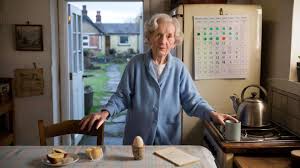
Her daughter hovers by the sink, suggesting—again—that maybe it’s time to think about help at home. Margaret’s spoon lands in the saucer with a small, decisive clink. “No. I refuse to end up in care,” she says. “If I can wash my own teacup, I wash my own teacup.”
The room goes quiet. You can feel the weight behind that sentence.

The stubborn daily rhythm that keeps her out of care
Every morning at 7:30, Margaret pulls aside her floral curtains and does the same thing she’s done for decades. She checks the weather, scans the street, and talks out loud to no one in particular. Then she dresses fully—shoes, earrings, lipstick—before breakfast. No shuffling around in a dressing gown until noon. For her, getting properly dressed is a line in the sand. “People who stay in their pyjamas all day,” she says, “age overnight.”

This small ritual sets the tempo of her day. It’s not glamorous. It’s not Instagrammable. Yet it’s the quiet backbone of her independence.
When you spend a day with Margaret, you notice the rhythm more than the milestones. After breakfast, she walks laps around her tiny garden, cane tapping on the paving stones. After lunch, she stands at the sink and washes dishes, even though there’s a perfectly good dishwasher humming under the counter. Later, she does her crossword in pen, squinting at the clues like they’re old rivals.
None of these moments look “special”. Still, taken together, they form a protective net. They keep her muscles from fading, her mind from fogging, her days from collapsing into a blur of TV noise and afternoon naps.
Researchers who follow centenarians talk about “daily load”—the little physical and mental tasks you do without thinking. Hang up the laundry, carry your groceries, count your change, argue with the newsreader on TV. Each small demand tells your body, “We’re still needed here.”
Margaret might not quote studies, but she lives the logic. She refuses to outsource what she can still do, even if it takes twice as long. That friction, that mild effort, is where her resilience hides. *Comfort isn’t what has kept her going. Movement is.*
The tiny choices she swears by (and the traps she avoids)
Ask Margaret for her “secret” and she laughs, then points to her shoes. Flat, sturdy, slightly ugly walking shoes. She wears them indoors, outdoors, up and down the stairs. “You stop walking, you start slipping,” she shrugs. So she builds walking into her day like brushing her teeth. One lap of the garden before breakfast. One trip to the corner shop if the weather behaves. Marching on the spot during the evening news when the adverts come on.

She treats movement like seasoning: scattered lightly through everything, not served as one heavy, exhausting dish.
She’s ruthless about screens—yes, even at 100. The TV goes off during meals. The tablet comes out only for family photos and video calls. “If it’s on all day, I disappear inside it,” she says. That’s her fear: not death, but disappearing before she dies.
She also eats like someone who lived through rationing. Simple plates, small portions, “proper food” as she calls it: porridge, vegetables, fish on Fridays, cake on Sundays. She doesn’t follow a named diet plan. She does avoid eating out of boredom. Let’s be honest: nobody really does this every single day. But every time she catches herself wandering to the cupboard with no real hunger, she stops, drinks water, phones a friend instead.
“People think living long is about doctors,” Margaret says. “Doctors patch you up. What keeps you going is what you do on the boring days, when no one is watching.”
On a notepad by her bed, she’s written three rules and boxed them in blue pen:
- Get up, get washed, get dressed before breakfast
- Walk somewhere with a purpose every single day
- Talk to at least one person who isn’t paid to be there
She reads them each morning like a private contract. They look almost childish on paper. Yet they target three huge traps that silently push older people towards care homes: staying in bed, not moving, and living in quiet, crushing isolation.
“I’m living, not waiting”: what her habits say to the rest of us
Sit with Margaret long enough and you realise she’s not chasing immortality. She knows friends who ate salad, did yoga, and still died too soon. What she’s chasing is agency. The feeling that, for as long as she’s here, her life still belongs to her. Picking out her own clothes, deciding when to have tea, choosing if she wants company or a quiet afternoon with the radio.

Her daily habits are less about adding years and more about guarding that small, bright circle of control. The refusal to “end up in care” isn’t a rejection of carers; it’s a refusal to drift, to hand over the steering wheel before she absolutely has to.

| Key point | Detail | Value for the reader |
|---|---|---|
| Rhythm beats intensity | Small, repeatable habits (walking, dressing, chores) matter more than occasional big efforts | Shows that sustainable change is possible at any age, starting with tiny actions |
| Protect your independence | Do what you can for yourself, even if it’s slower or less efficient | Encourages readers to keep their skills and strength instead of outsourcing everything |
| Connection as medicine | Daily conversations and small interactions prevent emotional “disappearing” | Reminds readers to prioritise social ties as seriously as diet or exercise |
FAQ:
- What does she actually do every day?She follows a simple routine: gets fully dressed before breakfast, walks in short bursts, does her own light chores, eats regular home-cooked meals, and talks to at least one person daily.
- Does she follow a specific diet?No branded diet. She eats modest portions, lots of vegetables, basic proteins, and keeps sweets for occasional treats, not constant snacking.
- How does she stay mentally sharp?Crosswords in pen, reading the news, managing her own appointments, and making small decisions instead of letting family decide everything.
- What’s her view on exercise at her age?She doesn’t “work out”. She just walks often, avoids sitting too long, and keeps daily tasks slightly challenging for her body.
- Can younger people use her habits too?Yes. Starting now with small routines—walking more, cooking simply, calling people—builds the foundation she’s still living on at 100.
