
You wake up with that heavy, stuffy feeling in your head and throat, like you spent the night in an airplane cabin. The alarm rings, your mouth is dry, and even though you slept seven hours, your brain feels oddly foggy. You look around and notice the same thing you do every morning: windows closed, bedroom door shut tight, air thick and a little warm. It feels safe. It feels private. It also feels… stale.
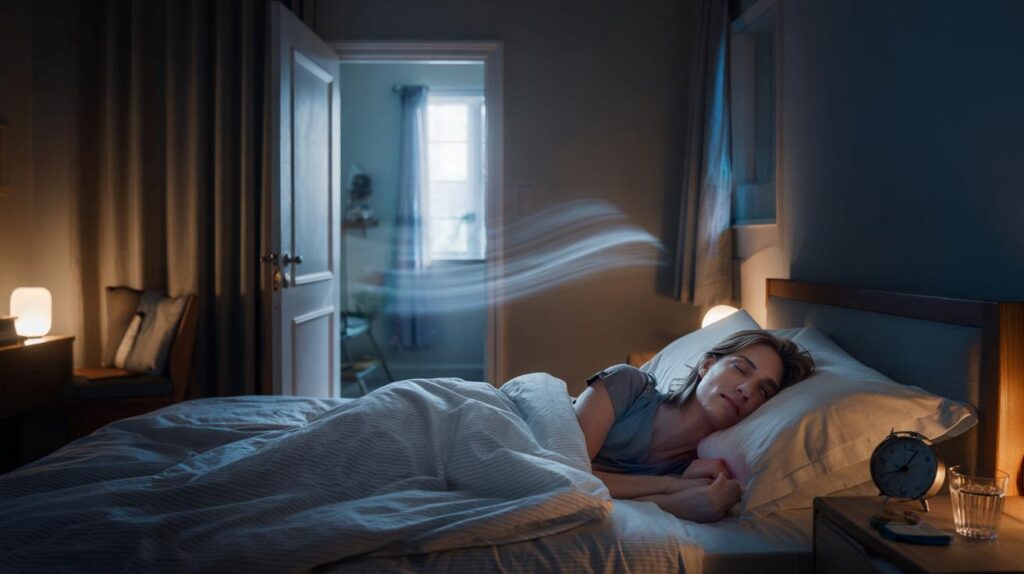
You crack the door open to grab coffee, and suddenly there’s a rush of fresher air in the hallway. You don’t think much of it, but your body does.
What if that tiny gap in the door could quietly change your nights?

That heavy, stale feeling in the bedroom isn’t just “in your head”
Most people think about their mattress, pillows, and bedtime routine when they talk about better sleep. Very few look at the most invisible factor in the room: the air itself. When you sleep with the door closed, your bedroom becomes a little bubble where the same breath is recycled again and again.

Over a few hours, carbon dioxide levels creep up. The room can still look clean and tidy, yet the air grows heavier in a way your eyes can’t see but your body definitely senses.
Sleep researchers have actually gone into real bedrooms with air-quality monitors and watched what happens overnight. In one small study, volunteers slept in rooms with doors and windows closed one night and open the next. With the door closed, carbon dioxide levels sometimes doubled by early morning.
When the door was left open, CO₂ dropped, airflow improved, and people reported sleeping a little deeper and waking up less groggy. That’s not a miracle cure. It’s just basic physics meeting your nervous system.
Here’s the simple chain reaction: you breathe out carbon dioxide all night, and the more sealed the room, the more it builds up. Higher CO₂ doesn’t mean you’re in danger, but it can nudge your brain out of its ideal comfort zone. Your body responds with slightly faster breathing, more micro-awakenings, and a sense that your rest never quite hit the “deep reset” level.
Open the door, and the air in your room mixes with the rest of the home, spreading that CO₂ out. Air exchanges faster, oxygen feels more abundant, and your brain gets a cleaner signal that it’s safe to sink into deeper sleep.
How simply opening your bedroom door can act like a mini sleep upgrade
The most low-tech “hack” for better sleep starts with a small, almost lazy gesture: leave the bedroom door ajar by a hand’s width. Not wide open, not slammed shut. Just a natural gap that lets air pass.
This tiny habit turns your bedroom from a sealed container into a space that can breathe. Fresh air from the hallway joins the room, and stale air has somewhere to go. No app, no gadget, just a small shift in how your house flows at night.
A lot of people worry that an open door will ruin the cozy, nest-like feeling of their bedroom. Many grew up being told to “close the door” for privacy or safety, so sleeping with it open feels slightly rebellious. That’s normal.
You don’t need to go from fully closed to fully open overnight. Start with a crack. A 5–10 cm gap can be enough to lower CO₂ quite a bit over several hours. If you live in a quiet home or apartment, you may find that narrow opening gives you the best mix of airflow, darkness, and peace.

One common trap is thinking that a clean-smelling room automatically means good air. It doesn’t. Fresh sheets and a scented candle might trick your nose, while actual gas levels stay high. **Your body cares more about invisible CO₂ than lavender perfume.**
If you’re sharing the bed with a partner, a child, or a pet, the amount of exhaled air doubles or triples quickly in a closed space. That’s when the open-door effect gets even stronger. With more lungs at work, the difference between a sealed room and one with even a slight opening becomes surprisingly noticeable by morning.
Turning your bedroom into a quieter, cooler, more breathable cocoon
The easiest method is a three-step ritual you can do in under two minutes. First, air out the room before bedtime: open a window for 5–10 minutes while you brush your teeth or get into pajamas. Let the old air escape.
Then close the window if it’s noisy or too cold outside, and leave the door partially open. Finally, adjust the bedding to be slightly lighter than usual, because better airflow often means you won’t need to bury yourself under layers just to feel comfortable.
Think about the classic sleep mistakes: cranking up the heat, piling on heavy blankets, locking the door, and wondering why you wake up sweaty and restless at 3 a.m. Many of us grew up in homes where “cosy” meant warm and shut. Your body doesn’t fully agree.
You’re not failing at sleep. You’re just following old habits. *Your nervous system relaxes when it has cool, gently moving air and the sense that the space isn’t airtight.* You can still feel safe, private, and tucked away while letting the room breathe at the same time.
“Once I started sleeping with the bedroom door open, I stopped waking up with that ‘hotel room’ headache,” says Elise, 34. “At first it felt weird, like the house was too open. Then after a week, closing the door again felt like I was locking myself in a box.”
- Crack the door rather than swinging it wide if you worry about noise or pets wandering in.
- Keep the hallway relatively clear and cool, so the air flowing in isn’t stale or overheated.
- Use a simple doorstop to hold the exact gap that feels right and avoid nighttime slamming.
- Combine an open door with a quiet fan pointing away from you to keep air circulating softly.
- Accept that some nights won’t be perfect. Let’s be honest: nobody really does this every single day.
Relearning what “comfortable” means when you sleep
Maybe you feel safer with the door closed, or maybe you have kids, roommates, or pets that complicate the picture. That’s real life. Still, there’s something oddly modern about sleeping in smaller, tighter, more sealed spaces every year, then wondering why our brains feel overcooked in the morning.
Opening your door at night is a small act of trust in your home, but it’s also a quiet message to your body: you’re allowed to breathe more freely. **You don’t have to overhaul your entire sleep routine to feel a difference.**
You might start with just one or two nights a week. See how your mornings feel. Notice whether your dreams feel clearer, whether you wake less during the night, whether that early headache fades. Some people don’t feel much difference. Others are shocked by how such a tiny change can ripple through their mood and focus the next day.
 According to astrological forecasts, these zodiac signs are destined for major prosperity in 2026
The door is still the same. The house hasn’t changed. Yet inside your bedroom, the air—and the way you move through sleep—starts to shift in quiet, almost invisible ways that your body understands long before your mind does.

| Key point | Detail | Value for the reader |
|---|---|---|
| Open doors lower CO₂ | Even a small gap lets exhaled air escape and fresh air enter overnight | Helps reduce morning grogginess and headaches |
| Better airflow, deeper sleep | Cooler, moving air supports more stable, restorative sleep cycles | Wake feeling clearer and less “stuffy” |
| Simple habit, no gadgets | Combine door slightly open with brief pre-bed airing of the room | Easy, zero-cost upgrade to your sleep environment |
FAQ:
- Question 1Is sleeping with the bedroom door open really safer or more dangerous?
- Answer 1Fire safety recommendations often lean toward closed doors, yet from an air-quality and CO₂ perspective, slightly open doors can help. Many people choose a compromise: a small gap and working smoke alarms, rather than a fully sealed room.
- Question 2What if I live on a noisy street or with loud roommates?
- Answer 2You can still improve airflow by cracking the door a few centimeters and using a white-noise machine or fan. The small opening helps CO₂ disperse without exposing you fully to every sound in the hallway or outside.
- Question 3Will leaving the door open make my room colder?
- Answer 3It might lower the temperature slightly, especially if the rest of the home is cooler. Many people sleep better in a slightly colder room, so lighter blankets and breathable bedding can balance the change comfortably.
- Question 4Can an air purifier replace opening the door?
- Answer 4Air purifiers help with dust and allergens but don’t always lower CO₂ efficiently. For gas build-up from breathing, you need actual air exchange, which means open doors, windows, or mechanical ventilation.
- Question 5How do I know if my bedroom’s air quality is really a problem?
- Answer 5You can use a small CO₂ monitor to see numbers, or just notice clues: morning headaches, feeling stuffy on waking, and that “used” smell when you re-enter the room after a while. Those are everyday signs your air could use a way out.
