
It’s 6:42 in the evening, and the light in the room has gone soft without you noticing. You’re holding your phone a little farther away than usual, tilting it until the words sharpen. Your eyes feel tired, but not sore. Just… slow. As if they’re taking an extra moment to catch up.
You blink a few times. The world steadies itself. You tell yourself it’s nothing. Everyone does this now.
Later, when you put your glasses down on the table, you notice how carefully you place them. As if they’ve become something fragile. Or maybe it’s your eyes you’re protecting.

The quiet feeling of being out of sync
Many people don’t talk about it, but there’s a subtle sense, often after 50, that your timing with the world has shifted. You’re not lost. You’re not confused. You’re just slightly out of step.

Street signs seem to blur sooner than they used to. Reading menus in dim restaurants becomes an exercise in patience. You move between near and far more slowly, waiting for your eyes to decide what they’re doing.
It can feel oddly personal, even though it isn’t. As if your body has started keeping its own schedule, independent of the one outside.
A change that arrives gradually
The idea behind smart glasses that adjust focus in real time didn’t come from a sudden medical crisis. It came from listening to these small moments. The pauses. The leaning forward. The quiet frustration of glasses that work well in one situation and not quite in another.
For decades, glasses asked your eyes to adapt to them. Fixed lenses. Fixed distances. You learned where to hold a book, how to angle your head, when to switch pairs.
Smart glasses turn that relationship around. Instead of you adjusting, the lenses do.
A real person, a familiar story
Marianne, 62, noticed the change while cooking. She would glance from the recipe on her tablet to the stove, then back again. Each shift came with a delay. “It felt like my eyes were thinking about it,” she said. “Like they needed a second to agree.”
She wasn’t worried. But she was tired of the constant negotiation.
What’s actually happening, in plain terms
When you’re younger, the tiny muscles inside your eyes are flexible. They change shape easily, helping you focus near and far without effort. Over time, those muscles stiffen. Not dramatically. Just enough that the change takes longer.
Your brain is still doing its job. Your eyes are still healthy. They’re just less quick to respond.
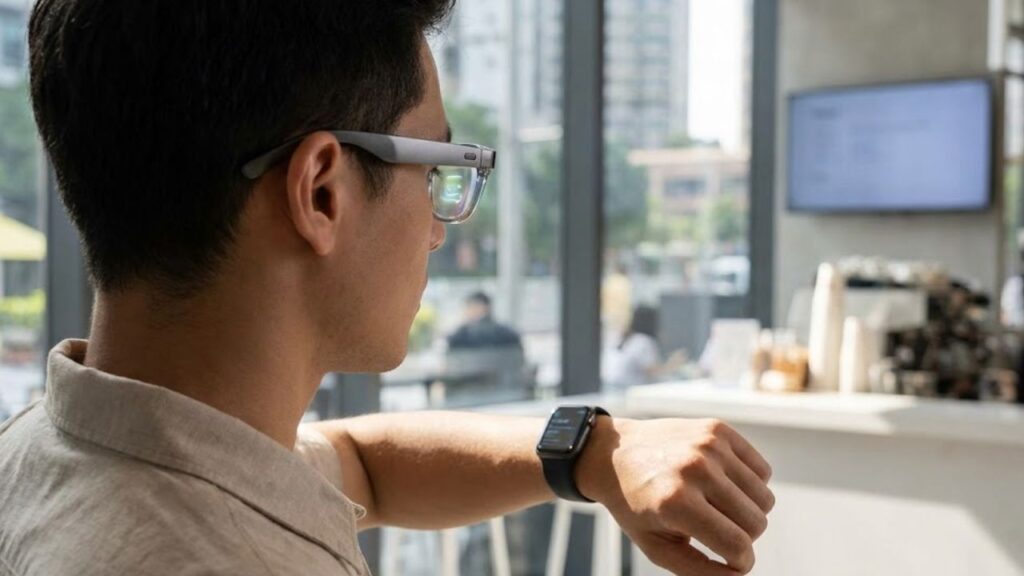
Smart glasses work by noticing where you’re looking and how far away that object is. Small sensors and adjustable lenses respond almost instantly, shifting focus so your eyes don’t have to work as hard.
The goal isn’t sharper vision in a dramatic sense. It’s smoother vision. Fewer pauses. Less strain.
Why this feels different from past solutions
Traditional solutions often came with trade-offs. Reading glasses that didn’t work for distance. Progressives that required learning a new way to move your head. Multiple pairs scattered around the house.

What makes real-time adjusting glasses feel new is not the technology itself, but the intention behind it. They’re designed around how people actually live now: switching screens, moving through rooms, glancing up and down all day.
They acknowledge that modern life asks your eyes to change focus constantly, and that this becomes harder with age.
Small, human adjustments that still matter
Even with smarter tools, most people find comfort in small changes that support their eyes rather than challenge them.
- Letting yourself pause before shifting focus, instead of rushing your eyes
- Choosing softer lighting in the evening, especially for reading
- Keeping screens at a comfortable distance, even if it looks awkward
- Accepting that eye fatigue is information, not failure
- Using glasses as support, not a test of how “well” you’re ageing
A lived-in truth
“I thought it meant I was losing something,” Marianne said. “But it turned out I was just needing a different kind of help than before.”
More about understanding than fixing
Smart glasses that adjust focus in real time are not about reversing age. They don’t promise to make your eyes young again. They simply meet your eyes where they are.
There’s something quietly respectful about that. They assume your body is changing for understandable reasons, and that comfort comes from cooperation, not correction.
Many people who use them describe not a dramatic improvement, but a sense of relief. Fewer reminders throughout the day that things have changed. Less friction between intention and action.
Living with shifting rhythms
Ageing often isn’t about loss. It’s about rhythm. Your body sets a different pace, one that asks for patience and awareness.
When tools adapt to you, instead of demanding adaptation from you, daily life feels more spacious. You’re not fighting your eyes. You’re moving with them.
That alone can change how you feel about the years ahead.
Ending where you are
At the end of the day, you take your glasses off and set them down again. The room is quiet. Your eyes are tired, but not strained.
You’re not trying to keep up with the world the way you once did. You’re letting it come into focus in its own time.

And that, in itself, feels like a kind of clarity.

| Key point | Detail | Value for the reader |
|---|---|---|
| Changing vision rhythm | Eyes take longer to shift focus with age | Reduces self-blame and worry |
| Real-time focus adjustment | Lenses respond automatically to viewing distance | Less daily eye strain |
| Support, not correction | Technology adapts to natural changes | Encourages acceptance and comfort |
