
It is 3:17 a.m. The room is quiet except for the soft hum of a fan and the sound of your own breathing — until it isn’t. You shift, half-awake, sensing a pause you can’t quite explain. Your chest tightens, then releases. You turn onto your side, hoping sleep will smooth itself out again.
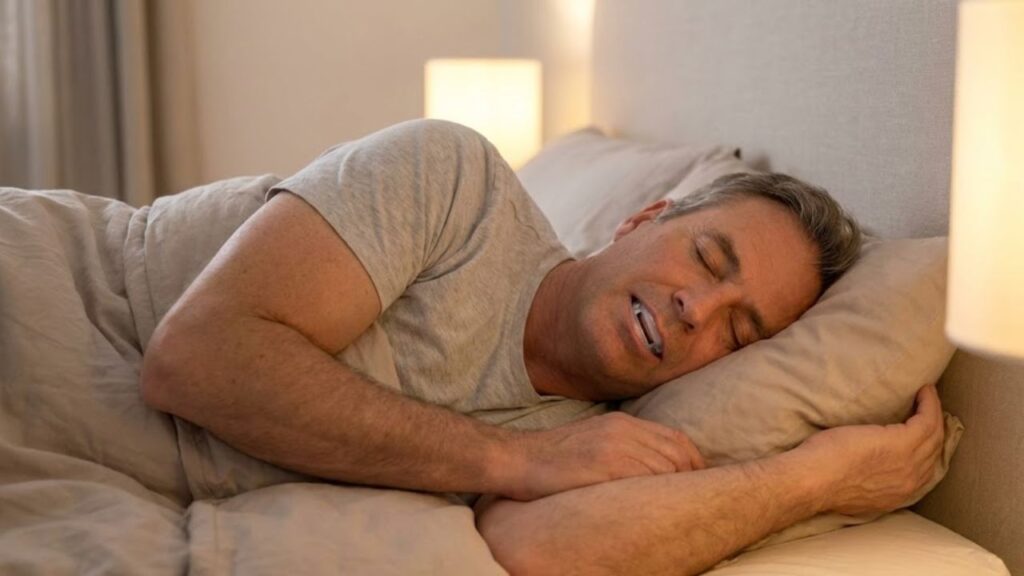
By morning, you’re not sure why you feel tired. You slept for hours. You went to bed on time. And yet there’s a faint heaviness behind your eyes, as if rest never fully arrived.
Many people reach this point without a name for it. Just a feeling that sleep has become thinner, less reliable, more effortful than it used to be.

When your nights stop matching your days
As the years pass, life develops its own rhythm. You wake earlier. You tire differently. Your body doesn’t always line up with the clock the way it once did. For some, sleep becomes the place where this mismatch shows up first.

You may feel alert enough during the day, yet oddly drained. Conversations require more focus. Small decisions feel heavier than they should. It’s not dramatic — just a sense of being slightly out of step with yourself.
This is often how sleep apnoea enters the story. Quietly. Gradually. Without obvious warning signs.
Understanding sleep apnoea without medical language
Sleep apnoea happens when breathing repeatedly slows or stops during sleep. Not for long, and not always loudly. Sometimes it’s just enough to pull your body out of deeper rest, again and again, through the night.
Your brain stays alert, even when you don’t realise it. It nudges you to breathe, then lets you drift back. Over time, this pattern fragments sleep, leaving you technically “asleep” but never fully restored.
For years, the most common treatment involved wearing a mask connected to a machine that keeps air flowing. For some people, it helps. For others, it feels intrusive, uncomfortable, or simply impossible to live with night after night.
A quieter shift: the rise of a mask-free oral option
Recently, researchers observed something unexpected. A new oral treatment — worn inside the mouth, without tubes or straps — significantly reduced breathing pauses during sleep. On average, pauses dropped by 56%.
This wasn’t a dramatic, futuristic device. It didn’t force air or make noise. It worked by gently supporting the position of the jaw and tongue, helping keep the airway open while you sleep.
The surprise wasn’t just the number. It was the simplicity. For people who struggled with masks, this offered another way — one that felt more like wearing a retainer than managing equipment.
Why this matters more than it sounds
Sleep treatments often fail not because they don’t work, but because they don’t fit into real lives. Anything that adds friction to bedtime can quietly fall away after a few weeks.
An oral option changes the emotional tone of treatment. It doesn’t announce illness. It doesn’t dominate the room. It blends into a routine that already exists.
For older adults especially, this subtlety matters. Sleep is already sensitive. The body is less tolerant of disruption. Comfort becomes as important as effectiveness.

A small story that reflects many others
Linda, 62, had been told for years that she stopped breathing at night. She tried a mask. She tried again. Each time, she woke feeling tangled, claustrophobic, more anxious than rested.
When she switched to an oral device, nothing dramatic happened. No instant energy. No overnight transformation. But after a few weeks, she noticed something else.
She stopped waking with a headache. Afternoon fatigue softened. Sleep felt less like a struggle and more like a place her body could settle.
What’s happening inside the body
As we age, muscles naturally lose some tone, including those that support the airway. During sleep, the tongue and soft tissues can relax backward, narrowing the passage for air.
An oral device works by gently repositioning the jaw or tongue forward. This creates more space for airflow, reducing collapses without forcing the body to fight against pressure.
It doesn’t override the body. It supports it — a small mechanical nudge that allows natural breathing rhythms to continue with fewer interruptions.
Gentle adjustments that often help alongside treatment
No single solution carries sleep on its own. Small, realistic shifts tend to work best when they respect how life actually feels.
- Keeping a consistent bedtime that feels kind, not strict
- Letting evenings slow down gradually rather than abruptly
- Sleeping in a position that feels open and supported
- Allowing the body time to adapt to new sleep tools
- Paying attention to how rested you feel, not just how long you slept
A thought many people quietly recognise
“I thought I was just getting older. I didn’t realise my sleep was asking for something different.”
Reframing what better sleep really means
This new oral treatment doesn’t promise perfect sleep. It doesn’t erase age or change who you are. What it offers is something gentler: fewer interruptions, less strain, more continuity.
Sometimes improvement isn’t about chasing energy or fixing a problem. It’s about removing an obstacle the body has been working around for years.
Sleep doesn’t have to look the way it did at 30 to be meaningful now. It just needs to feel supportive, steady, and enough.
 What is a hedgehog’s cry called?
Understanding that shift — and responding with curiosity instead of frustration — can be its own kind of rest.

What to remember
| Key point | Detail | Value for the reader |
|---|---|---|
| Sleep apnoea can be subtle | Breathing pauses often go unnoticed at night | Explains unexplained fatigue or unrest |
| Mask-free oral treatment | Reduces breathing pauses by 56% | Offers a gentler, more livable option |
| Comfort matters | Treatments work best when they fit daily life | Improves long-term consistency |
| Better sleep isn’t perfection | It’s about fewer disruptions, not total control | Encourages acceptance and ease |
