
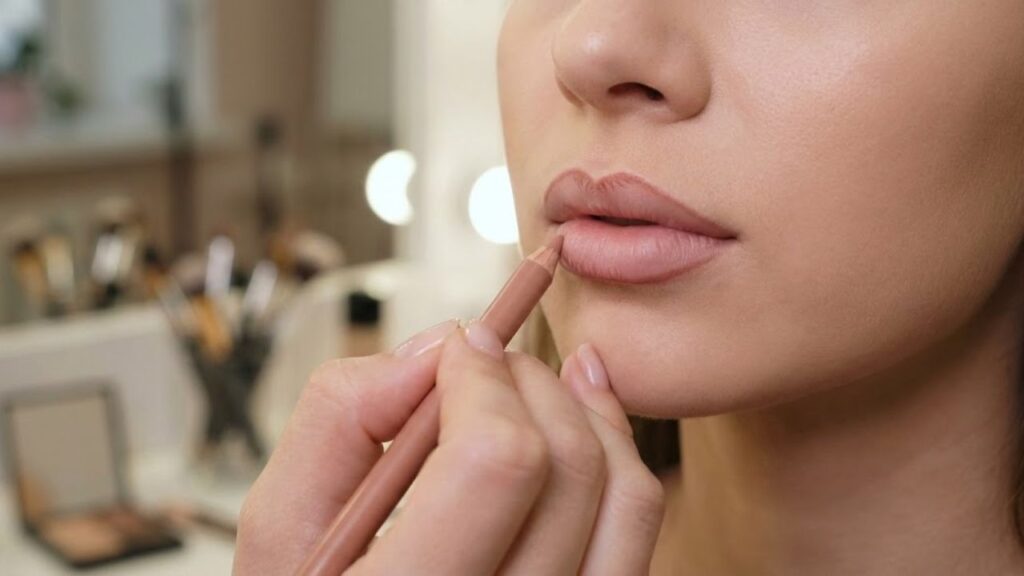
In a busy café bathroom, a young woman applies her lip makeup, unaware that those waiting in line are quietly watching. With two quick strokes of pencil and a light press of gloss, she transforms her lips without drama. There’s no heavy outlining or contouring, just a natural fullness that suggests rest and vitality. Her lips don’t scream makeup—they suggest balance and softness. Later, standing before your own mirror, you try to copy the effect. You use the same tools and mimic her steps, but the result feels flat. The secret lies in exact pencil placement, a tiny shift that changes everything.
This Isn’t About Size — It’s About Focus
The goal here isn’t making lips look bigger—it’s about directing the viewer’s eye. The traditional advice of tracing around your lips and blending might still work, but up close and in daylight, it can feel off. The line sits awkwardly against real skin texture, making your lips seem detached from your face. Instead of enhancing, it distracts.
Why the Old Lip Liner Trick Falls Short
Most of us were taught a simple rule: line just outside your lips, smudge, fill, and go. But this method often fails in natural lighting. On actual faces, exaggerated outlines don’t blend in seamlessly. The result can feel artificial, especially in candid settings like morning commutes or midday chats.

The Modern Approach to Lip Shaping
Today’s makeup artists take a different route. Rather than faking volume, they guide attention to specific zones. That pillowy look isn’t the main goal—it’s a subtle result. The lips appear fuller in photos, on video calls, or in person, not because they’re heavily lined, but because light hits the right spots.

Why Small Changes Matter Most
The key lies in minute pencil movements. It’s not about adding size—it’s about accentuating natural features. When you observe closely, you realize that the best results come from working within your lip shape, making tiny enhancements that feel believable rather than bold.
Where Pros Actually Apply Lip Liner
Scroll through your feed and you’ll start to see it: artists skip the outer corners. Instead, they apply pigment to:
- The Cupid’s bow peak
- The center of the lower lip
- The rounded “pillows” just off-center
The edges? Barely touched. The effect is more implied than defined, giving the lips shape without outlining them fully.
Why the Look Feels So Natural
A London-based artist shared that she uses the same lip pencil on every client, adjusting only the placement. People assume she’s using filler, but the real magic lies in strategic highlights and soft edges. Her clients often say they look “rested”—not glam, not overdone—just refreshed. That’s the power of subtlety.

How the Brain Interprets Lip Shape
This technique works because our brains track contrast and curves. We naturally focus on areas like:
- The dip of the Cupid’s bow
- The curve at the bottom center
- Glossy spots that catch light
By enhancing these features, the lips appear fuller without needing a bold boundary.
Step-by-Step: How to Apply for Soft Fullness
Begin with dry lips and a neutral expression. Use a sharpened nude pencil close to your natural tone:
- Draw a short bridge across the Cupid’s bow, connecting peaks just above the dip—not a full M, but a smooth line.
- On the lower lip, place the pencil one millimeter outside the center, drawing a short arc aligned with your iris width.
- Leave the outer thirds nearly untouched.
- Gently link the center marks to the corners with light upward strokes that fade out.
Smudge slightly with a fingertip and tap gloss only in the center. The effect? Plump, soft lips that no one can quite explain. It’s tempting to overdo it, but the trick is restraint. Too much liner near the edges ruins the illusion. Always check your work from a step back and build gradually.
Why This Technique Holds Up All Day
This method isn’t just pretty—it’s practical. If you’re rushed, a slight hand tremor won’t ruin it. It forgives imperfections and still works when your skin isn’t cooperating. Whether it’s harsh lift lighting or soft candlelight, your lips keep their shape without drawing awkward attention. Unlike rigid outlines, this approach moves naturally with your face, making it perfect for real-life wear.

| Principe clé | Nouvelle approche | Bénéfice visible |
|---|---|---|
| Mise au point centrale | Le liner est appliqué principalement sur l’arc de Cupidon et le centre de la lèvre du bas | Crée une impression de volume instantanée sans contours trop marqués |
| Coins de la bouche allégés | Application minimale ou absente du liner sur les commissures, avec un léger flou | Aspect doux et équilibré, naturel même en plein jour |
| Accent lumineux ciblé | Gloss ou baume appliqué uniquement au centre des lèvres | Amplifie le relief et donne des lèvres plus charnues en photo comme en réalité |
