
The question appeared in a late-night group chat, squeezed between a meme and someone posting their Spotify Wrapped: “So… how many countries are there in the world?”
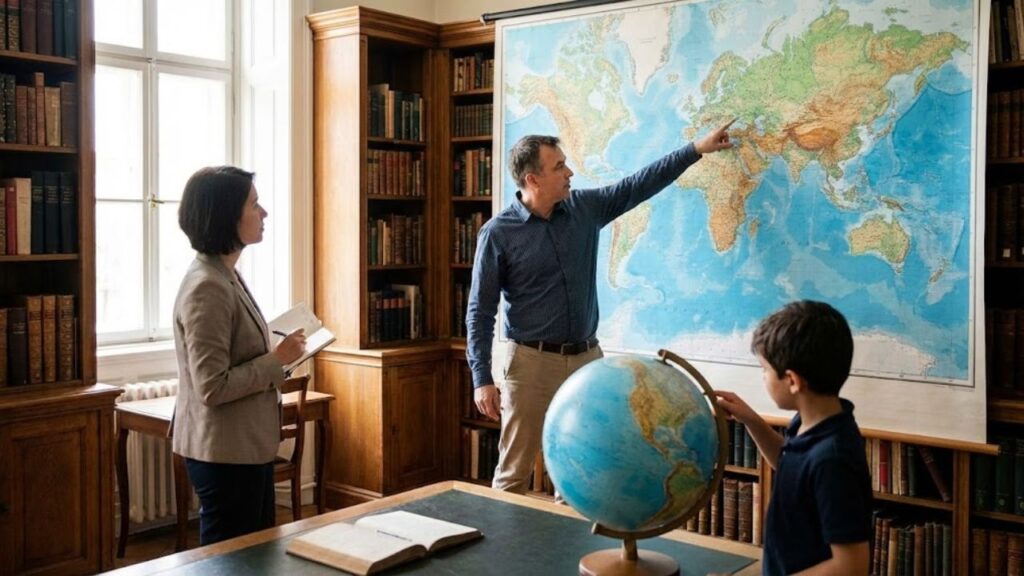
First came silence. Then guesses flooded in. 180? 205? One friend finally typed what everyone was thinking: “Depends. Who’s counting?”
I stared at my phone and realised I didn’t really know either. We all grew up staring at classroom maps that felt permanent, as if those borders were carved into stone.
 People Who Never Make Their Bed Have This Rare, Sought-After Trait, According To Psychology
But borders move. Some are disputed, some only half-recognised, and others exist in diplomatic limbo. Behind that innocent question sits a mix of politics, power, identity, and human stories — and a number that never quite settles.

The Official Answer (And Why It Feels Incomplete)
If you ask the United Nations for a clear answer, they’ll tell you there are 193 member states.
On top of that, there are two observer states: the Holy See (Vatican City) and Palestine.
Add them together, and most textbooks, quizzes, and travel blogs settle on 195 countries. It sounds tidy and reassuring.
But the moment you look closer, that tidy number begins to blur. Because not everyone agrees on who qualifies as a country.
The Grey Zones That Complicate Everything
Some places live in an uncomfortable in-between, functioning like countries in everyday life but lacking full international recognition.
Taiwan is the clearest example. It has its own government, elections, army, currency, and passports. You can fly there, work there, vote there, and argue politics over dinner.
Yet Taiwan is not a UN member. Many countries avoid formally recognising it to maintain relations with China.
Then there’s Kosovo, which declared independence from Serbia in 2008. Around 100 UN member states recognise it, and it belongs to the World Bank and IMF — but it still isn’t a UN member itself.
These cases reveal how recognition is often less about daily reality and more about geopolitics and diplomacy.
Why the Number Changes Depending on Who You Ask
Ask Google how many countries exist, and the answer quietly depends on which list is being used.
Most people start with the UN as their anchor: 193 members. Then the questions begin.
- Are the two observer states included?
- Do we count territories that act like independent states but lack full recognition?
- What about places with contested status?
Once you choose your rules, the confusion fades. You stop hunting for a single “correct” number and start asking a better question: “Correct for whom?”
Why Travelers Can’t Even Agree
If you’ve ever browsed travel forums, you’ve probably seen wildly different claims.
Some travelers say they’ve visited 193 countries. Others insist the real total is 197, 201, or even more.
It all comes down to classification.
- Is Greenland a country or part of Denmark?
- Is Hong Kong a country or a special administrative region?
- Are England, Scotland, Wales, and Northern Ireland separate or one?
The Travelers’ Century Club even tracks over 300 countries and territories, not because the world secretly expanded, but because cultural and geographic distinctions matter to them.

Why Countries Aren’t Fixed Like Planets
Countries aren’t discovered once and frozen in time. They are political agreements that can split, merge, collapse, or emerge.
South Sudan only became independent in 2011. Before that, every country count was automatically lower.
Many borders were drawn during colonial times with rulers on paper maps, slicing through cultures, languages, and landscapes. The consequences of those decisions still shape today’s global map.
Most people don’t track these changes unless their job depends on it. We carry a childhood version of the world in our heads and only notice updates when a new flag appears at a major sporting event.
How to Answer Without Starting an Argument
If you want a safe, clear answer that works in most situations, use this:
“There are 193 UN member states, plus 2 observer states, so most people say 195 countries.”
That covers quizzes, school projects, and casual conversation. If someone disagrees, asking what they’re counting usually turns debate into discussion.
One common mistake is treating the number as eternal and unquestionable. Another is using the word “real” when talking about disputed places, which can carry emotional weight for people with personal ties.
A gentler approach is to separate three layers:
- Legal recognition
- Everyday reality on the ground
- Personal or political perspective
This makes space for lived experience without trying to solve global conflicts at the dinner table.
Why the Question Matters More Than the Number
Use the UN figure when you need something standardised — 193 or 195. But remember the grey zones: Taiwan, Kosovo, Palestine, Western Sahara, and others.
Each represents unresolved stories, power struggles, and identities still being negotiated.
As one geography teacher put it, “Maps are promises, not facts.” They show how the world is officially described, not always how people actually live.
Once you pull on this thread, the map becomes a living document. Borders soften. Names shift. New states appear, others fade, and some remain in limbo.
A Question That Never Fully Settles
When someone asks again, you can give the clean answer — 195 by the usual count — and, if they’re curious, the complicated one.
You can talk about recognition, identity, and power, all starting from one innocent question.
The number may stay the same for a while. Or it may not.
 The plant that perfumes the home and repels mosquitoes: here’s why everyone wants it in spring
What lasts is the realisation that the world isn’t as fixed as the maps suggest. Lines move. Names change. And somewhere, a future country may already be imagining itself into being.

| Key point | Detail | Value for the reader |
|---|---|---|
| UN baseline | 193 member states + 2 observer states (Holy See, Palestine) | Gives a clear, widely accepted figure for everyday use |
| Disputed & de facto states | Places like Taiwan, Kosovo, Somaliland operate like countries but lack full recognition | Helps understand why some lists go beyond 195 |
| Perspective matters | Different organisations and communities count entities differently | Encourages critical thinking about maps, power, and identity |
