
On a rainy Tuesday in October, a graduate psychology student sits alone in a cramped lab cubicle, watching a slideshow of random shapes and emotionally neutral faces. A week later, she insists she remembers a smiling man in a blue shirt who was never actually shown. Nothing in the images changed. Only one thing did: the story she was told about what truly mattered in the experiment. The goal, the stakes, the subtle hint about where to focus. Her motivation.
This is the subtle point where memory stops behaving like a clean recording and becomes something far more fragile, personal, and political. And right now, that fragile space sits at the center of a growing psychology culture war.
How Motivation Can Quietly Rewrite the Past
Many of us were raised on a reassuring idea: memory works like a mental hard drive. Experiences are stored, then replayed later more or less intact. Neutral. Objective. But as researchers probe deeper, that model keeps falling apart.

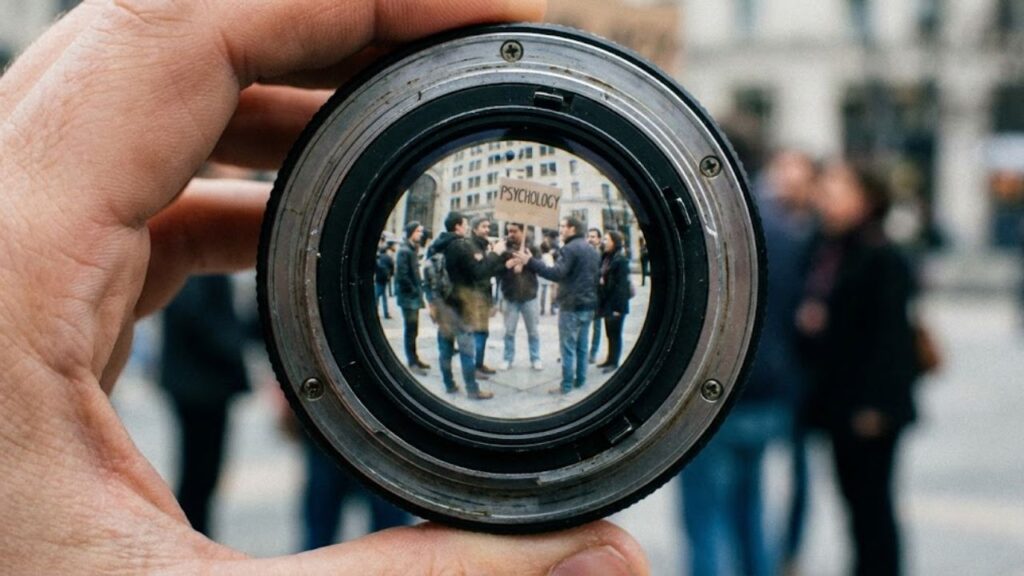
What replaces it is more unsettling. Goals, fears, and identities act like a camera lens, subtly shaping what gets captured in the first place. Motivation does not simply tint memories after the fact. In some cases, it helps sculpt them as they form.

This idea alarms some psychologists and energizes others.
One of the clearest illustrations comes from research on motivated memory in political contexts. In the months following the 2016 U.S. election, multiple labs asked participants to recall headlines and major events. Republicans and Democrats did not merely disagree on interpretations. They remembered different details altogether.
Same debates. Same scandals. Entirely different mental footage.
Accuracy tests revealed a consistent pattern. People more easily recalled details that favored their own group and were more likely to forget, distort, or lose information that helped the opposing side. This was not deliberate deception. It was deeper, as if the mind had already edited the footage long before playback.
Psychologists now disagree on how far this influence goes. One group argues motivation acts as a priority filter, preserving what feels useful for survival, belonging, or status. Another group believes motivation reaches deeper, influencing how memories are encoded at a biological level.
Why These Debates Spill Far Beyond the Lab
These questions do not stay confined to journals. They surface in courtrooms when eyewitnesses clash, in therapy when childhood memories are revisited, and in politics when competing groups insist their version of history is the only true one. If motivation can bend memory, who decides which memories count as truth?
That single question is reshaping research methods, professional reputations, and public trust.
- Psychology says people who always browse on social media but never comment or post typically display these 5 traits
- Swap oil or butter for this simple alternative to cook perfectly fried eggs that are lighter, easier to digest, and just as flavorful
- The subtle sign your body is asking for more rest, not more effort
- China unearths a 2,200-year-old imperial road that challenges our modern highways
- If your dog gives you its paw, it’s rarely about playing or saying hello and animal experts explain the real reasons behind this behavior
- Psychologists reveal the three colors most often chosen by people with low self-esteem
- Engineers confirm that construction is underway on an underwater rail line designed to connect entire continents through a vast deep sea tunnel
- Chefs explain why seasoning cast iron at low heat lasts much longer
Learning to Spot When Your Own Lens Is Warping
Quietly, some researchers are teaching their students a simple practice: name your motivation before a memory settles. After an emotional conversation or major news event, take one minute and write down: “What do I most want to be true about this?”

The answers often surprise people. Maybe the desire was to appear reasonable. Maybe it was to feel safe, respected, or morally right. Once that motive is visible, the memory feels less fixed and more flexible.
Those who repeat the exercise notice something else. The same argument can feel different depending on the week. On one day, you are sure the other person raised their voice first. Later, you are less certain. The lens has shifted.
We have all experienced this moment when a friend retells an event and we barely recognize ourselves in their version. They are not necessarily lying. They are often protecting a story that allows them to live with themselves.
Therapists working with trauma survivors sit directly in the middle of this debate. Some are accused of planting memories by encouraging new interpretations. Others argue that healing requires a new story, a new lens, and a new way of remembering.
Memory is not a file you open. It is a story still being written, guided by your present motivation.
Questions to Ask Before a Memory Hardens
- Before fixing a memory: Ask what outcome you secretly want it to support.
- During conflicts: Start with shared facts, then explore differing motivations.
- While reading headlines: Notice which version makes you feel morally superior.
- In journaling: Write one version where you are the hero and one where you are not.
- When memories clash: Ask what the other person’s story might be protecting.
A Quiet Shift in How We Argue About Truth
As research deepens, it collides with public debates about truth itself. Some psychologists push for stricter tools to separate accurate memory from motivated distortion. Others argue that humans are meaning-makers, not cameras, and that removing motivation is neither possible nor desirable.
This divide shapes how society talks about misinformation, lived experience, and who gets to define historical reality. When both sides arrive with memories shaped by need, facts alone rarely resolve the conflict.
What might change if people openly acknowledged how their memories serve them? Would conflicts soften if someone could say, “This is how I remember it, and this is what that memory gives me”? Or would trust erode even further?
 If you want to avoid loneliness at 70 and beyond, it’s time to say goodbye to these 9 habits
The research is still unfolding. So is the culture war. And for now, the lens remains in your hands.
 With its 337 metres and 100,000 tonnes, the largest aircraft carrier in the world rules the oceans
| Key point | Detail | Value for the reader |
|---|---|---|
| Motivation shapes memory | Goals, fears, and identity act like a lens that filters which details get stored and which fade | Helps you understand why honest people can remember the same event so differently |
| Conflicts are often “memory wars” | Political debates, family fights, and online outrage are fueled by competing, motivated recollections | Gives you a new way to de-escalate arguments by focusing on motives, not just facts |
| Simple self-checks change the story | Briefly naming what you want to be true about an event can expose your own bias in real time | Offers a concrete habit to keep your mental “lens” a bit cleaner and your judgments a bit softer |
