Psychologists explain that everyday language can quietly expose long-term unhappiness, shaping how people view themselves, others, and the future—often without conscious awareness.
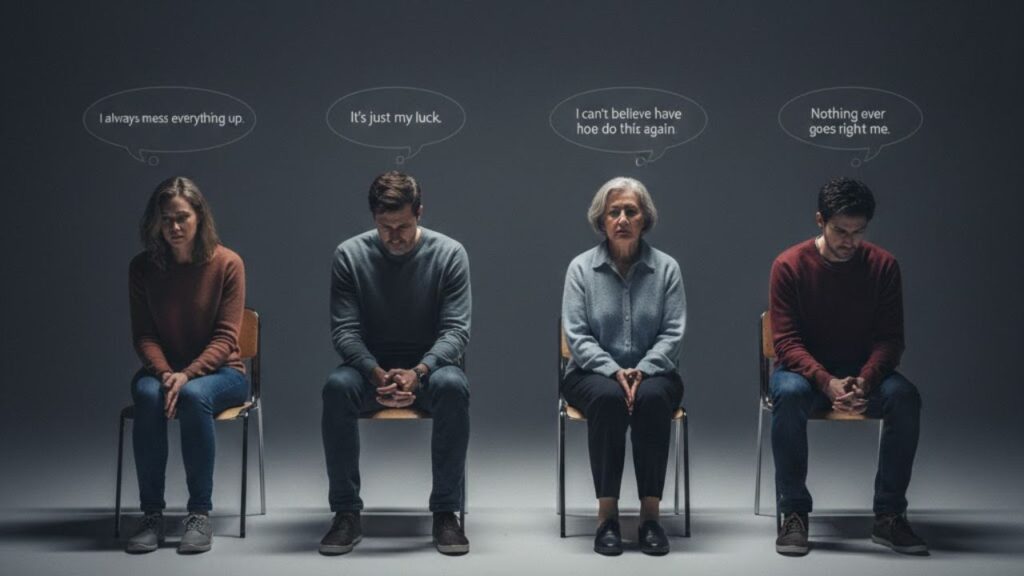
How negative wording subtly reshapes emotional health
Repeated sad or pessimistic expressions are not harmless habits. Over time, they function like constant background noise, training the brain to focus on threat, injustice, and failure. When these phrases repeat, the mind begins to treat them as objective truths rather than temporary emotional reactions.
Clinicians observe that individuals who feel stuck, exhausted, or depressed often rely on the same familiar lines. Many appear neutral on the surface, yet they slowly reinforce a narrative of helplessness—phrases like “nothing works,” “I never get a break,” or “there’s no point.”

This internal story matters because language guides attention. When someone tells themselves life is rigged, the brain searches for evidence of loss. Subtle wording shifts toward curiosity or practicality can gently redirect attention toward options rather than shutdown.
Sixteen phrases that often reflect unspoken unhappiness
1. “Nothing ever works out for me”
This sentence reflects deep discouragement and a mental filter that notices failures while overlooking small successes. The words “never” and “ever” turn temporary setbacks into a fixed identity. A softer reframe could be: “This didn’t go as hoped. What could I try differently?”
2. “No one ever listens to me”
This phrase often signals feeling ignored or unseen, sometimes shaped by repeated interruptions or dismissals. Rephrasing it more specifically—such as “I don’t feel heard in this moment”—creates room for dialogue rather than silence.
3. “I don’t care”
While it sounds indifferent, this line frequently hides disappointment or emotional fatigue. Detachment can act as protection. Alternatives like “I care, but I’m worn out” keep emotions accessible without emotional shutdown.
4. “Why does this always happen to me?”
This wording places the speaker in a role of permanent victimhood. The word “always” suggests life follows an unchangeable pattern. Shifting to “What can I influence here?” restores a sense of agency.
5. “What’s the point?”
This phrase strongly signals hopelessness. It often appears when effort feels meaningless. Reframing it as “I’ve lost clarity on the point right now” keeps the feeling intact without finality.
6. “I’m so sick of all this”
Commonly used to vent frustration, this line releases emotion but stops short of action. Breaking it into specifics—such as naming one exhausting factor—can shift the brain from complaint to planning.
7. “I’ll never be good enough”
Driven by perfectionism and comparison, this phrase turns growth into an impossible test. Replacing it with “I’m learning” allows progress without constant self-judgment.
8. “I’m just unlucky”
Attributing setbacks solely to fate can feel comforting, but it weakens the sense of personal influence. A balanced version—acknowledging both chance and choice—restores control.
9. “Why bother?”
This line reflects quiet surrender, often rooted in fear of disappointment. Asking “What level of effort feels manageable right now?” respects limited energy while preserving action.
10. “It’s not fair”
Life includes genuine injustice, but labeling every difficulty as unfair can trap attention there. Separating emotion from response helps shift toward constructive action.
11. “I never get a chance”
This phrase suggests opportunity is reserved for others. It may hide external barriers or internal avoidance. Reframing it toward increasing odds invites movement.
12. “Maybe I’m just not meant to be happy”
This is one of the most concerning lines clinicians hear. It frames happiness as permanently inaccessible. Replacing it with “I’m not happy right now, and I need support” opens the door to help.
13. “It’s too late for me”
Often linked to career or relationship changes, this phrase reflects fear of missed timing. Shifting to “Starting now will feel unfamiliar, but it’s still possible” allows room for later beginnings.
14. “I always ruin everything”
This sentence merges mistakes with identity. Precision helps: “I mishandled that situation” keeps errors specific and temporary.
15. “I never catch a break”
Chronic stress can train the nervous system to scan for pressure. Tracking small moments of relief helps rebalance attention toward ease, not just strain.
16. “They don’t care about me”
This phrase often emerges from feeling overlooked. The vague word “they” obscures clarity. Naming the person and situation can lead to either conversation or healthier redirection.
The grounding question psychologists often suggest
Many clinicians recommend one simple interrupting line:
“What is one small thing I can do to feel a bit better right now?”
This question works because it keeps the task small, limits it to one step, and anchors attention in the present moment. The action itself matters less than the message it sends: a sense of personal agency remains.
From thought patterns to healthier speech habits
These phrases often stem from well-known cognitive distortions:
- All-or-nothing thinking: using “always” or “never” to generalize events
- Catastrophising: expecting the worst outcome as inevitable
- Mind reading: assuming others’ intentions without confirmation
- Discounting positives: minimizing wins while magnifying setbacks
Noticing these patterns in language is a practical starting point. Emotional change often follows wording adjustments, not the other way around.
Applying the shift in everyday situations
After a difficult day—an idea rejected, messages piling up, plans canceled—the usual inner dialogue might spiral into familiar lines of defeat. Using a clinical approach, the language becomes more precise and compassionate:
“Today was hard.”
“I’m disappointed and tired.”
“What is one small thing that could help tonight?”
The circumstances remain, but the internal narrative shifts from permanent failure to temporary strain plus self-care.
When language points to deeper distress
Occasional expressions like “what’s the point?” are normal during stressful periods. Concern increases when such phrases are constant and paired with signs like persistent fatigue, loss of interest, sleep or appetite changes, or thoughts of hopelessness.
Psychologists stress that language can serve as an early warning signal. Hearing yourself repeatedly say “I’ll never be happy” or “it’s too late” is reason enough to seek support—from a GP, therapist, or trusted person—and begin reshaping the internal script, one sentence at a time.