
For many people, age-related tooth yellowing only becomes obvious during a photo, a video call, or a routine dental visit. That moment often triggers an important question: can older teeth look white again, and where is the boundary between safe dental care and shortcuts that could cause harm?
Why teeth naturally darken over time
Teeth age differently from skin or hair, but they do change. Even with excellent hygiene, tooth colour shifts gradually as the years pass.
The outer layer, known as enamel, is slightly translucent. Beneath it sits dentine, a tougher tissue with a naturally yellow-grey tone. As enamel slowly thins with wear, the underlying dentine becomes more visible. In addition, dentine can thicken after repeated minor stress, further deepening colour.

As enamel wears down, darker dentine shows through more clearly.

External factors also contribute to discolouration:
- Coffee, tea and red wine deposit pigments into tiny enamel imperfections.
- Smoking and nicotine vaping create persistent brown and yellow stains.
- Certain medications and long-term mouthwash use can affect colour.
- Dry mouth, common with age and medication, reduces saliva’s natural cleaning action.
Gums also recede slightly over time, exposing the darker root surface, which lacks enamel. This exposure can make the entire smile appear more yellow even when the visible crowns have changed very little.
Daily habits that slow age-related yellowing
Before considering bleaching gels or light-activated treatments, basic oral care can make a visible difference, especially when adopted early.
Brushing techniques that protect ageing teeth
Quick, rushed brushing often falls short. Technique matters more than pressure.
Brushing gently for at least two full minutes, twice daily, using a soft-bristled brush helps lift stains without damaging enamel.
- Choose a fluoride toothpaste with low to medium abrasiveness.
- Avoid aggressive “whitening” pastes that can scratch enamel.
- Replace toothbrushes every three months or when bristles spread.
- Angle bristles toward the gumline, where stains often collect.
- An electric toothbrush can help those with arthritis or reduced dexterity and often prevents over-brushing.
Professional cleaning: an overlooked whitening step
Dental scaling and polishing remove hardened deposits and deep stains that home care cannot reach. Pigments from tea, coffee and tobacco cling to tartar, which tends to build faster with age.
Most dental associations recommend a professional cleaning every six to twelve months. Smokers, heavy tea or coffee drinkers, and people with partial dentures may need it more often.
A single thorough cleaning can make teeth appear one to two shades lighter by removing years of surface build-up.
At-home whitening: benefits and limits
Once plaque and tartar are controlled, whitening products are more likely to work. However, not all over-the-counter options deliver the same results or safety.
Whitening toothpastes and pens
Most whitening toothpastes rely on mild abrasives and small amounts of peroxide. They help remove surface stains but do not alter the tooth’s natural colour.
Whitening pens contain low concentrations of peroxide. Used daily on dry teeth, they may brighten recent stains from coffee or wine but cannot reverse long-term discolouration.
Whitening strips and pre-filled trays
These products use higher peroxide levels and may lighten teeth by one to three shades over several weeks. Results vary widely.
Common drawbacks include tooth sensitivity, gum irritation, and uneven results where strips fail to cover curved areas.
- Whitening toothpaste: mild stain removal, risk of enamel wear if too abrasive.
- Whitening strips: modest shade change, possible sensitivity and gum irritation.
- Dentist-made trays: more even lightening, temporary sensitivity or gum soreness.
People with multiple fillings, crowns or veneers should consult a dentist first, as artificial materials do not whiten and may create uneven colour.
Professional whitening options for older adults
For many people over 50, dentist-supervised whitening offers more predictable outcomes. Dentists first check for cavities, gum disease and cracks, reducing the risk of painful reactions.
In-office whitening treatments
Chairside whitening uses high-strength peroxide gels, often activated by light or laser. Sessions typically last around an hour.

This approach can lighten teeth by several shades in one visit, particularly when yellowing comes from dentine changes. Gums are protected during treatment, though temporary sensitivity is common and usually fades within days.
Custom trays for home use
Custom-fitted trays allow controlled whitening at home. Prescribed gel is worn for a few hours daily or overnight across several weeks.
This slower method offers greater control, easier adjustment if sensitivity occurs, and convenient future top-ups without restarting treatment.
When whitening may not be suitable
Some discolouration does not respond well to bleaching, especially staining caused by childhood antibiotics, trauma or enamel development issues.
In these cases, cosmetic options such as bonding, veneers or crowns may provide better results by covering the tooth surface.
People with untreated gum disease or severe enamel loss are often advised to delay whitening. Bleaching exposed roots or inflamed gums can worsen discomfort and damage.
Lifestyle choices that help maintain a brighter smile
Small daily changes can extend whitening results and slow new stain formation.
- Limit strongly coloured drinks like black tea, coffee and red wine.
- Rinse with water after consuming staining beverages.
- Use a straw for iced drinks to reduce contact with teeth.
- Avoid smoking and nicotine vaping, major causes of stubborn stains.
- Reduce frequent snacking to protect saliva flow and enamel.
Crunchy fruits and vegetables stimulate saliva and gently clean surfaces, while dairy products supply minerals that support enamel strength.
Popular myths and risky home remedies
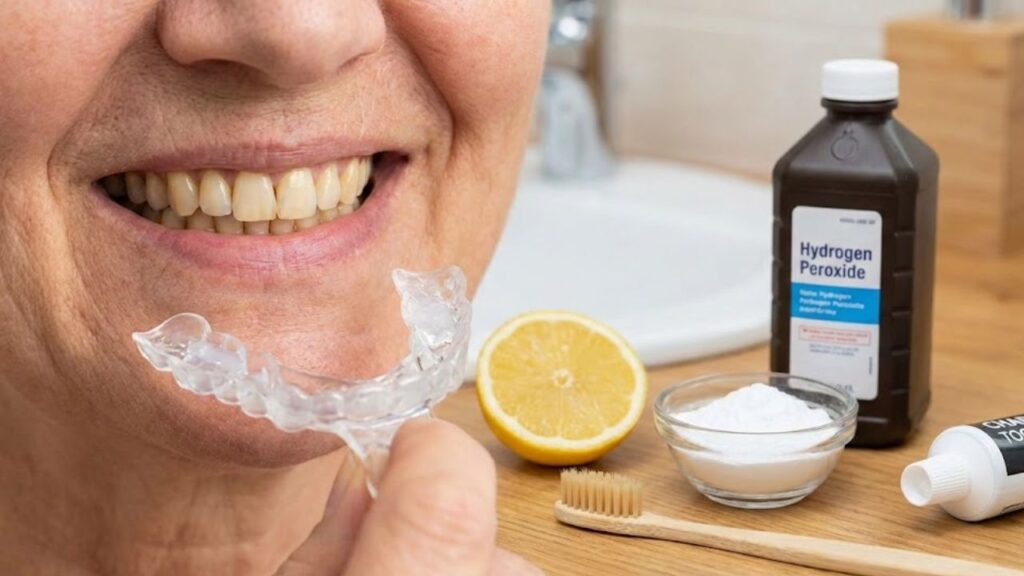
Many online whitening hacks are damaging, especially for thinner enamel common with age.
Acidic fruits, vinegar and baking soda pastes can strip enamel, leaving teeth weaker and darker over time. Acid softens enamel, and abrasive scrubbing removes that softened layer, exposing dentine.
Charcoal toothpastes may create dramatic photos, but their abrasive particles can accelerate enamel wear and worsen yellowing in older adults.
Setting realistic expectations for ageing teeth
Teeth in later life rarely match youthful advertising images. Gums recede, lips thin and jaw structure changes.
A realistic goal is a brighter, healthier tone that complements natural features, not an artificial white. Dentists often use digital shade guides to preview outcomes.
Someone with strong enamel and surface staining may see dramatic improvement, while others with worn enamel and restorations may benefit from combining whitening with targeted bonding.
Understanding key whitening terms
Most whitening products contain hydrogen peroxide or carbamide peroxide. Both release the same active whitening agent, though carbamide works more slowly and suits longer wear times.
Post-whitening sensitivity usually comes from fluid movement inside dentine tubules rather than permanent damage.
Desensitising gels, fluoride treatments and spacing sessions can help manage sensitivity. Reducing acidic drinks during whitening also improves comfort.

Age-related yellowing does not mean giving up on a confident smile. A combination of careful hygiene, thoughtful lifestyle choices and appropriate professional guidance can safely brighten teeth while protecting fragile enamel. The best results come from plans tailored to the teeth you have today.
 If you want to avoid loneliness at 70 and beyond, it’s time to say goodbye to these 9 habits
