
The room is crowded yet hushed, filled with the kind of silence that comes from people being cautious with their bodies. Sneakers sit neatly beside the mats. Most belong to people who, a few years ago, would never have pictured themselves signing up for a gentle movement class. A man in his fifties rubs his knee before lowering himself down. A younger woman adjusts a hidden brace beneath her leggings. Near the back, a retired teacher leans on a chair, quietly testing her limits for the day.
The instructor never mentions calories or toned abs. Instead, she talks about joint awareness, slow strength, and pain that shifts from day to day. Phones are placed face down. The focus narrows to one simple goal: standing without pain.
The session starts with something almost laughably basic.

They begin by simply walking in place.

The Overlooked Movement That Outperforms Swimming and Pilates
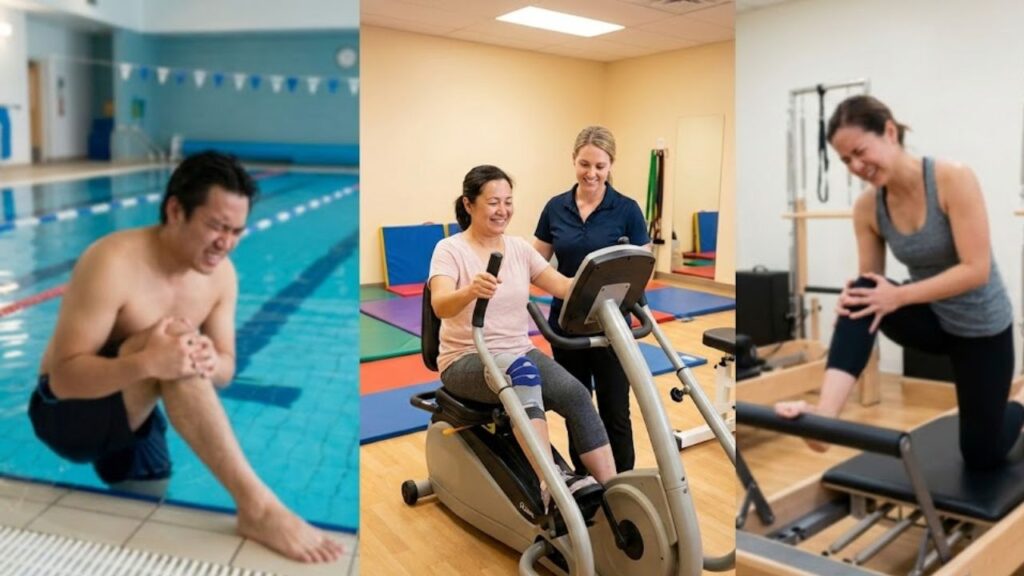
Ask a doctor about knee pain and two suggestions usually appear first: swimming and Pilates. Both are solid choices. Still, for many people, they are hard to sustain. Pools may be crowded or far away. Pilates studios can feel intimidating or expensive. And knee pain rarely waits for the perfect schedule.
This is where low-impact strength and mobility, done standing or with support, quietly changes everything. Think of it as joint-friendly strength. Not muscle-building workouts, but movements that help knees survive daily life. Small, precise actions that activate the muscles around the joint instead of punishing it.
No loud music. No jumping. Just slow, controlled effort that reminds your knees they can trust your legs again.
Claire, 42, learned this the hard way after knee pain followed her second pregnancy. She tried swimming and loved the feeling in the water, but the routine drained her: packing, driving, changing, drying hair. Each visit took nearly two hours and more mental energy than she had after work and homework duty.
Her physiotherapist suggested simple standing exercises at home: wall squats with a ball, slow step-ups, balance holds near the kitchen counter. Ten minutes, three times a week. Nothing flashy. Nothing social-media ready.
Three months later, she climbed metro stairs without grabbing the handrail and suddenly realized she had not thought about her knees at all. That moment felt bigger than any perfectly executed Pilates move.
Why Simple Land-Based Strength Protects the Knee Better
There is a clear reason this type of training often works better than more polished approaches. The knee is not just a hinge. It sits between the hip and the ankle, acting as a go-between joint. When nearby muscles lack strength or coordination, the knee absorbs the stress of every step.
Swimming removes load, which feels wonderful, but it does not fully prepare the body for life on land. Pilates improves control and posture, yet some movements still place high demands on sore joints or rely heavily on equipment and expert guidance.
Targeted standing strength does something very specific. It trains the exact actions knees need every day: standing up, sitting down, walking, and climbing. The resistance is just enough to rebuild trust without triggering pain.

Turning Basic Movements Into a Knee-Saving Habit
Begin with the least glamorous exercise imaginable: the sit-to-stand. Use a sturdy chair. Sit slowly, then stand using your legs rather than your hands. If discomfort appears, raise the seat with cushions. Aim for five to eight smooth repetitions, rest, then repeat once or twice.
Next, add a gentle wall squat. Stand with your back against the wall, feet slightly forward. Slide down just a little, not into a deep squat. Hold for five seconds, then return to standing. Again, five to eight repetitions are plenty at first.
Two exercises. Less than five minutes. No equipment. That is the kind of routine your knees are willing to accept on tough days.
Many people believe exercise only counts if they sweat or feel a burn. With knee pain, that mindset often leads to pain flare-ups. Trouble starts when progress is rushed: lowering the chair too fast, bending too deeply, or forcing daily sessions.
Consistency matters, but consistency can mean two or three calm sessions each week. On unstable days, you can shorten movements, use support, or switch to seated leg extensions and ankle pumps.
The aim is not heroics. The aim is tomorrow functioning better.
Everything changes when you stop fighting your knee and start working with it.
A sports physician once explained it simply: knees respond best to predictable movement. Small, repeatable actions done without fear calm the joint far more than bold efforts followed by days of limping.
A Simple Knee-Friendly Strength Rotation
- Chair sit-to-stands, using a higher seat if needed
- Wall squats with only a shallow bend
- Low step-ups on a bottom stair
- Standing balance holds near a counter
- Supported calf raises using a chair
How This “Unimpressive” Work Changes Pain Over Time
Low-impact knee strength does not look exciting. There is no splash, no reformer, no stylish setup. Yet after a few weeks, subtle shifts appear. You stand longer in a supermarket queue. You rise from the sofa without bracing for pain.
The pain may not disappear, but it stops being the center of attention. It becomes background noise you can negotiate with. That quiet shift is the win few people talk about.

This approach restores small freedoms you may have already given up: crouching to reach under the bed, kneeling briefly to plug in a cable, or walking an extra bus stop in the sun instead of sitting immediately.
 Those Who Don’t Feel The Need To Dye Their Hair As They Age Often Share These 8 Remarkable Qualities
Key Takeaways for Sore Knees
- Gentle strength over pure low impact: Slow, controlled land movements load muscles rather than stressing the joint, preparing you better for daily life.
- Short, regular sessions: Five to fifteen minutes, two to four times weekly, fit real schedules and low-energy days.
- Pain as guidance: Adjust range, speed, and support based on daily feedback to build confidence and independence.
