The pan looked harmless when the chicken hit the surface. Warm oil shimmered, the sizzle sounded right, and there was that quiet confidence that dinner was going exactly as planned. Twenty minutes later, you’re attacking a thick, black crust fused to the metal like it’s been there for decades. The smoke alarm has finally gone silent, the window is wide open, and the pan sits there, unmoved.
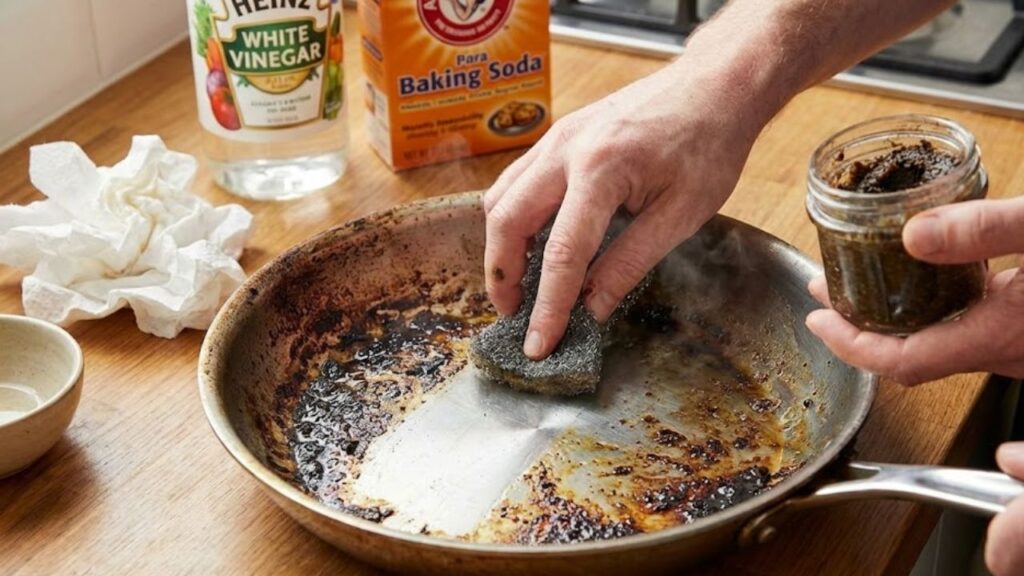
You soak it. You scrub harder. You dust on baking soda like a viral cleaning hack and add vinegar for drama. The surface barely reacts. The pan stares back, unchanged and oddly victorious.
At some point, every home cook runs into this small but crushing moment.

But what if the fix wasn’t what everyone keeps recommending?
Why burnt grease clings to pans even when you’re careful
Burnt grease follows its own rules. It shows up on rushed evenings when the heat creeps too high, or on relaxed weekends when you leave the pan alone for “just a second” to check your phone. Oil melts, bubbles, then quietly hardens into a dark shell that grips the metal like glue.
It may look like a surface problem, but it goes deeper. That layer affects heat distribution, changes how food browns, and even alters flavor. Once it forms, it invites more buildup. Before long, your once-reliable pan feels sticky and tired, no matter how much oil you add.
Ask around and you’ll hear the usual routines. Overnight soaking, vinegar baths, baking soda pastes. Some people even boil water and detergent in the pan like a homemade potion. Still, many kitchens quietly hide one pan nobody wants to show. The one saved for greasy eggs or smoky stir-fries, hoping the dark ring somehow helps.
In reality, that ring just grows darker. At high heat, oils break down and oxidize, forming a hardened, plastic-like film bonded to the metal. Once it cools, simple soaking can’t touch it. Baking soda and vinegar help with light stains, but polymerized grease is a different problem. It needs something that can slip underneath and loosen its grip without wrecking the pan.
The surprising pantry item that breaks down burnt grease fast
The answer isn’t baking soda. It isn’t vinegar. It’s dishwasher detergent tablets or powder — the kind meant for machines and usually forgotten under the sink.
Those small tablets are built for tough jobs. They’re designed to handle baked-on fats, dried sauces, and stubborn food residue under high heat and pressure. Used properly on a pan, they shortcut hours of scrubbing and bring cookware back to life.
Instead of fighting the pan, treat it like a mini dishwasher. Fill a burnt stainless-steel pan with hot water, drop in half a tablet, and place it on low heat. Within minutes, the liquid turns cloudy. The dark ring loosens at the edges, peeling away like an old label.
With a wooden spatula, the grease lifts off in sheets, not dust. No screeching metal, no sore wrists, no frustration. Dishwasher detergents contain surfactants and enzymes that don’t just sit on grease. They break it apart and lift it from the surface. Gentle heat activates them, speeding up the process without damaging most pans.
How to clean burnt pans safely using dishwasher detergent
Start by filling the pan with hot water, just enough to cover the burnt area. Add half a dishwasher tablet or a teaspoon of powder. Place the pan on low to medium-low heat.
Let it simmer gently for 10 to 20 minutes. Avoid boiling. Once the heat is off, allow the pan to cool slightly. Use a wooden or silicone utensil to push at the softened grease. It should slide or curl away with little effort. Rinse, then wash normally with dish soap.
Avoid common mistakes. Turning the heat too high can warp pans or damage coatings. Pouring cold water into a blazing pan can also deform the metal. For non-stick surfaces, use lower heat, more patience, and very gentle tools. No steel wool, no sharp edges.
This method works best as a rescue technique, not an everyday habit. The goal is to reset the pan, not punish it. Often, the biggest relief isn’t seeing it shine again — it’s realizing you don’t need to throw it away.
From ruined cookware to calm confidence in the kitchen
Knowing that burnt-on messes aren’t permanent changes how you cook. Forgotten onions, overheated oil, or stuck sauces stop feeling like disasters. A pan you thought was finished gets a second chance, and so does your confidence.
You cook a little bolder, less afraid of heat or long caramelization. Instead of hiding that ugly pan, you know there’s a solution waiting under the sink. The next time you face a stubborn black ring, you’ll skip the miracle sprays and reach for dishwasher detergent. A few quiet minutes on the stove won’t ruin dinner this time — they’ll save your pan.
- Dishwasher detergent works fast: Designed to break down hardened grease more effectively than common home remedies.
- Low heat matters: Gentle simmering activates cleaning agents while protecting cookware.
- Best used occasionally: Ideal for stubborn buildup, helping extend the life of your pans.