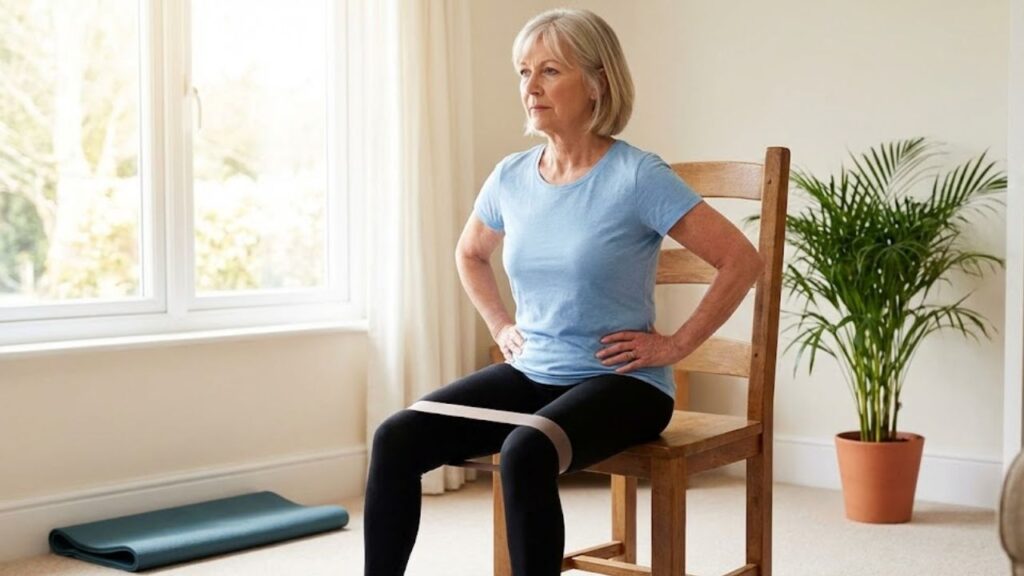
Hip strength is one of the most overlooked factors in healthy ageing. With nearly 40 years experience working with older adults as a personal trainer and fitness education director at TRAINFITNESS, one issue shows up repeatedly: people underestimate how vital hip mobility and strength truly are. As we grow older, stronger and more mobile hips play a major role in maintaining independence, balance, and ease of movement. The encouraging part is that rebuilding hip strength doesn’t require a gym, equipment, or even standing. A simple 8-minute chair routine can target the exact muscles that weaken with age, right from the comfort of your living room.
How Weak Hips Quietly Limit Daily Movement
Across decades of training, the same patterns appear again and again. The hips slowly become tight and weak, losing range of motion without people noticing—until everyday tasks suddenly feel difficult. Getting out of a car becomes awkward. Putting on socks turns into a struggle. Stairs feel harder, not only because of the knees, but due to reduced hip power. Walking changes too, with shorter steps and poorer balance because the hips are no longer stabilising the body effectively.
The issue is rarely a single cause. Sitting shortens the muscles at the front of the hips, while the glute muscles weaken from underuse. At the same time, the smaller muscles responsible for rotation lose strength and flexibility. Together, this creates a chain reaction—pelvic tilt stresses the lower back, other muscles compensate incorrectly, and simple movements like turning or stepping sideways become harder.

Ageing vs Inactivity: The Real Cause
Many people assume these changes are a normal part of ageing. They aren’t. While some physical changes are inevitable, most hip problems come from lack of movement, not unavoidable decline. The hips are designed to move forward, backward, sideways, and rotate. When those movements disappear from daily life, so does function. The good news is that movement can be rebuilt with consistent, targeted effort—starting with seated exercises that safely restore strength and mobility.
Seated Knee Lifts
This exercise strengthens the front hip muscles while keeping the core engaged. Being seated removes balance concerns, allowing better control and focus on proper movement.
Muscles trained: Hip flexors, core
- Sit near the front of the chair with feet flat and hip-width apart.
- Keep your spine tall, imagining your head lifting upward.
- Lightly hold the chair for balance.
- Lift one knee toward your chest as high as comfortable.
- Hold briefly, then lower with control.
- Alternate legs.
Common mistakes include leaning back, rushing the movement, or gripping the chair too tightly. Aim for slow control.
Recommended: 20 reps per leg (about 2 minutes)
Seated Leg Pushes
This movement activates the outer hip muscles and glutes, which are essential for side-to-side stability and safe walking.
Muscles trained: Hip abductors, glutes
- Sit upright with feet together and knees bent.
- Hands rest beside your hips.
- Move one knee out to the side while keeping the foot grounded.
- Pause briefly, then return to centre.
- Switch sides.
Avoid tilting your torso, lifting the foot, or moving too fast. Deliberate motion is key.
Recommended: 15 reps per side (about 2 minutes)
Seated Hip Press Backs
This exercise reactivates the glute muscles and trains the backward hip movement needed for walking, standing, and climbing stairs.
Muscles trained: Glutes, hip extensors
- Sit near the front of the chair with feet flat.
- Keep your torso upright.
- Lift one foot slightly and press the leg back.
- Squeeze the glutes, not the lower back.
- Return slowly and switch legs.
Avoid arching your back or leaning forward. If you don’t feel the glutes working, reduce the range and refocus.
Recommended: 15 reps per leg (about 2 minutes)
Seated Hip Rotations
Hip rotation is often lost over time, yet it’s essential for smooth turning and directional changes.
Muscles trained: Internal and external hip rotators
- Sit tall and lift one foot slightly.
- Rotate the leg inward, then outward.
- Keep the knee steady and movements small.
- Switch legs after completing reps.
Do not force the movement or rush. Controlled rotation builds mobility safely.
Recommended: 10 rotations each direction per leg (about 90 seconds)
Seated Hip Circles
This exercise brings all hip movements together, helping identify stiff or restricted areas.
Muscles trained: All hip muscles
- Lift one foot slightly while seated.
- Draw smooth circles with your knee.
- Change direction after a few reps.
- Switch legs.
Keep movements small and controlled. Stiff spots are normal and improve with time.
Recommended: 5 circles each way per leg (about 30 seconds)
When Medical Advice Comes First
If you’ve had a hip replacement, recent injury, worsening pain, or severe arthritis, consult your doctor before starting. These exercises target general weakness and stiffness, not acute conditions. Anyone with balance issues, vertigo, blood disorders, or pelvic or lower back conditions should also seek medical clearance first.
Choosing a Safe, Supportive Chair
Select a stable, firm chair without wheels or padding. Your feet should rest flat on the floor with knees around a 90-degree angle. Adjust with a foot support if needed. No equipment is required—your body weight provides sufficient resistance. Ensure there’s enough space around you to move freely.
What Changes to Expect After 4–6 Weeks
Within the first week, movements begin to feel smoother as your nervous system adapts. After two weeks, daily tasks like standing up, climbing stairs, or putting on shoes feel easier. By four weeks, walking becomes more fluid, stride length increases, and turning feels natural again.

At six weeks, improved hip strength and balance are often noticeable to others. Many people regain significant hip rotation, reducing discomfort and improving confidence in movement. While this routine won’t restore your hips to how they were decades ago, it reliably helps you reclaim recently lost function. Consistency matters most—three to four short sessions per week can create lasting improvements in how you move through everyday life.