
Building endurance plays a vital role in overall wellness. It provides the stamina needed to stay active, manage everyday responsibilities, and enjoy hobbies without constant fatigue. Strong endurance supports both physical energy and mental resilience, while also helping strengthen the heart and lungs. In simple terms, endurance allows the body to work efficiently for longer periods, making daily life feel more manageable and balanced.
“As we get older, both muscular and cardiovascular endurance naturally decline due to factors like muscle fiber loss, stiffer arteries, reduced heart efficiency, and lower oxygen use,” explains Eric North, known as The Happiness Warrior. “These changes can reduce stamina, but regular physical activity can slow this process significantly. While muscle atrophy, a lower maximal heart rate, and less flexible blood vessels affect how the heart delivers oxygen, the body can still adapt and maintain function with consistent movement.”
Endurance is closely linked to long-term health because it enhances mitochondrial efficiency, improves cardiovascular health, and supports key metabolic markers. Together, these benefits help increase daily energy levels and reduce the risk of chronic conditions such as heart disease, diabetes, and stroke.

“While strength training is essential for preventing muscle loss, endurance training directly supports the heart, lungs, and cellular energy systems, offering broader benefits for aging well,” North adds.
 8-Second Visual Challenge: Can You Spot the 3 Differences in the Duck Wearing Jacket Image?
To help assess endurance levels later in life, a simple four-minute chair workout can be a useful benchmark after age 60. Completing the routine with control and consistency is a strong indicator of excellent endurance capacity.
Why Chair-Based Workouts Are So Effective
“Many exercise programs suggest you need complex routines or expensive equipment,” says Erin Richardson, Corporate Director of the Aging & Functional Ability program at Sun Health. “In reality, one of the most effective tools is something nearly everyone already has—a simple chair.” Research shows that adults over 65 who regularly perform controlled chair exercises often improve lower-body strength, experience better health outcomes, and maintain greater independence.
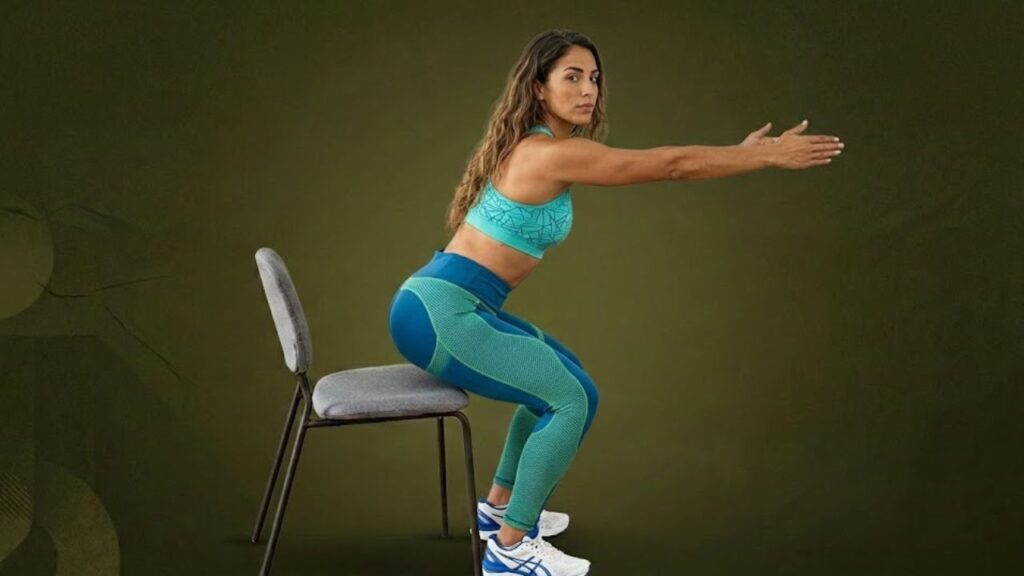
One of the most practical chair movements is simply standing up from a seated position. This sit-to-stand motion mirrors everyday actions and plays a major role in maintaining independence as we age.
“Chair exercises are also effective because they prioritize safety and stability,” Richardson explains. “They reduce fall risk, accommodate mobility limitations, and allow individuals to focus on strength and control. Whether used as a starting point or a long-term training option, the key is progression—not where the exercise takes place.”

Sit-to-Stand Exercise for Lower-Body Strength
“Focus on smooth, controlled movement—avoid dropping back into the chair,” Richardson advises. “Armrests can be used initially, but the long-term goal is standing without arm support. This movement builds quadriceps strength needed for daily activities like rising from a chair or toilet.”
- Start seated at the front of a sturdy chair with feet flat under your knees.
- Lean slightly forward from the hips.
- Stand up without using your hands or knees if possible.
- Lower yourself back down with control.
- Count how many repetitions you complete in 30 seconds.
- Rest briefly and repeat for 3 to 4 rounds.
Seated Weight Shifts for Core Control
“This movement improves trunk stability, which is essential for tasks like dressing or putting on socks,” Richardson notes.
- Sit upright while holding a light weight in one hand.
- Reach comfortably to the side, forward, and across your body.
- Lean slightly into each reach while maintaining balance.
- Return to the center after each movement.
- Switch sides and perform 5 to 10 reaches in each direction.
Seated Marches to Support Walking Ability
“Seated marches strengthen the hip flexors, which are crucial for weight shifting and starting to walk,” Richardson explains.
- Sit tall with feet hip-width apart on the floor.
- Lift the left knee to about hip height, then lower it.
- Repeat with the right knee.
- Avoid leaning back and maintain upright posture.
- Complete 3 to 5 sets of 10 to 20 marches per leg.
- Add ankle weights for increased challenge if appropriate.
Seated Resistance Twists for Daily Movement
“This exercise mirrors real-life actions like reaching into cupboards or turning to grab items,” Richardson says.
 Goodbye hair dyes : the new trend that covers grey hair and helps you look younger emerging
- Sit upright on a chair.
- Anchor a resistance band at your hip with one hand.
- Hold the band with the opposite hand.
- Rotate your torso away from the anchored side while reaching upward.
- Switch sides after completing all repetitions.
- Perform 3 to 5 sets of 10 to 15 reps per side.
“What makes these exercises so effective is their adaptability,” Richardson concludes. “They can be adjusted to be easier or more challenging, and many can eventually progress to standing. Always prioritize proper posture, keep your feet flat on the floor, relax your shoulders, and focus on safe, controlled movement.”
 The reason why hair seems to get greasier faster in the winter months despite the air being drier
