Strength training machines provide guided resistance to help build muscle, improve joint stability, and support progressive overload in a controlled environment. 🏋️♀️If you’re asking, what are the 10 types of strength training machines?, the most common include leg press, chest press, lat pulldown, seated row, shoulder press, leg extension, leg curl, hack squat, cable crossover, and abdominal crunch machines. Each targets specific muscle groups and offers unique advantages depending on your experience level, fitness goals, and physical comfort. For beginners or those recovering from injury, machine-based workouts offer safer movement patterns than free weights 1. More advanced users may combine machines with free weights for balanced development. Key considerations when selecting machines include adjustability, range of motion, ease of use, and integration into your current routine.
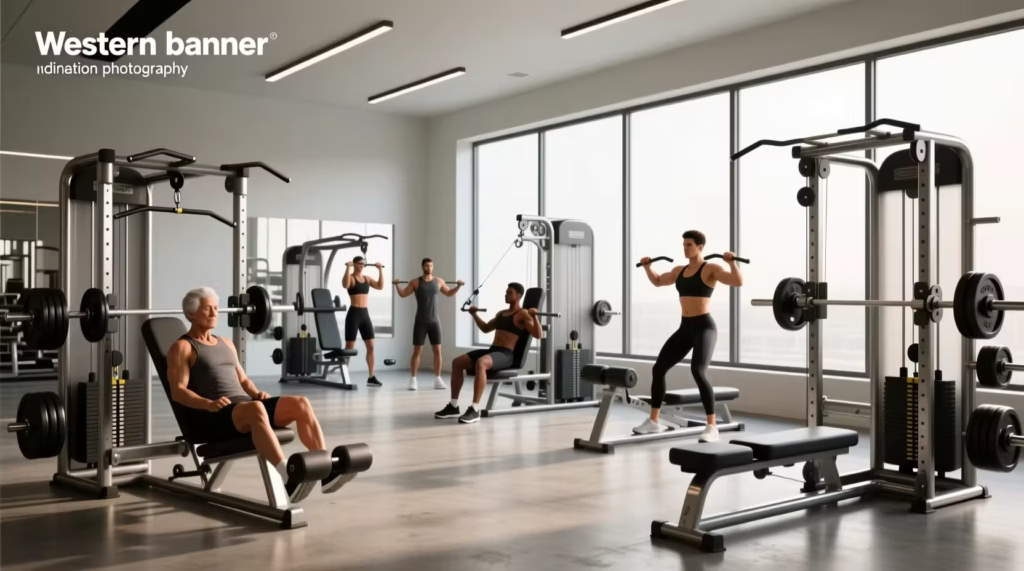
About Strength Training Machines
⚙️Strength training machines are engineered devices designed to isolate and strengthen specific muscle groups through resistance. Unlike free weights like dumbbells or barbells, these machines guide the user through a fixed path of motion, reducing the need for balance and coordination. This makes them ideal for individuals focusing on form, rehabilitation, or targeted hypertrophy.
They are commonly found in commercial gyms, physical therapy centers, and home setups. Typical usage scenarios include building foundational strength, supporting muscle symmetry, and enabling safe training for newcomers. Some machines use weight stacks with selector pins, while others rely on hydraulic systems or digital resistance controls. Their structured design helps minimize injury risk during repetitive sets, especially when fatigue sets in.
Why Strength Training Machines Are Gaining Popularity
📈In recent years, strength training machines have seen increased adoption due to rising interest in functional fitness, injury prevention, and accessible workout options. Many people seek low-impact yet effective ways to maintain strength as part of a long-term fitness lifestyle. Machines lower the learning curve compared to complex compound lifts, making strength training more approachable.
Gyms are expanding machine zones to accommodate diverse demographics, including older adults and beginners. Additionally, technological advancements—such as digital tracking, adjustable resistance levels, and compact designs—have improved usability and engagement. The consistency they offer also supports measurable progress, appealing to data-driven users who track performance over time.
Approaches and Differences
Different strength training machines serve distinct purposes based on biomechanics and muscle targeting. Below is an overview of 10 common types:
- Leg Press Machine: Targets quadriceps, glutes, and hamstrings. Allows heavy loading with reduced spinal compression. Best for lower-body volume without barbell squatting.
- Chest Press Machine: Works pectorals, shoulders, and triceps. Offers stable pushing mechanics. Ideal for isolating chest muscles safely.
- Lat Pulldown Machine: Focuses on latissimus dorsi and upper back. Mimics pull-up motion with adjustable resistance. Great for developing back width.
- Seated Row Machine: Trains mid-back and biceps. Encourages proper scapular retraction. Useful for posture support and back thickness.
- Shoulder (Overhead) Press Machine: Builds deltoids and trapezius. Provides vertical pressing path. Helps develop shoulder strength with controlled alignment.
- Leg Extension Machine: Isolates quadriceps. Simple setup and clear contraction. Often used for knee rehab or quad definition.
- Leg Curl Machine: Targets hamstrings via knee flexion. Complements quad-dominant routines. Supports posterior chain development.
- Hack Squat Machine: Simulates barbell squats at an angle. Reduces lower back strain. Enables deep knee flexion with back support.
- Cable Crossover Machine: Offers multi-angle resistance using pulleys. Enhances muscle activation through variable vectors. Suitable for chest, back, arms, and core.
- Abdominal Crunch Machine: Assists in trunk flexion. Guides spine movement for focused ab work. Supports core endurance training.
Key Features and Specifications to Evaluate
🔍When evaluating strength training machines, consider the following criteria to ensure compatibility with your needs:
- Adjustability: Look for seat height, pad position, and resistance range adjustments to fit different body sizes.
- Motion Path: A smooth, natural arc reduces joint stress. Check for ergonomic handles and footplates.
- Resistance Type: Weight stack systems are reliable; hydraulic or magnetic options suit low-noise environments.
- Durability: Frames made from steel or reinforced alloys last longer under frequent use.
- User Capacity: Verify weight limits—commercial models typically support up to 300 lbs or more.
- Safety Mechanisms: Features like locking pins, emergency stops, or assisted return functions enhance safety.
- Footprint: Especially important for home gyms. Compact or foldable units save space.
Pros and Cons
✅❗Understanding both sides helps determine if machine-based training suits your situation.
Advantages
- Beginner-friendly with minimal technique required
- Reduced risk of improper form leading to strain
- Effective for unilateral training (one side at a time)
- Supports consistent progression tracking
- Can be used post-injury with medical guidance
Limitations
- Limited functional carryover to real-world movements
- Less engagement of stabilizing muscles vs. free weights
- Fixed paths may not match individual biomechanics
- Bulkier and more expensive than basic free-weight setups
- Potential access issues in crowded gyms
How to Choose the Right Strength Training Machine
📋Selecting the best machine depends on your goals, experience, and available resources. Follow this step-by-step guide:
- Define Your Goal: Hypertrophy, endurance, rehab, or general strength? Match the machine to your objective.
- Assess Body Compatibility: Try the machine if possible. Ensure full range of motion without pinching or discomfort.
- Check Adjustability: Confirm multiple adjustment points for seats, pads, and resistance levels.
- Evaluate Build Quality: Look for sturdy frames, smooth cables/pulleys, and durable upholstery.
- Consider Space & Budget: Measure your area. Compare prices across retailers and check warranty terms.
- Avoid Overlooking Maintenance Needs: Machines require periodic lubrication, cable inspection, and bolt tightening.
- Don’t Ignore User Reviews: Real-world feedback often reveals durability issues or design flaws.
Insights & Cost Analysis
💰Cost varies widely based on type, brand, and intended use. Home-use models typically range from $200 to $1,500, while commercial-grade units can exceed $3,000. Entry-level leg press or chest press machines start around $300. Multi-station racks with several functions cost between $800–$2,000.
For budget-conscious buyers, second-hand gym equipment from verified sellers can offer value—but inspect for wear, rust, or damaged components. Consider shipping costs and assembly requirements, which may add $100–$300. Investing in a single high-quality machine often proves more cost-effective than buying multiple lower-tier ones.
| Machine Type | Best For | Potential Issues | Budget Range (USD) |
|---|---|---|---|
| Leg Press | Lower-body strength | Back rounding if form breaks | $400–$1,200 |
| Chest Press | Pec development | Limited shoulder mobility adaptation | $300–$900 |
| Lat Pulldown | Back width | Neck strain if leaning too far | $350–$1,000 |
| Seated Row | Posture improvement | Short stroke length on cheaper models | $300–$850 |
| Shoulder Press | Deltoid growth | Front shoulder pressure if seat too low | $280–$800 |
Better Solutions & Competitor Analysis
🌐While machines excel in isolation and safety, integrating them with other modalities often yields better overall results. Free weights promote greater neuromuscular coordination and stability. Resistance bands offer portability and variable tension. Bodyweight exercises enhance mobility and control.
A hybrid approach—using machines for primary lifts and free weights for accessory work—balances structure with functionality. For example, pairing a leg press with lunges builds strength and balance simultaneously. Adjustable dumbbells and power racks allow compound movements that mimic daily activities more closely than fixed-path machines.
| Solution Type | Advantage Over Machines | When to Prefer Machines |
|---|---|---|
| Free Weights | Greater stabilization demand, functional transfer | Learning phase, joint sensitivity |
| Resistance Bands | Portable, scalable, joint-friendly | Targeted strengthening with precise load control |
| Bodyweight Training | No equipment needed, improves coordination | Rehabilitation or beginner stages |
Customer Feedback Synthesis
📊Analysis of user reviews highlights recurring themes:
Frequent Praise
- “Easy to learn and use independently”
- “Helped me regain confidence after a long break from exercise”
- “Consistent resistance lets me track weekly improvements”
Common Complaints
- “Seat padding wore out within six months”
- “Cables started fraying after heavy use”
- “Limited adjustability didn’t fit my torso length”
Maintenance, Safety & Legal Considerations
🔧Regular maintenance ensures longevity and safe operation. Wipe down contact surfaces after each use. Inspect cables, pulleys, and bolts monthly for signs of wear. Lubricate moving parts every 3–6 months depending on usage frequency. Follow manufacturer guidelines for part replacement.
Safety-wise, always use machines within recommended weight limits and avoid sudden jerking motions. Ensure the weight pin is fully engaged before starting. If using at home, secure the unit to the floor if specified by the manual.
Legally, personal liability generally applies for home equipment misuse. Commercial facilities must comply with local safety codes and provide clear instructions. Always verify warranty coverage and return policies before purchase, as these may vary by retailer and region.
Conclusion
✨If you’re new to strength training or prioritizing joint safety, machines offer a structured way to build foundational strength. If your goal is athletic performance or functional movement, consider blending machines with free weights and bodyweight exercises. The 10 types of strength training machines each serve a purpose—choose based on your individual biomechanics, goals, and access. Prioritize adjustability, build quality, and proper fit over brand name or aesthetics.
FAQs
❓What are the 10 types of strength training machines?
The 10 most common types are leg press, chest press, lat pulldown, seated row, shoulder press, leg extension, leg curl, hack squat, cable crossover, and abdominal crunch machines.
❓Are strength training machines good for beginners?
Yes, they are ideal for beginners because they guide movement patterns, reduce balance demands, and help users focus on muscle contraction with less risk of injury.
❓Can I build muscle with machines only?
Yes, machines can effectively build muscle through progressive overload, especially when combined with proper nutrition and recovery. They allow consistent training of specific muscle groups.
❓How do I know if a machine fits my body size?
Test the range of motion: sit in the machine and check for full extension and flexion without joint pinching. Adjust seats and pads to align joints properly with the machine’s pivot points.
❓Do strength machines help with weight loss?
Yes, they contribute to weight loss by increasing muscle mass, which boosts resting metabolism. When paired with cardiovascular activity and dietary awareness, they support fat reduction.